Follow India Renewable Energy News on WhatsApp for exclusive updates on clean energy news and insights
CPCB Releases Guidelines for Safe Handling and Storage of Solar E-Waste
Mar 14, 2026
The Central Pollution Control Board (CPCB) has issued Version 1.0 of the “Guidelines for Storage and Handling of Waste Solar Photovoltaic Modules or Panels or Cells” under the E-Waste (Management) Rules, 2022. The draft version of these guidelines was first released in June 2025.
The newly issued framework outlines operational standards for the transportation, storage, and handling of discarded solar photovoltaic modules, panels, and cells. The aim is to ensure environmentally responsible management of solar waste while minimizing potential risks to human health and the environment.
Under the guidelines, solar photovoltaic waste must be transported and handled in a manner that prevents environmental contamination and protects workers. Disposal of solar panels in open areas or landfills is prohibited because such waste can release hazardous substances. Materials meant for recycling must be transferred only to registered e-waste recyclers, although producers and manufacturers are permitted to collect and temporarily store the waste under regulated conditions.
The guidelines also mandate that transportation of solar waste be conducted in covered vehicles to avoid damage and environmental exposure. In cases where waste is transported for final disposal, the process must comply with the Hazardous and Other Wastes (Management and Transboundary Movement) Rules, 2016.
For storage and handling, CPCB has specified detailed requirements for facilities managing solar waste. Photovoltaic modules must be stored in covered, dry, and well-ventilated areas to reduce the risk of degradation or accidental breakage. Storage floors must be impervious and non-leachable to prevent contamination of soil and groundwater, while broken modules must be kept separately in rigid, clearly labelled containers.
Facilities handling solar waste must also install fire-safety systems, maintain emergency response procedures, and label storage racks clearly to facilitate safe handling and recycling. Workers involved in handling such waste must be provided with appropriate personal protective equipment.
Operators are required to maintain detailed inventory records of stored waste and conduct monthly inspections of storage areas. These records must be preserved and presented during audits carried out by CPCB or state pollution control boards.
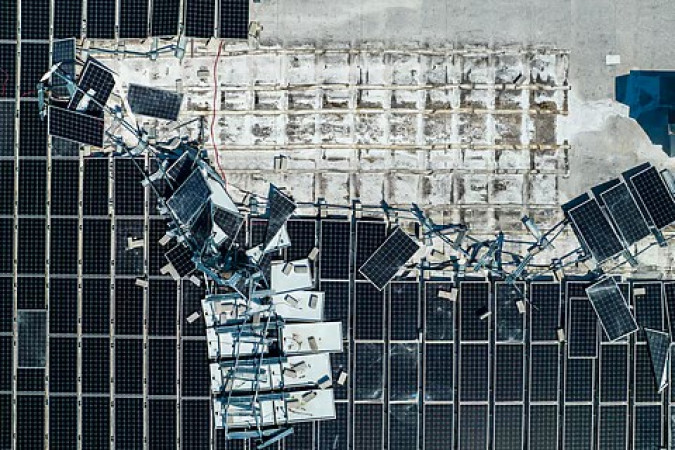
The board noted that improper disposal of end-of-life solar panels could pose environmental and health risks because these panels contain materials such as glass, aluminum frames, silicon wafers, plastics, and metals including copper, silver, lead, cadmium, tellurium, gallium, arsenic, and tin.
To ensure compliance, the guidelines introduce an inspection format that records the month of inspection, facility details, quantity of stored waste, and the status of ventilation systems, fire protection arrangements, spill control mechanisms, personal protective equipment availability, and inventory management.
The regulatory framework governing solar e-waste originates from the Ministry of Environment, Forest and Climate Change notification of the E-Waste (Management) Rules, 2022, which came into effect on April 1, 2023. These rules cover 106 categories of electrical and electronic equipment, including solar panels, modules, and cells classified under Schedule I as CEEW-14.
The rules follow the Extended Producer Responsibility (EPR) principle, which requires producers to meet recycling obligations by purchasing EPR certificates from registered recyclers. However, the current framework does not yet prescribe specific recycling targets for waste solar modules, panels, or cells.
Manufacturers, producers, and recyclers dealing with solar photovoltaic equipment must register under the e-waste regulations, follow CPCB’s operational guidelines, file annual returns on the regulatory portal, and store solar waste until the financial year 2034–35.
Additionally, producers and manufacturers are required to establish collection systems such as take-back programs. They must also provide publicly accessible information on collection points and designate contact persons to assist consumers with support and grievance redressal related to solar waste management.
Related News

Tamil Nadu Unveils Rs 1 Lakh Rooftop Solar Subsidy…
The Tamil Nadu Government has announced a new rooftop solar subsidy of up to Rs…

MERC Clears MSEDCL’s 2,269 MW Distributed Solar Procurement…
The Maharashtra Electricity Regulatory Commission (MERC) has approved the tariffs…

OERC Proposes New 10 MW Distributed Renewable Energy…
The Odisha Electricity Regulatory Commission (OERC) has proposed a new regulatory…