Follow India Renewable Energy News on WhatsApp for exclusive updates on clean energy news and insights
Localised solar consumption, particularly through EV charging, could maximise the benefits of decentralised energy systems
Mar 24, 2026
Growing geopolitical uncertainties, especially in regions like the Gulf region, have once again exposed the vulnerability of global energy supply chains. For a country such as India, which relies heavily on imported fossil fuels, enhancing energy security has become both an economic necessity and a strategic priority. Expanding the energy mix—through nuclear, biofuels, solar, and wind—is therefore critical.
Among these alternatives, solar energy has taken centre stage in India’s clean energy transition. Over the past decade, the country has rapidly scaled its solar capacity to nearly 130 GW, driven by a combination of large solar parks and distributed rooftop systems. However, as solar adoption increases, integrating this power efficiently into the grid is becoming a growing challenge.
Large-scale solar installations have played a key role in boosting capacity due to their cost advantages. Yet, they depend on extensive transmission infrastructure to deliver electricity from remote generation sites to urban demand centres. Developing such infrastructure is both capital-intensive and time-consuming, and in several instances, inadequate transmission capacity has delayed the evacuation of generated power, compounding existing transmission and distribution losses.
In contrast, rooftop solar systems offer a decentralised solution by generating electricity closer to where it is consumed. Government initiatives like the PM Surya Ghar Yojana aim to expand residential solar adoption and reduce reliance on centralised power generation. Ideally, this model should ease pressure on long-distance transmission networks.
However, decentralised solar also introduces new complexities. When households produce more electricity than they use, the surplus is typically fed back into the grid through net metering. Traditional power networks were designed for one-way electricity flow—from large power plants to consumers. The growing number of rooftop systems creates two-way flows, leading to operational challenges such as voltage fluctuations and grid instability.
Distribution companies also face concerns about revenue loss, as high-paying residential consumers offset their electricity consumption with solar generation. This has led some states to introduce additional charges or regulatory restrictions, reducing the appeal of rooftop solar systems.
Technological advancements like smart grids and battery storage can help address these issues. Time-of-day tariffs, for instance, can encourage electricity usage during peak solar generation hours, while batteries can store excess daytime energy for use during evening demand peaks.
Another promising approach is to align decentralised generation with decentralised consumption. In many households, solar production peaks during the day when demand is low, and falls in the evening when consumption rises—a mismatch often referred to as the Duck Curve. This leads to surplus electricity being exported during the day and imported at night.
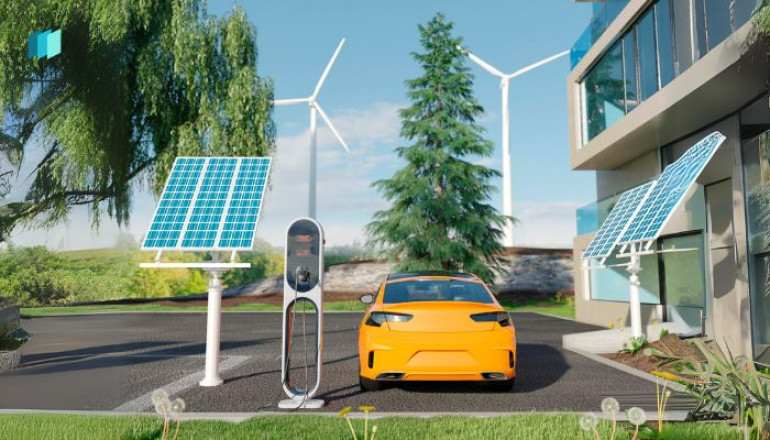
One effective way to utilise this surplus locally is by increasing daytime consumption. Electric vehicle (EV) charging presents a strong opportunity, as it not only absorbs excess solar power but also supports clean transportation goals.
India’s EV adoption is currently limited by insufficient charging infrastructure. To address this, the government is expanding public charging networks under the PM-DRIVE Scheme. Integrating rooftop solar with EV charging could unlock significant synergies between these initiatives.
Most rooftop solar systems under the PM Surya Ghar programme are relatively small, typically around 1 kW. Individually, they generate limited surplus energy. However, when aggregated across residential communities or apartment complexes, the combined surplus can be substantial.
Housing societies could pool this excess solar power to operate shared EV charging stations during the day. Such localised energy use would reduce the need to export surplus electricity to the grid in small, inconsistent quantities, improving overall system efficiency.
A large-scale example of this approach can be seen at VOC Port, where local solar generation is integrated with EV usage to enhance on-site energy consumption in a cost-effective manner.
The advantages of this model are significant. It can reduce stress on distribution networks, minimise voltage fluctuations, and lower the need for expensive transmission infrastructure. At the same time, EV users benefit from more accessible and potentially cheaper charging options.
Related News
NueGo Adds New Electric Bus Routes Across India, Expanding…
NueGo, the electric intercity bus brand operated by GreenCell Mobility and backed…

Sona Comstar and DENSO Form Two Joint Ventures to…
Sona BLW Precision Forgings Ltd. (Sona Comstar) has entered into definitive joint…
Kazam Rolls Out ‘EV-Ready Ghar’ Initiative to Strengthen…
EV charging and energy management company Kazam has launched its nationwide 'EV-Ready…