Follow India Renewable Energy News on WhatsApp for exclusive updates on clean energy news and insights
NITI Aayog Proposes One-Time Discom Debt Takeover, Green Bonds for Nuclear Power
Feb 12, 2026
Report outlines restructuring roadmap for power distribution reforms and net-zero transition
NITI Aayog has proposed a one-time debt takeover and restructuring scheme for power distribution companies (discoms), with conditional support linked to performance benchmarks. The recommendation forms part of its report on Viksit Bharat and Net Zero for the power sector, released on Tuesday.
The report states that financial support should be tied to clearly defined, time-bound milestones aimed at efficiency gains and improved governance. It emphasises that financially viable discoms are essential for sustained investment in grid modernisation. Utilities have also been advised to explore additional revenue streams by monetising non-core assets, such as leasing unused land, and increasing participation in non-power purchase agreement (non-PPA) power markets.
At the report’s launch, Power Secretary Pankaj Agarwal flagged the risks associated with long-term power purchase agreements (PPAs) of up to 25 years, noting that such contracts create demand risks for discoms. He said the government aims to introduce intermediary contracts and open up procurement for the commercial and industrial (C&I) segment, enabling direct power procurement without high surcharge costs.
The report further recommends gradual tariff rationalisation to better reflect the cost of supply while protecting low-income households through targeted subsidies. It also suggests introducing alternative franchise models in power distribution and expanding feeder segregation, which has already helped several states improve load management and rural power supply reliability.
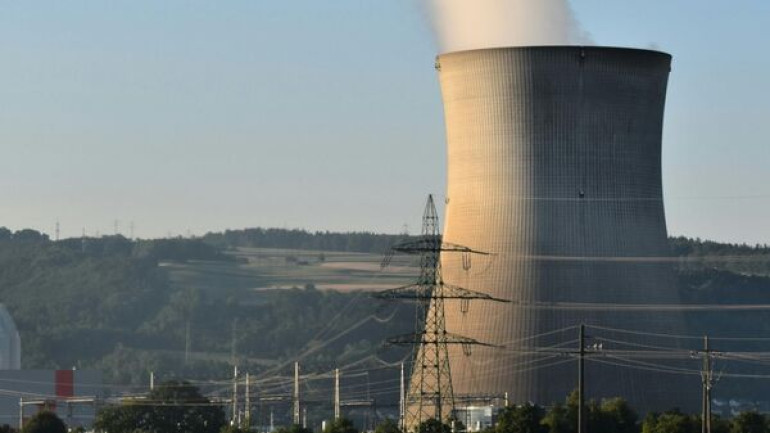
On nuclear energy, NITI Aayog stressed the need to implement the SHANTI Act to scale capacity to 200–300 GW by 2070. It proposed adopting public-private partnership (PPP) models to attract private investment and recommended making nuclear power eligible for green bond financing to mobilise global climate funds.
The report also called for viability gap funding (VGF) schemes for clean energy technologies, including concentrated solar power (CSP) and long-duration storage solutions such as pumped storage projects. In addition, it highlighted the need for large-scale deployment of carbon capture, utilisation, and storage (CCUS) technologies at coal-based plants. While the Union Budget has announced a Rs20,000 crore scheme for CCUS, the technology remains at the pilot stage, with implementation framework discussions expected shortly.
In a separate net-zero pathway report for transport, NITI Aayog projected that achieving net zero would require cumulative investment of $4.3 trillion by 2070 — around 25% higher than the $3.44 trillion projected under the current policy pathway. However, it described the additional investment as a strategic opportunity.
Under its modelling, transport sector energy demand is projected to decline to 200 million tonnes of oil equivalent (Mtoe) by 2070 under the Net Zero Scenario, about 40% lower than the 336 Mtoe projected under the Current Policy Scenario. The report recommends prioritising electrification of high-utilisation fleets such as buses, taxis, and logistics vehicles through aggregated procurement, Renewable Energy Services Company models, and corridor electrification.
Related News
Bihar Unveils Rs 1.40 Lakh Crore Energy Investment…
The Government of Bihar has presented an ambitious roadmap for transforming the…

GK Energy Revenue Jumps 71% in Q1 FY27 as Renewable…
GK Energy, a decentralised renewable energy infrastructure company focused on solar…
Siemens Energy India Q3 FY26 Revenue Surges 39.3%…
Siemens Energy India Ltd. delivered a strong financial performance in the third…