Follow India Renewable Energy News on WhatsApp for exclusive updates on clean energy news and insights
At ICGH 2025, SPDA Urges Bold Financing Models and Policy Support to Reduce Green Hydrogen Costs
Nov 17, 2025
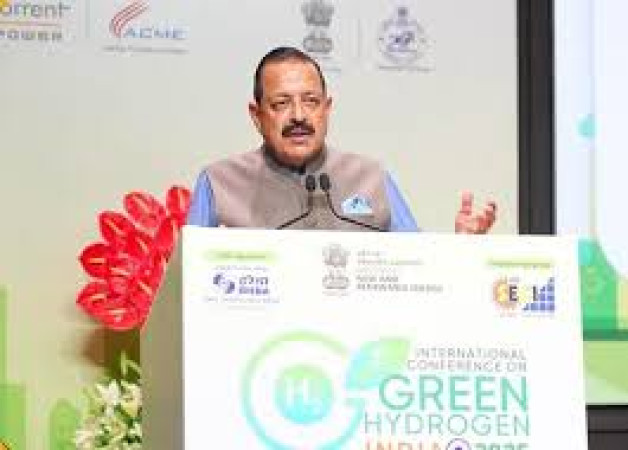
Innovative financial mechanisms and sharper policy measures will be essential to reduce the high production costs of green hydrogen and advance India’s clean energy transition. This was the central message from industry leaders during sessions hosted by the Sustainable Projects Developers Association (SPDA) at the 3rd International Conference on Green Hydrogen (ICGH) 2025.
SPDA organised two major engagements at the event: a panel discussion titled “Financing Green Hydrogen: Bridging the Cost Gap” and the India–France Roundtable with Industry CEOs on the Green Hydrogen Value Chain. Both gatherings were aimed at outlining a strategic pathway to scale India’s green hydrogen and derivatives sector.
The financing-focused panel brought together scientists, senior industry experts, global financial institutions, and lenders to discuss cost drivers, innovative funding models, international best practices, risk-mitigation options, and ways to secure long-term offtake. The session was moderated by Dr. Ashvini Kumar, former Managing Director of SECI, with a keynote address by Joshit Ranjan Sikidar, Director (Finance), SECI. Speakers included representatives from SBI, HDFC Bank, H2Global Foundation, SMBC, ACME and Ocior Group.
The India–France roundtable concentrated on strengthening cooperation under the bilateral green hydrogen roadmap established in 2022. Discussions spanned regulatory alignment, carbon certification, industrial collaboration, and joint research opportunities. Participants included senior officials from India’s Ministry of External Affairs, representatives from the French Embassy, and executives from CEA, IFI, EDF, ENGIE, HDF Energy and others.
Reflecting on India’s progress since launching the National Green Hydrogen Mission, Abhay Bakre, Mission Director at the Ministry of New and Renewable Energy, said the country is rapidly building a strong ecosystem supported by advancements in technology, skills, and standards. He emphasised that upcoming projects could significantly lower fossil fuel imports and decarbonise multiple sectors.
Dr. Sadre Alam, Director of the NEST Division at the Ministry of External Affairs, highlighted the importance of building an export-oriented green hydrogen economy while also broadening domestic demand as industries transition toward cleaner fuels.
Avaada Group Chairman Vineet Mittal stressed the urgency of accelerating India’s clean energy transformation. He noted that achieving the nation’s goals of Atmanirbhar Bharat and Viksit Bharat will be difficult without rebalancing the fuel mix and suggested that mandate-driven policies—like those previously used to scale wind and solar—could drive green hydrogen adoption in hard-to-abate sectors.
SPDA Governing Council Member Ravi Verma spoke about India’s evolving green hydrogen ecosystem and encouraged deeper collaboration with French companies. He reaffirmed that the Indian government is actively working to address industry challenges through measures aimed at reducing costs, improving efficiencies, and promoting technology localisation.
Despite the strong progress, several challenges continue to slow commercial viability—including high electrolyser and renewable energy costs, limited offtake security, and inadequate transport and storage infrastructure. Industry participants agreed that coordinated action across financing, policy development, and international partnerships is vital to enable large-scale deployment and make green hydrogen price-competitive.
Related News
Oriana Power Plans Rs 4,500 Crore Integrated Green…
Oriana Power has signed a Memorandum of Understanding (MoU) with the Government…

GreenH Electrolysis Powers India’s First Indigenous…
GreenH Electrolysis has successfully developed the hydrogen production and refuelling…

ACME-IHI Green Ammonia Project in Odisha Secures Japan's…
The green ammonia joint venture between ACME Group and Japan's IHI Corporation has…