Follow India Renewable Energy News on WhatsApp for exclusive updates on clean energy news and insights
CPSUs Partner with States to Develop 33 Solar Parks Amid Land Acquisition Challenges
Dec 23, 2025
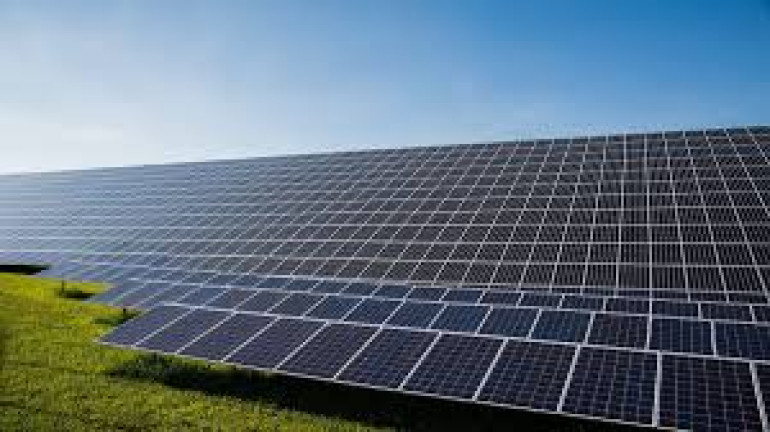
Facing persistent land acquisition hurdles, Central Public Sector Undertakings (CPSUs) are increasingly collaborating with state governments to develop large-scale solar parks across India. Of the 55 solar parks approved under the Development of Solar Parks and Ultra-Mega Solar Power Projects scheme, 33 parks are being developed or are under development through CPSU–state partnerships, accounting for a combined capacity of 20.7 GW, according to data shared by the Ministry of New and Renewable Energy (MNRE).
Land availability remains one of the biggest bottlenecks for utility-scale solar projects, as land acquisition falls under the jurisdiction of state governments. Identifying large, contiguous parcels—particularly non-agricultural or non-ecologically sensitive land—has proven difficult. To address this, CPSUs are forming joint ventures (JVs) with state governments and their entities, giving states an equity stake in projects and facilitating smoother land identification and acquisition.
Public sector companies such as NHPC, SJVN, and NTPC Green Energy (NGEL) have established state-specific joint ventures to execute solar projects across multiple regions. Under this model, state governments participate as equity partners and, in return, support land allocation and local clearances, helping accelerate project execution.
The land challenge has also been highlighted at the parliamentary level. Earlier this month, the Parliamentary Standing Committee (PSC) on Energy observed that land suitable for solar development often overlaps with agriculturally productive areas or ecologically sensitive zones, creating competition with food security and conservation priorities.
MNRE also informed that, in consultation with state governments, it has identified renewable energy potential zones totalling around 258 GW across five states, in addition to the 500 GW transmission planning undertaken by the Central Electricity Authority (CEA). However, further details on these zones were not disclosed.
Launched in 2014, the Solar Parks and Ultra-Mega Solar Power Projects scheme encourages states and Union Territories to prioritise government-owned waste or non-agricultural land for solar park development. As of October 2025, the scheme has approved 55 solar parks with a cumulative sanctioned capacity of nearly 40 GW across 13 states.
Of this capacity, approximately 14.9 GW has already been commissioned, while the remaining projects are at various stages of implementation. MNRE noted that CPSU–state partnerships have played a key role in advancing projects under the scheme by reducing land-related delays and improving coordination between central and state authorities.
Related News
Himachal Pradesh Commissions 500 kW Solar Plant in…
Himachal Pradesh has strengthened its clean energy and rural development initiatives…
SJVN Commissions India's Largest 1 GW Single-Site…
State-owned power producer SJVN Limited has commissioned a 1,000 MW (1 GW) Domestic…
JSW Breaks Ground on Green Steel Plant in Andhra Pradesh…
Andhra Pradesh has strengthened its position as an emerging hub for sustainable…