Follow India Renewable Energy News on WhatsApp for exclusive updates on clean energy news and insights
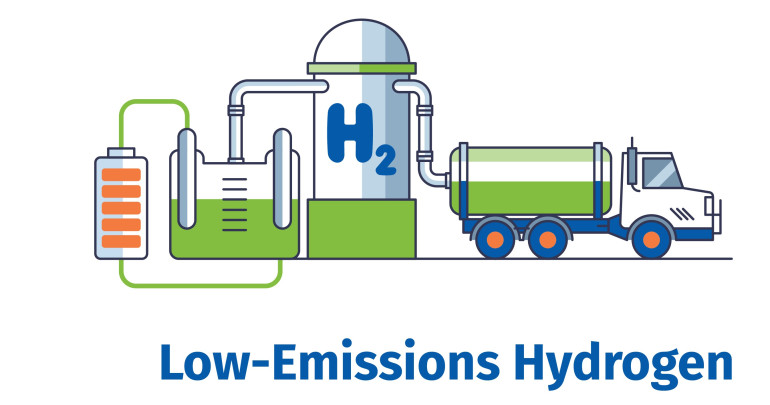
Global Low-Emissions Hydrogen Production Projected to Hit One Million Tons by 2025
Oct 27, 2025
Global production of low-emissions hydrogen is projected to reach one million tons by the end of 2025, according to the International Energy Agency’s (IEA) Global Hydrogen Review 2025. Despite a 10% growth in 2023, low-emissions hydrogen still accounts for less than 1% of total global hydrogen production. The sector continues to face challenges such as high costs, limited demand, regulatory uncertainty, and slow infrastructure development.
Since 2020, over 200 low-emission hydrogen projects have reached final investment decisions — a significant increase from only a few pilot initiatives a few years earlier. Technological advancements across the hydrogen value chain are accelerating, indicating a sector that is maturing and laying the groundwork for large-scale deployment.
Hydrogen produced through electrolysis grew by 60% in 2024, surpassing 100 kilotons, though it represents just one-sixth of all low-emission production methods. Capital investment in low-emission hydrogen projects rose by 80% year-on-year to Rs 4.3 billion in 2024, split almost evenly between electrolysis and carbon capture, utilization, and storage (CCUS) initiatives. By 2025, electrolysis is expected to account for 80% of total project spending, despite contributing only 56% of hydrogen output under construction due to its higher capital intensity.
Europe remains the leading hub, contributing nearly 25% of the announced production by 2030. However, project delays and weak market uptake have caused a 20% year-on-year decline. North and Latin America together represent about 35% of the global project pipeline, while China’s electrolyzer capacity surged 30%, entirely driven by new installations. China now dominates global electrolyzer manufacturing, holding 65% of installed and approved capacity and nearly 60% of global production capability.
Falling natural gas prices and rising electrolyzer costs have widened the cost gap between fossil-based and renewable hydrogen. Nevertheless, this disparity is expected to narrow by 2030 as technology costs decline and carbon pricing becomes more robust. In China, renewable hydrogen could reach cost parity by the end of the decade, supported by lower manufacturing and capital expenses.
The report also highlights that global offtake agreements for low-emission hydrogen remain limited, covering less than 2 million tons annually — just about 5% of total global hydrogen production. Southeast Asia is emerging as a new growth hub, with production expected to reach 480 kilotons per annum by 2030, although most projects are still in early development stages.
By 2030, global low-emissions hydrogen production is expected to reach around 37 million tons annually — revised down from the previously estimated 49 million tons per annum. Operational and under-construction projects are projected to total 4.2 million tons per annum, representing a fivefold increase from 2024 levels. The IEA anticipates that low-emission hydrogen could account for 4% of global hydrogen production by 2030, mirroring the early growth trajectory of the solar energy sector.
To accelerate progress, the report calls for stronger financial support for ready-to-build projects, faster policy execution, and closer collaboration between governments and industry to drive demand and establish lead markets for sustainable hydrogen products. According to Deloitte’s Global Green Hydrogen Outlook 2023, the global clean hydrogen market could expand to 170 million tons by 2030 and surpass 600 million tons by 2050, underscoring its pivotal role in the global energy transition.
Related News
Oriana Power Plans Rs 4,500 Crore Integrated Green…
Oriana Power has signed a Memorandum of Understanding (MoU) with the Government…
GreenH Electrolysis Powers India’s First Indigenous…
GreenH Electrolysis has successfully developed the hydrogen production and refuelling…
ACME-IHI Green Ammonia Project in Odisha Secures Japan's…
The green ammonia joint venture between ACME Group and Japan's IHI Corporation has…