Follow India Renewable Energy News on WhatsApp for exclusive updates on clean energy news and insights
How India Is Managing Power Supply Challenges Amid Global Conflict
Mar 26, 2026
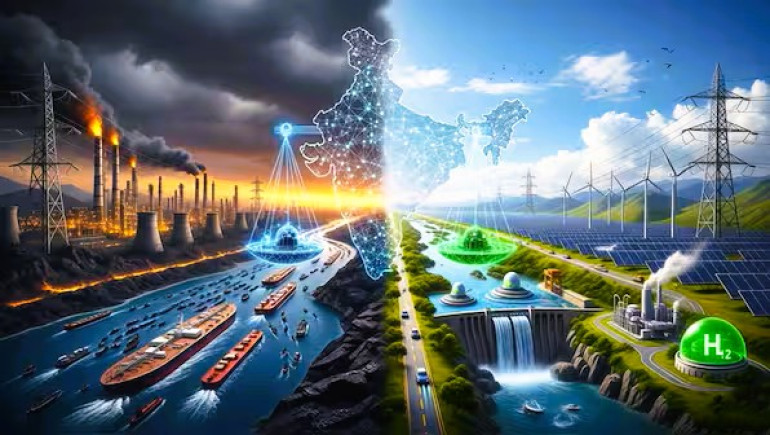
As global geopolitical tensions continue to disrupt energy markets, India has adopted a multi-pronged strategy to ensure stable power supply and shield its economy from potential electricity shortages. While the country has not faced a widespread power crisis, fluctuations in fuel availability and prices—particularly in coal, oil, and liquefied natural gas—have prompted the government to act proactively to maintain energy security.
A key pillar of this approach has been strengthening domestic coal production. With coal forming the backbone of India’s power generation, the government has focused on increasing output through Coal India Limited and ensuring that thermal power plants maintain adequate stock levels. In periods of high demand, utilities have also been directed to blend imported coal to prevent supply disruptions, helping the country avoid large-scale outages even during peak consumption.
At the same time, India is accelerating its transition toward renewable energy to reduce dependence on imported fuels. Large-scale solar and wind projects, along with initiatives such as rooftop solar schemes, are being promoted to diversify the energy mix. These efforts align with the country’s long-term goal of significantly expanding non-fossil fuel capacity, thereby reducing exposure to global price volatility and supply shocks.
The government has also taken steps to diversify fuel sourcing and manage imports more strategically. In response to global disruptions, including the Russia-Ukraine conflict, India has broadened its crude oil procurement network and entered into more stable, long-term agreements for energy supplies. This has helped cushion the domestic market from sudden international price spikes.
In addition, investments in transmission infrastructure and grid modernisation have strengthened the resilience of the power system. A unified national grid allows electricity to be efficiently distributed across regions, ensuring that local shortages can be balanced with surplus supply from other areas. This has significantly reduced the risk of widespread blackouts.
Alongside supply-side measures, the government is also focusing on managing demand through energy efficiency programs and consumption optimisation. Initiatives promoting efficient appliances and lighting have contributed to lowering peak electricity demand, easing pressure on the grid during critical periods.
Overall, India’s strategy reflects a balanced and forward-looking approach—leveraging conventional energy sources for immediate stability while steadily expanding clean energy capacity for long-term resilience. In the face of global uncertainty, these measures have enabled the country to maintain a reliable power supply and position itself for a more secure and sustainable energy future.
Related News

International Solar Alliance Seeks Consultants to…
The International Solar Alliance (ISA) has invited bids from eligible consulting…
Hinduja Renewables Crosses 4 TWh Green Power Generation…
Hinduja Renewables Energy Private Limited (HREPL), the renewable energy arm of the…
Mahavitaran CMD Lokesh Chandra Honoured for Driving…
Lokesh Chandra, Chairman and Managing Director of Maharashtra State Electricity…