Follow India Renewable Energy News on WhatsApp for exclusive updates on clean energy news and insights
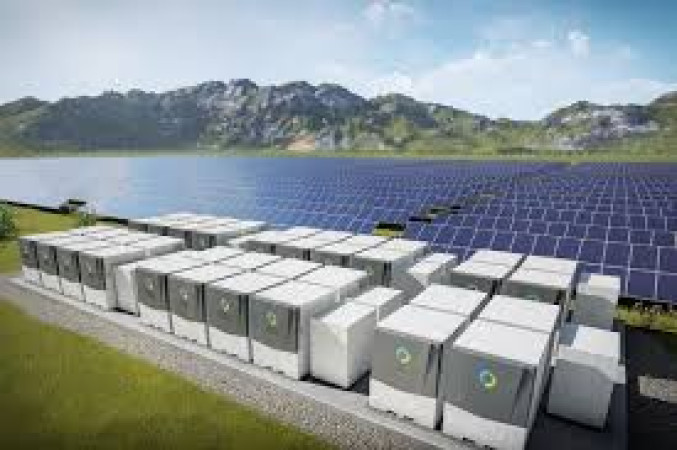
India Eyes 230 GWh Energy Storage to Reliably Meet 300 GW Peak Power Demand
Dec 25, 2025
As India advances towards its target of 500 GW of non-fossil fuel power capacity by 2030, the country’s power sector is entering a phase where grid stability, flexibility, and round-the-clock reliability are becoming as critical as capacity expansion, according to Bhupinder Singh Bhalla, Former Secretary, Ministry of New and Renewable Energy (MNRE).
Speaking at the Indian Power and Energy Storage Conference 2025, Bhalla highlighted that India has already achieved 254 GW of renewable energy capacity, taking non-fossil sources beyond 50 per cent of total installed power capacity.
The conference, organised by FICCI with support from the Ministry of Power, MNRE, and the Central Electricity Authority, brought together policymakers, regulators, and industry leaders to discuss the challenges of integrating renewable energy while managing existing thermal assets.
Bhalla noted that renewable energy currently contributes 26 per cent of total electricity generation, with the country witnessing a historic peak of 51 per cent renewable generation on a single day this year. With peak electricity demand projected to approach 300 GW in the coming years and overall power demand growing at 6–7 per cent annually, he stressed that India would require nearly 230 GWh of energy storage capacity by 2030 to ensure grid stability, flexibility, and reliability.
Emphasising that capacity addition alone would no longer define success, Bhalla stated, “Reaching 500 GW is achievable, but the real challenge lies in integrating this capacity reliably into a rapidly expanding grid without compromising stability or affordability.”
Addressing technology, markets, and manufacturing, RPV Prasad, Managing Director, Envision Energy India, said India is entering a decisive phase of high battery and energy storage penetration aligned with its renewable energy goals.
“India is at a tipping point where declining battery costs, fast-charging ecosystems, and strong policy support can transform storage from a balancing tool into a core grid resource delivering resilience and flexibility at scale,” Prasad said.
He cautioned against ultra-low bidding and weak technical standards, calling for robust safety frameworks, global best practices, and diversified use cases. Prasad also underscored the need to allow energy storage projects to stack revenues across grid services, demand response, and ancillary markets, while longer-duration storage solutions evolve to provide baseload-like reliability.
Providing a market and investment perspective, Ashish Mittal, Director – Energy and Commodities at CRISIL, noted that energy storage has become the defining theme of India’s power sector, with over 212 GWh of storage capacity already tendered over the past five to six years.
“Energy storage has moved from concept to execution, but this is only the beginning. Achieving India’s 500 GW non-fossil target will require a cohesive national and state-level regulatory framework that gives investors long-term confidence,” Mittal said.
Highlighting the role of innovative financing, Mittal pointed to the importance of cap-and-floor mechanisms, viability gap funding, and storage-as-a-service models to de-risk investments and mobilise private capital at scale.
From a financing standpoint, Ashok Sharma, Deputy Managing Director, State Bank of India, observed that energy storage projects demand a fundamental shift in risk assessment and capital deployment.
“Energy storage is capital-intensive, with batteries accounting for a significant portion of project costs. Financing frameworks must evolve to reflect the unique risk and revenue profiles of these assets,” Sharma said.
He also emphasised the importance of domestic manufacturing and technology diversity, noting that India must accelerate storage manufacturing while remaining technology-agnostic, leveraging batteries, pumped storage, and emerging solutions to build resilient long-term infrastructure.
Summing up the discussions, Sandy Khera, Country Manager and CEO, Enel Green Power, stated that India’s energy transition has firmly moved from ambition to execution.
“As renewable capacity scales rapidly, energy storage is no longer optional—it is indispensable for ensuring grid reliability, round-the-clock power, and system-wide resilience,” Khera said.
While acknowledging early momentum driven by evolving policies, market structures, and financial participation, Khera cautioned against premature localisation mandates. He stressed the need for a portfolio-based approach, combining short-duration batteries, long-duration storage, and pumped hydro, to address diverse grid requirements and position storage as a strategic infrastructure asset for decades.
The two-day deliberations concluded with a clear consensus: energy storage now lies at the heart of India’s clean energy transition, playing a critical role in delivering reliable, affordable, and sustainable power as the country progresses toward its 500 GW non-fossil capacity goal by 2030.
Related News
Kalpa Power Secures 100 MWh BESS Manufacturing Capacity…
Energy management company Kalpa Power has signed a Memorandum of Understanding (MoU)…
Government Opens Global Bidding for 10 GWh ACC Battery…
The Ministry of Heavy Industries (MHI) has invited global bids for the establishment…
Hitachi Energy Wins 165 MW/330 MWh Battery Storage…
Hitachi Energy has secured its first Battery Energy Storage System (BESS)…