Follow India Renewable Energy News on WhatsApp for exclusive updates on clean energy news and insights
India’s Power Capacity Reaches 5.05 Lakh MW as Non-Fossil Energy Overtakes Fossil Fuels
Dec 05, 2025
India’s total installed power capacity has climbed to 5.05 lakh MW, with non-fossil fuel sources surpassing fossil-based generation for the first time—marking a major milestone in the country’s clean energy transition.
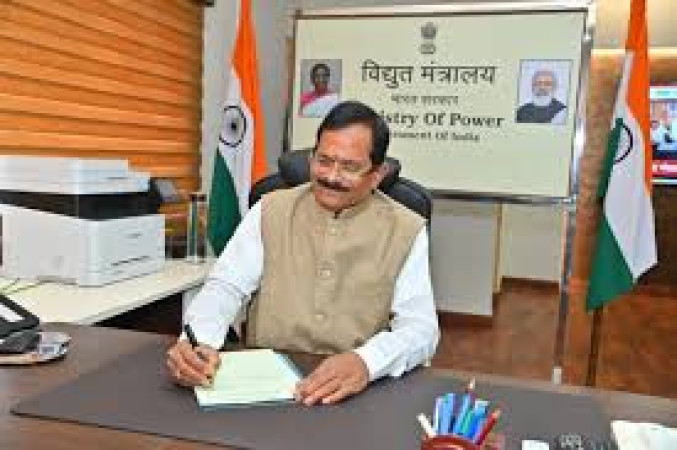
According to data shared in the Rajya Sabha by Minister of State for Power Shripad Yesso Naik, India’s installed capacity stood at 5,05,023 MW as of October 31, 2025. Non-fossil sources contributed 2,59,423 MW, slightly higher than the 2,45,600 MW generated from fossil fuels. Of the non-fossil total, renewable energy alone accounts for 2,50,643 MW.
This shift comes amid strong central government policies aimed at achieving 500 GW of non-fossil capacity by 2030. Key measures include waivers on ISTS charges for qualifying solar, wind, offshore wind, and green hydrogen projects, standard bidding guidelines, and a 50 GW annual renewable procurement trajectory. India also permits 100 percent FDI under the automatic route and continues to enhance transmission networks under the Green Energy Corridor programme.
Flagship initiatives such as PM-KUSUM, the PM Surya Ghar Muft Bijli Yojana, the National Programme on High Efficiency Solar PV Modules, and the National Green Hydrogen Mission have played a major role in accelerating adoption of clean energy technologies. The government has additionally issued a Renewable Consumption Obligation trajectory through FY 2029–30, with penalties for non-compliance and provisions mandating decentralized renewable usage.
India is also expanding its focus on nuclear power as a long-term, clean baseload option. The government aims to achieve 100 GW of nuclear capacity by 2047, supported by a Rs20,000 crore Nuclear Energy Mission to develop indigenous small modular reactors. Amendments to the Atomic Energy Act and the nuclear liability framework are being considered to allow greater private participation. Recently identified uranium reserves, including deposits that extend the life of the Jaduguda mine by over 50 years, are expected to strengthen nuclear fuel security.
To ensure the stability of a renewables-heavy grid, India is rapidly building out energy storage capabilities. A battery storage capacity of 13.22 GWh is currently being developed under a viability gap funding scheme, with an additional 30 GWh approved this year. Ten pumped storage projects with a combined capacity of 11,870 MW are also under construction. Offshore wind development has gained momentum as well, with viability support sanctioned for the first 1 GW.
The National Green Hydrogen Mission remains central to India’s decarbonisation strategy, targeting the production of 5 MMT of green hydrogen annually by 2030, supported by 125 GW of dedicated renewable capacity. Officials say the mission will not only curb emissions but also unlock major industrial and economic opportunities.
Within the fossil fuel portfolio, coal continues to dominate with 2,18,258 MW, followed by gas (20,132 MW), lignite (6,620 MW), and diesel (589 MW). Among renewables, solar leads with 1,29,924 MW, followed by wind at 53,600 MW. Hydropower—including pumped storage—totals 50,348 MW, while nuclear contributes 8,780 MW.
India crossed the milestone of sourcing over 50 percent of its installed capacity from non-fossil fuels in June 2025—over five years earlier than its Nationally Determined Contributions (NDC) deadline. The government says this achievement strengthens India’s long-term transition pathway and reinforces its commitment to achieving net-zero emissions by 2070.
Related News
Delhi Needs Faster Rooftop Solar and Battery Storage…
Delhi will need to accelerate the deployment of rooftop solar, battery energy storage,…
NHPC Strengthens Clean Energy Portfolio with 40-Year…
NHPC Limited has signed a long-term Power Purchase Agreement (PPA) with Chhattisgarh…
REC Commits Rs 5,000 Crore to Boost Renewable Energy…
REC Ltd. has signed a Memorandum of Understanding (MoU) with the Tripura Renewable…