Follow India Renewable Energy News on WhatsApp for exclusive updates on clean energy news and insights
Maharashtra Enforces Bamboo Biomass Blending in Thermal Power Plants from December 2025
Dec 06, 2025
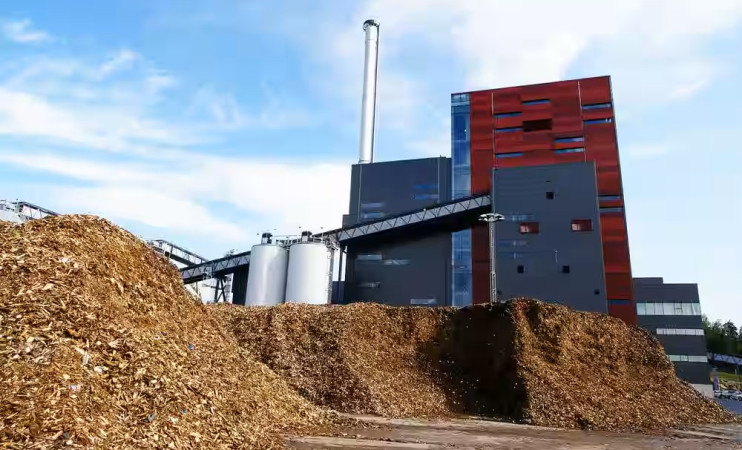
Maharashtra will require all state-run and private thermal power plants to mix 5–7 percent bamboo-based biomass or charcoal with coal beginning December 2, 2025. The mandate forms a key part of the newly introduced Maharashtra Bamboo Industry Policy, 2025, and represents the state’s first formal step toward integrating bamboo into its energy portfolio.
Under the policy, the government has earmarked Rs 1,534 crore for the first five years (2025–2030) and sanctioned a total incentive package of Rs 11,797 crore over a 20-year period. The initiative is designed to lower emissions from coal-fired plants while creating a robust industrial market for bamboo cultivation and processing.
Officials note that although bamboo production in Maharashtra has slowed in recent years, the state retains strong potential for large-scale bamboo cultivation. Often called “green gold,” bamboo is one of the fastest-growing renewable biomaterials, capable of absorbing significant amounts of carbon dioxide, restoring degraded land, and requiring fewer resources than conventional timber or energy crops. These qualities make it an attractive, low-emission fuel substitute for industrial applications.
The government expects bamboo biomass blending to help reduce lifecycle emissions, decrease dependence on fossil fuels, and allow co-firing with minimal changes to existing plant infrastructure. The move also aligns with Maharashtra’s climate priorities and India’s ongoing efforts to decarbonize its power sector.
While biomass co-firing has been promoted nationally, Maharashtra is among the first states to introduce a dedicated bamboo-based blending requirement, citing its rapid regenerative ability and availability. The policy is expected to stimulate a full value chain—from plantation and harvesting to pellet manufacturing and charcoal production. Regions like Gadchiroli, Chandrapur, Satara, Kolhapur, and Nashik are likely to emerge as major bamboo-processing centers.
Government estimates suggest the initiative could generate nearly five lakh direct and indirect jobs across farming, processing, and industry-related activities. The policy also aims to boost bamboo-centric industrial clusters, empower farmer producer organizations, expand contract farming, and support MSMEs involved in biomass and biochar production.
By substituting a portion of coal with bamboo biomass, Maharashtra aims to attract global green investment and position itself within the fast-developing bamboo-based carbon credit market, which the policy intends to formalize.
Related News
NavPrakriti and NASH Energy Partner to Advance Battery…
NavPrakriti has formed a strategic partnership with NASH Energy to strengthen lithium-ion…
Maharashtra Enforces Bamboo Biomass Blending in Thermal…
Maharashtra will require all state-run and private thermal power plants to mix 5–7…
Union Minister Highlights India’s Clean Energy Shift…
Union Power and Housing & Urban Affairs Minister Manohar Lal engaged with leaders…