Follow India Renewable Energy News on WhatsApp for exclusive updates on clean energy news and insights
MNRE, Finance Ministry Discuss New Schemes for Floating Solar and Agri-PV: Sarangi
Dec 01, 2025
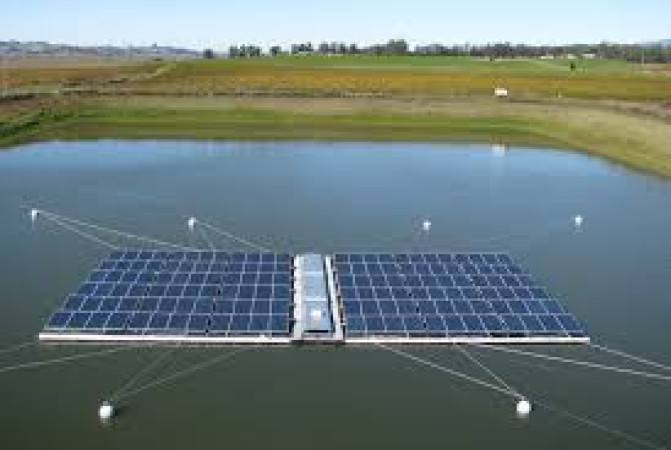
The Ministry of New and Renewable Energy (MNRE) is currently in talks with the Ministry of Finance to develop new schemes aimed at scaling floating solar and agrivoltaic projects—two renewable solutions that do not require extensive land use. MNRE Secretary Santosh Kumar Sarangi shared the update while speaking at FICCI’s 98th Annual General Meeting and Annual Convention in New Delhi.
Sarangi highlighted that India’s energy demand is set to rise sharply, making it essential to build a balanced energy mix comprising renewable energy, nuclear power, and coal-based generation to ensure baseload stability. He reiterated India’s targets of achieving 500 GW of renewable energy capacity by 2030 and an estimated 1,800 GW by 2047, with solar energy contributing the largest share.
He noted that transmission infrastructure remains a major bottleneck, given the longer gestation period for high-voltage transmission lines (4 to 5.5 years) compared with renewable projects, which can be built within 1 to 2 years. To reduce grid congestion and land-related hurdles, Sarangi pointed to regulatory reforms such as updated CERC norms, splitting NIAs, and promoting distributed renewable solutions—like agrivoltaics in agriculturally rich states and floating solar in the Northeast. He also mentioned that the Green Energy Corridor is expanding circuit kilometers to strengthen state-level evacuation networks.
On tariff trends, Sarangi explained that the marginally higher tariff levels, around Rs2.50 per unit, reflect deliberate policy choices aimed at boosting domestic manufacturing through DCR requirements and supporting India’s Atmanirbhar ambitions as the country moves toward its 1,800 GW renewable target.
He expressed optimism about emerging technologies such as perovskite solar cells, stating that if long-term stability can be achieved, they could potentially reduce power costs to Rs1.00 per unit.
Sarangi also underlined the critical role of state governments in renewable deployment—particularly in land allocation, evacuation approvals, and signing Power Purchase Agreements (PPAs). He highlighted schemes such as PM-KUSUM, which have helped states reduce discom losses from agricultural feeders and rural consumer segments.
Related News
MNRE’s ALMM-II Exemption Extension Eases Solar Project…
The Ministry of New and Renewable Energy (MNRE) has extended the exemption from…
MNRE Issues Fresh Clarification on Prototype Wind…
The Ministry of New and Renewable Energy (MNRE) has clarified that prototype wind…
Bihar Removes Rooftop Solar Application and Meter…
In a significant move to encourage residential rooftop solar installations, the…