
Follow India Renewable Energy News on WhatsApp for exclusive updates on clean energy news and insights
Saatvik Green Energy Commissions 2 GW In-House EPE Film Plant in Haryana
Dec 23, 2025
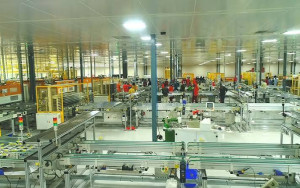
Saatvik Green Energy (SGEL) has commissioned a 2 GW in-house EPE (Protective Encapsulant) film manufacturing facility at its Ambala campus in Haryana, marking a major step toward deeper vertical integration in its solar manufacturing operations.
The new facility is located within Saatvik’s existing solar module manufacturing complex and represents a key milestone in the company’s efforts to strengthen supply-chain self-reliance. With this commissioning, SGEL joins a limited group of Indian manufacturers with captive encapsulant production capability, a critical component in high-performance solar photovoltaic modules.
According to the company, in-house EPE film production enhances control over product quality, operational efficiency, and long-term module reliability, while aligning with national initiatives such as Make in India and Atmanirbhar Bharat.
Commenting on the development, Prashant Mathur, Chief Executive Officer of Saatvik Green Energy, said the commissioning supports the company’s roadmap toward fully integrated solar manufacturing. He noted that localising key components helps build a strong domestic value chain, supporting India’s clean energy transition and long-term energy security.
Encapsulant films play a vital role in solar modules by protecting cells, ensuring effective layer adhesion, maintaining electrical insulation, and enabling durability under diverse operating conditions. By bringing EPE film production in-house, Saatvik now has direct oversight of material formulation, optical performance, and lamination quality. This ensures consistent standards across its entire module portfolio, including M10 and G12 high-wattage formats, the company stated.
The co-location of the EPE line with module manufacturing delivers operational advantages such as near-zero transport time, just-in-time material availability, and the elimination of inter-facility logistics. This integration supports lean manufacturing practices, improves shop-floor productivity, and ensures a seamless production flow across module assembly operations.
Saatvik added that the in-house facility also enables cost optimisation by removing expenses related to external transportation, freight, insurance, and heavy-duty packaging. These efficiencies reduce material handling costs, lower module production expenses, and support the company’s sustainability objectives.
From a risk management standpoint, captive EPE production strengthens supply-chain resilience by reducing reliance on imports and third-party suppliers. This mitigates exposure to global supply disruptions, shortages, and price volatility, ensuring uninterrupted production in a rapidly expanding solar market.
The facility also enhances Saatvik’s innovation and customisation capabilities, allowing faster development of advanced encapsulation solutions for high-efficiency, bifacial, and large-format modules. This flexibility enables the company to tailor products for utility-scale, commercial and industrial (C&I), and export markets, further strengthening its competitive positioning.
Related News

Navitas Solar and Caelux Partner to Manufacture 5…
Indian solar module manufacturer Navitas Solar has entered into a five-year strategic…
Avaada Joins ALMM List-II with 610 MW TOPCon Cell…
India's domestic solar manufacturing ecosystem has received another boost as the…

Rayzon Solar Partners with Caelux to Develop 5 GW…
Indian photovoltaic manufacturer Rayzon Solar has entered into a strategic five-year…