Follow India Renewable Energy News on WhatsApp for exclusive updates on clean energy news and insights
Solar Cell Manufacturing Is Not an Excel Project
Dec 24, 2025
India’s solar manufacturing sector is entering a critical phase. A wave of announcements promising multi-gigawatt solar cell capacity, accelerated timelines, and alignment with Production Linked Incentive (PLI) schemes has created an impression of rapid and assured progress. On paper, the momentum appears compelling. Yet beyond spreadsheets and boardroom presentations, a far more complex reality is unfolding on the factory floor.
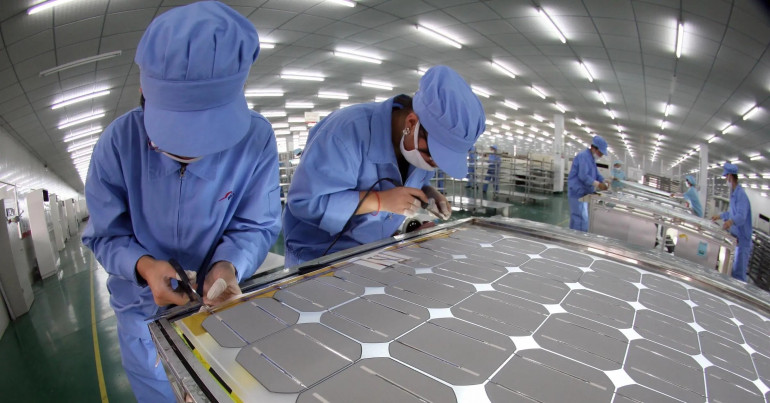
A growing number of new entrants are approaching solar cell manufacturing with assumptions drawn from module assembly. The belief that cell manufacturing can be executed in a similar manner is not only flawed but financially dangerous. Module manufacturing is largely an assembly-driven operation. With standardised equipment, established workflows, and disciplined execution, production lines can typically be stabilised within predictable timeframes. Solar cell manufacturing, however, is fundamentally different. It is a deeply process-driven, technology-intensive activity that sits at the intersection of semiconductor physics, surface chemistry, thin-film engineering, high-temperature diffusion, and ultra-tight process control. Performance depends not merely on installed equipment, but on the depth of process understanding behind it.
This distinction matters more today than ever before because the protective environment that once cushioned inefficiencies no longer exists. Earlier generations of Indian cell manufacturers benefited from limited domestic competition, Domestic Content Requirement protection, lower efficiency expectations, and margins that could absorb yield losses. That era has decisively ended. India is now moving rapidly towards multi-gigawatt domestic cell capacity, with efficiency benchmarks converging toward global standards. Customers are increasingly cost-conscious and performance-driven, and even a marginal efficiency loss can significantly impact profitability. In this environment, domestic origin alone is no longer a competitive advantage.
The industry has already paid a price for this learning curve. Established Indian players such as Waaree, Emmvee, and Premier have experienced first-hand the consequences of premature technology selection, underestimated facility and utility requirements, extended stabilisation periods, and unplanned capital expenditure to correct design and process gaps. Many survived only by committing additional capital, absorbing longer timelines, and in some cases rebuilding critical parts of their plants after commissioning. For new entrants operating in a far more competitive and margin-sensitive market, the tolerance for such missteps is considerably lower.
One of the most underestimated risks in solar cell manufacturing lies in utility design. Process gases, chemical distribution systems, ultra-pure water infrastructure, power quality and redundancy, exhaust handling, and abatement are not secondary considerations. They directly define the ceiling of cell efficiency, yield stability, equipment uptime, and long-term scalability. Errors in utility sizing or integration can permanently cap plant performance, and once a facility is built, correcting these limitations is both technically challenging and financially burdensome.
Technology selection further compounds this challenge. Decisions between platforms such as PERC, TOPCon, HJT, or emerging hybrid architectures are often treated as procurement exercises driven by equipment pricing or vendor assurances. In reality, technology choice is a strategic commitment that requires deep internal process knowledge, long-term roadmap clarity, and the capability to absorb, stabilise, and continuously improve the chosen platform. Without a strong in-house technical backbone, even the most advanced technology risks underperforming under real manufacturing conditions.
As incentives gradually normalise and competition intensifies, policy support alone will not shield inefficiency. The only durable advantage in solar cell manufacturing will come from technical capability—experienced engineering teams, robust process control, correctly designed utilities from day one, and a long-term mindset that prioritises sustainable performance over short-term capital savings.
Solar cell manufacturing is not an Excel-driven planning exercise. It is a knowledge-intensive, process-critical industry where early technical decisions compound over time, either creating lasting advantage or locking in structural weakness. Companies that treat cell manufacturing as an extension of module assembly will struggle to remain competitive. Those that invest early in people, engineering depth, and process excellence will define the future of India’s solar manufacturing ecosystem.
Related News

Navitas Solar and Caelux Partner to Manufacture 5…
Indian solar module manufacturer Navitas Solar has entered into a five-year strategic…
Avaada Joins ALMM List-II with 610 MW TOPCon Cell…
India's domestic solar manufacturing ecosystem has received another boost as the…

Rayzon Solar Partners with Caelux to Develop 5 GW…
Indian photovoltaic manufacturer Rayzon Solar has entered into a strategic five-year…