Follow India Renewable Energy News on WhatsApp for exclusive updates on clean energy news and insights
Supreme Court Clarifies Tariff Powers: State Regulators Hold Authority but Must Align with Policy Intent
Mar 27, 2026
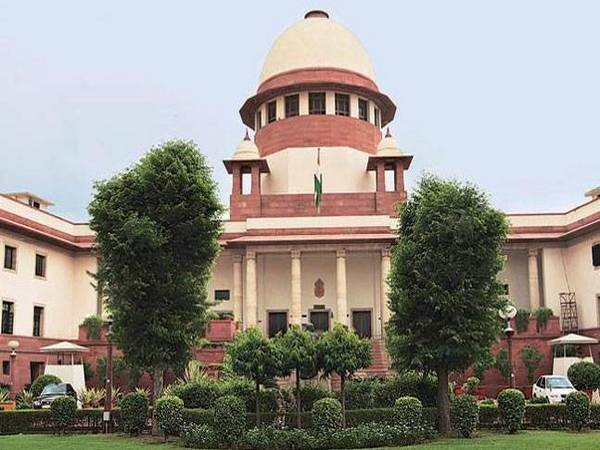
In a significant ruling on renewable energy incentives, the Supreme Court of India has affirmed that state electricity regulators have exclusive authority to determine power tariffs, while emphasising that such decisions must remain consistent with broader government policies.
The judgment came in the case involving wind energy incentives, where a bench comprising Justices P S Narasimha and Atul S Chandurkar examined whether tariff-setting bodies could adjust rates by factoring in central subsidies. The Court held that tariff determination is the sole domain of State Electricity Regulatory Commissions (SERCs), but cautioned against actions that undermine the purpose of policy-driven incentives.
The dispute originated from a decision by the Andhra Pradesh Electricity Regulatory Commission, which had considered a central government incentive while fixing tariffs for wind power projects. This incentive, introduced in 2009, provided Rs 0.50 per unit of electricity generated, aimed at encouraging investment in renewable energy and boosting grid-connected green power capacity.
However, the Court ruled that such incentives are meant to directly benefit power producers and should not be used to reduce tariffs for distribution companies. Upholding the view of the Appellate Tribunal for Electricity, the apex court clarified that regulators must ensure incentives serve their intended purpose rather than being absorbed into tariff calculations.
At the same time, the Court highlighted the need for a coordinated approach within the power sector, where central and state governments, regulators, and other stakeholders work in alignment. It noted that while regulators enjoy wide-ranging powers, these must be exercised in a manner that supports policy objectives, including environmental and social goals.
The ruling reinforces a balanced framework—granting regulators autonomy in tariff setting while ensuring that policy instruments, especially those designed to promote renewable energy, are implemented effectively without dilution.
Related News

Tamil Nadu Unveils Rs 1 Lakh Rooftop Solar Subsidy…
The Tamil Nadu Government has announced a new rooftop solar subsidy of up to Rs…

MERC Clears MSEDCL’s 2,269 MW Distributed Solar Procurement…
The Maharashtra Electricity Regulatory Commission (MERC) has approved the tariffs…

OERC Proposes New 10 MW Distributed Renewable Energy…
The Odisha Electricity Regulatory Commission (OERC) has proposed a new regulatory…