Follow India Renewable Energy News on WhatsApp for exclusive updates on clean energy news and insights
Bihar Unveils Rs 1.40 Lakh Crore Energy Investment Pipeline, Targets Renewable-Led Power Sector Growth
Aug 09, 2026
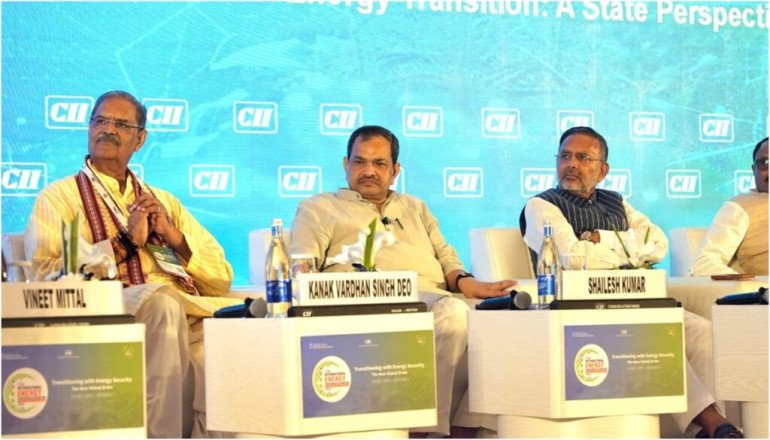
The Government of Bihar has presented an ambitious roadmap for transforming the state's power sector into a cleaner, more technology-driven and investment-ready ecosystem at the 7th CII International Energy Conference and Exhibition (IECE) 2026 in New Delhi. The state highlighted progress in electricity distribution, smart metering, renewable-energy deployment and grid infrastructure while inviting domestic and international investors to participate in a proposed investment pipeline of nearly Rs 1.40 lakh crore over the next five years.
The Bihar delegation at the event was led by Energy Minister Shailesh Kumar, also known as Bulo Mandal, along with Ajay Yadav, IAS, Energy Secretary and Chairman-cum-Managing Director of Bihar State Power Holding Company Ltd. (BSPHCL). Senior officials from North Bihar Power Distribution Company Ltd. (NBPDCL) and Bihar State Power Transmission Company Ltd. (BSPTCL) also participated in discussions focused on the state's future energy requirements and investment opportunities.
Bihar used the conference to highlight the transformation of its electricity sector from a historically power-deficit system towards a more reliable and financially disciplined power ecosystem. According to the state government, its distribution companies have reported combined profits of more than Rs 2,300 crore, while aggregate technical and commercial (AT&C) losses have fallen to 11.54%. The state also highlighted the deployment of more than 92 lakh smart prepaid meters as a major technology-led reform aimed at improving billing efficiency, reducing losses and strengthening revenue collection.
The expansion of smart metering is particularly significant for Bihar because accurate consumption data and improved payment discipline can strengthen the financial position of distribution utilities. Prepaid metering can also provide consumers with greater visibility over electricity consumption while helping utilities reduce billing inefficiencies and improve cash-flow management. Combined with improved subsidy support, vendor-payment mechanisms and regulatory reforms, these measures are intended to create a more predictable operating environment for power-sector investors.
Renewable energy forms a central component of Bihar's future power-sector strategy. The state is looking to expand rooftop solar adoption through initiatives such as the PM Surya Ghar: Muft Bijli Yojana while also promoting solarisation of agricultural electricity supply under PM-KUSUM. Strengthening agriculture feeders and increasing decentralised renewable generation can help improve the availability of electricity for farmers while supporting the state's wider clean-energy objectives.
Bihar also showcased a broad infrastructure pipeline extending beyond conventional solar projects. The proposed investment opportunities include renewable-energy generation, thermal power, battery energy storage systems (BESS), pumped-storage projects, Green Energy Corridors, transmission-network expansion, smart-grid infrastructure and digital transformation. The combination of generation and grid investments is important because higher renewable penetration will require additional transmission capacity and flexibility to balance variable solar and wind generation.
The state is also positioning itself to participate in emerging areas of the clean-energy economy. Battery storage and pumped-storage hydropower can play an increasingly important role as renewable capacity grows by shifting electricity availability across different periods of the day and providing flexibility to the grid. For Bihar, developing such infrastructure could support greater integration of renewable power while improving system reliability as electricity demand continues to rise.
During the special session titled "Powering Bihar: Investment, Innovation and Growth," Ajay Yadav outlined the state's investment roadmap and highlighted the expansion of generation, transmission and distribution infrastructure. He said Bihar's policy approach is intended to provide investors with greater certainty through transparent processes, technology-driven reforms and institutional support.
The state also emphasised its Single Window Clearance System, under which investors are assigned dedicated nodal officers to coordinate approvals and facilitate interaction with government departments. Such mechanisms are intended to reduce administrative delays and make project development more predictable, particularly for large infrastructure investments that require clearances from multiple agencies.
The conference also brought together government officials, utilities, developers, financiers and technology companies to examine opportunities across Bihar's energy value chain. Industry representatives and senior executives from organisations including REC, NTPC, Avaada Group and other energy companies participated in discussions on renewable energy, transmission, power infrastructure and emerging clean-energy technologies. The participation indicates growing interest in Bihar's potential as the state expands its power infrastructure and renewable-energy ecosystem.
Energy Minister Shailesh Kumar said Bihar had moved from a period when electricity availability itself was a major development issue towards a new phase focused on energy security, sustainability and economic growth. He highlighted rooftop solar, PM Surya Ghar, PM-KUSUM and agricultural feeder strengthening as key areas through which the state intends to expand access to cleaner and more affordable electricity.
The state's proposed Rs 1.40 lakh crore investment pipeline could create opportunities across the entire power-sector value chain, from generation and transmission to distribution, information technology, maintenance and energy-storage infrastructure. If implemented effectively, these investments could also support industrial development by improving power reliability and creating infrastructure capable of accommodating higher electricity demand.
Bihar's strategy reflects a broader shift in India's power sector, where states are increasingly combining renewable-energy expansion with distribution reforms, digitalisation, storage and transmission upgrades. For a rapidly developing state, strengthening these interconnected elements will be essential to ensuring that rising electricity demand can be met without compromising reliability or long-term sustainability.
By presenting its reform achievements alongside a large pipeline of future projects, Bihar is seeking to reposition its power sector as a platform for industrial growth and clean-energy investment. The state's focus on financial discipline, smart metering, renewable deployment, grid modernisation and investor facilitation could provide a stronger foundation for attracting private capital and accelerating the development of a more resilient and sustainable electricity system over the coming years.
Related News
Bihar Unveils Rs 1.40 Lakh Crore Energy Investment…
The Government of Bihar has presented an ambitious roadmap for transforming the…
GK Energy Revenue Jumps 71% in Q1 FY27 as Renewable…
GK Energy, a decentralised renewable energy infrastructure company focused on solar…
Siemens Energy India Q3 FY26 Revenue Surges 39.3%…
Siemens Energy India Ltd. delivered a strong financial performance in the third…