Follow India Renewable Energy News on WhatsApp for exclusive updates on clean energy news and insights
EUROBOND Expands Captive Solar Capacity to 3.6 MW, Meets Half of Surat Plant’s Power Demand with Renewable Energy
Jul 29, 2026
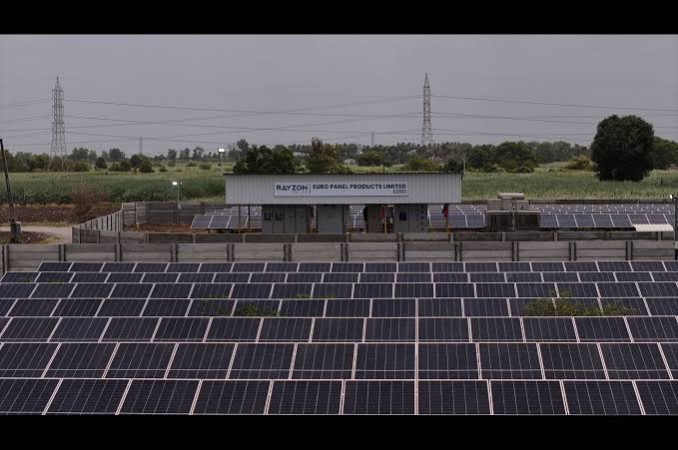
Building materials manufacturer EUROBOND, the flagship brand of Euro Panel Products, has commissioned a 2.2 MW grid-connected captive solar power plant at Moti Falod, Surat, significantly expanding its renewable energy footprint. With the latest installation becoming operational, the company's cumulative captive solar capacity has increased to 3.6 MW, enabling it to meet around 50 percent of its manufacturing facility's electricity requirements through clean energy.
The newly commissioned solar project marks the third phase of EUROBOND's long-term renewable energy programme. The company began its transition towards clean energy with a 520 kW solar installation in 2020, expanded its capacity to 1.4 MW in 2024, and has now reached 3.6 MW through the latest addition. The phased expansion reflects the company's strategy of gradually reducing dependence on conventional grid electricity while improving energy efficiency and lowering operational costs.
According to the company, the new solar plant is expected to generate approximately 3 million units (30 lakh kWh) of clean electricity annually. By replacing a significant portion of grid-supplied power with captive solar generation, EUROBOND aims to reduce carbon emissions associated with fossil fuel-based electricity while improving the sustainability of its manufacturing operations. Captive renewable energy projects have become increasingly attractive for industrial consumers as they provide long-term energy cost stability and help businesses meet corporate sustainability commitments.
Alongside renewable energy adoption, EUROBOND has strengthened its environmental management practices through Zero Liquid Discharge (ZLD) operations. The company operates in-house sewage and effluent treatment facilities that have reclaimed more than 1.32 million litres of treated water over the past six months. The recycled water is utilised for landscaping, greenbelt development and other facility requirements, ensuring that no industrial wastewater is discharged outside the manufacturing premises.
The company's sustainability initiatives also support the growing demand for environmentally responsible construction materials. As green building certification systems such as those promoted by the Indian Green Building Council (IGBC) increasingly emphasise low-carbon supply chains and resource-efficient manufacturing, developers and architects are seeking products manufactured using renewable energy and sustainable production practices. EUROBOND's investments in captive solar power, water recycling and environmental compliance strengthen its position as a supplier of greener building materials for commercial and residential projects.
In addition to its environmental initiatives, EUROBOND continues to enhance product quality and manufacturing standards. The company recently expanded the scope of its National Accreditation Board for Testing and Calibration Laboratories (NABL) accredited in-house laboratory from 16 to 51 testing parameters, covering products such as aluminium composite panels (ACP), metal composite panels (MCP), coatings and core materials. The expanded testing capability is expected to improve quality assurance, product reliability and compliance with industry standards.
Captive solar installations are witnessing rapid growth across India's industrial sector as manufacturers seek to reduce electricity costs, improve energy security and lower carbon emissions. Supportive renewable energy policies, open access reforms and declining solar generation costs have encouraged industries to invest in on-site clean energy projects. Such initiatives also contribute to India's broader objective of achieving 500 GW of non-fossil fuel-based installed power capacity by 2030 while helping businesses align with national and global decarbonisation goals.
With its latest solar capacity expansion and continued investments in resource conservation, laboratory infrastructure and sustainable manufacturing, EUROBOND is strengthening its long-term environmental strategy while improving operational resilience and supporting the transition towards greener industrial production.
Related News
EUROBOND Expands Captive Solar Capacity to 3.6 MW,…
Building materials manufacturer EUROBOND, the flagship brand of Euro Panel Products,…
Waaree Renewable Technologies Expands into New Zealand…
Waaree Renewable Technologies Limited (WRTL), the engineering, procurement and construction…
Tata Power Posts Rs 1,401 Crore Q1 FY27 Profit as…
Tata Power has reported a strong financial performance for the first quarter of…