Follow India Renewable Energy News on WhatsApp for exclusive updates on clean energy news and insights
GreenH Electrolysis Powers India’s First Indigenous Hydrogen Train with Integrated Green Hydrogen Production and Refuelling Facility
Jul 21, 2026
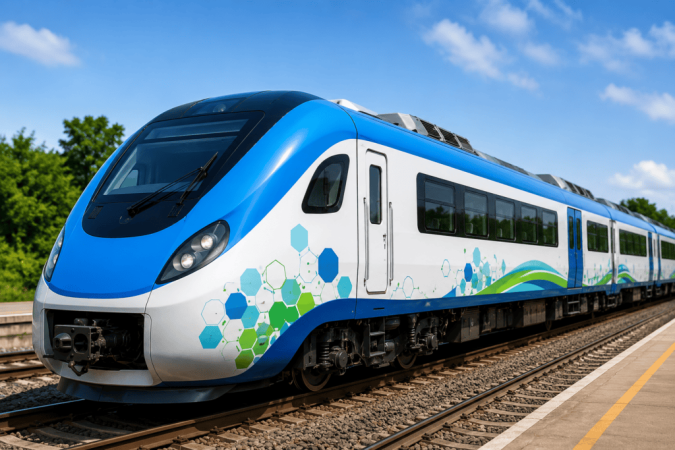
GreenH Electrolysis has successfully developed the hydrogen production and refuelling infrastructure for India's first indigenously developed hydrogen-powered train, marking a major milestone in the country's transition towards clean and sustainable rail transport. The hydrogen-powered train was inaugurated at Jind, Haryana, on July 17, 2026, showcasing India's growing capabilities in green hydrogen technologies and low-carbon mobility solutions.
Developed as a joint venture between H2B2 Electrolysis Technologies and Castlegreen Energy, GreenH designed and executed the complete hydrogen production and refuelling station for the project. At the heart of the facility is a 1 MW electrolyser, manufactured at the company's Jhajjar, Haryana facility using technology from H2B2 Electrolysis Technologies. The system is capable of producing up to 420 kilograms of green hydrogen per day, providing a dedicated fuel supply for hydrogen-powered railway operations while demonstrating India's ability to manufacture advanced hydrogen equipment domestically.
The project was implemented as part of Indian Railways' initiative to introduce hydrogen-based mobility by converting a Diesel Electric Multiple Unit (DEMU) operating on the Sonipat–Jind railway section into a hydrogen-powered train. Indian Railways had awarded the train retrofitting contract to Medha Servo Drives, which subsequently entrusted GreenH Electrolysis with the engineering, procurement and construction (EPC) of the hydrogen generation and refuelling infrastructure.
The hydrogen station has been developed as a fully integrated turnkey facility incorporating hydrogen production, compression, storage, dispensing, process engineering, electrical systems, instrumentation, automated controls, and advanced safety mechanisms. The installation includes 3,000 kilograms of hydrogen storage capacity, making it one of the largest hydrogen storage and refuelling facilities developed for railway applications in India. Integrated hydrogen compressors, dispensers, and pre-cooling systems enable safe, efficient, and rapid refuelling, supporting reliable day-to-day train operations.
Hydrogen-powered trains are increasingly being adopted worldwide as a zero-emission alternative for non-electrified railway routes where overhead electrification may not be economically viable. Powered by hydrogen fuel cells, these trains generate electricity onboard while emitting only water vapour, significantly reducing greenhouse gas emissions, air pollution, and dependence on fossil fuels. For India, the successful deployment of indigenous hydrogen rail technology represents an important step towards decarbonising one of the world's largest railway networks while promoting domestic manufacturing under the 'Make in India' initiative.
The project also aligns with the objectives of the National Green Hydrogen Mission, through which the Government of India aims to establish the country as a global hub for green hydrogen production, manufacturing, and exports. Investments in hydrogen production, storage, transportation, and end-use applications across sectors such as transportation, industry, power generation, and heavy mobility are expected to play a pivotal role in achieving India's long-term decarbonisation and energy security goals.
Beyond powering a single railway project, GreenH Electrolysis' hydrogen production and refuelling system demonstrates the growing maturity of India's green hydrogen ecosystem and its potential to support wider adoption of hydrogen-based transportation. As hydrogen infrastructure continues to expand, similar technologies could find applications in buses, heavy-duty trucks, industrial operations, ports, and other hard-to-abate sectors, contributing to India's ambition of building a resilient, low-carbon energy economy.
Related News
Oriana Power Plans Rs 4,500 Crore Integrated Green…
Oriana Power has signed a Memorandum of Understanding (MoU) with the Government…
GreenH Electrolysis Powers India’s First Indigenous…
GreenH Electrolysis has successfully developed the hydrogen production and refuelling…
ACME-IHI Green Ammonia Project in Odisha Secures Japan's…
The green ammonia joint venture between ACME Group and Japan's IHI Corporation has…