Follow India Renewable Energy News on WhatsApp for exclusive updates on clean energy news and insights
India Becomes World’s Third-Largest Renewable Energy Market, Overtakes Brazil
Apr 10, 2026
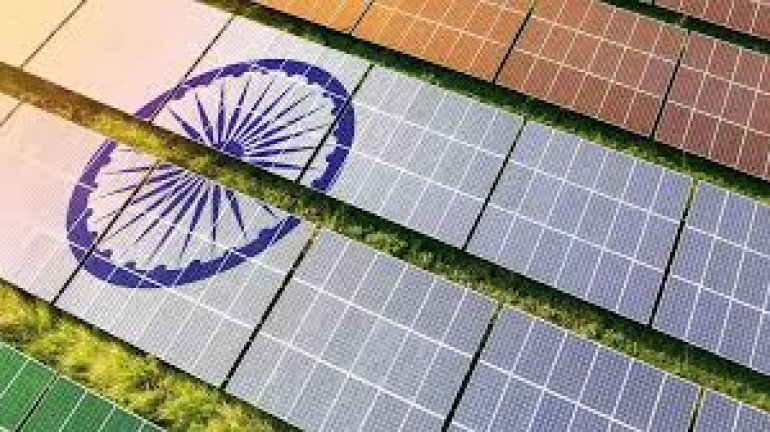
Record capacity addition and policy push drive India’s global rise. India has climbed to the third position globally in renewable energy capacity, surpassing Brazil, following a record addition of 55.29 GW of non-fossil power in FY2025-26. According to International Renewable Energy Agency, India’s installed renewable capacity reached 250.52 GW by the end of 2025, placing it behind only China and the United States.
Union Minister Pralhad Joshi highlighted that the country’s total non-fossil fuel capacity has now reached 283.46 GW, marking the highest annual increase ever recorded. Renewable energy contributes 274.68 GW of this total, with nuclear power accounting for the remaining share.
Solar energy continues to dominate India’s renewable mix, with installed capacity crossing 150 GW to reach 150.26 GW. Wind energy stands at 56.09 GW, followed by large hydro (51.41 GW), bioenergy (11.75 GW), and small hydro (5.17 GW). The country also achieved a major milestone in June 2025, when non-fossil sources accounted for 50% of total installed electricity capacity—well ahead of its 2030 climate commitments.
Renewable energy performance has also strengthened on the consumption side. In July 2025, clean energy sources met a record 51.5% of India’s electricity demand of 203 GW in a single day. Overall, non-fossil sources contributed 29.2% of total electricity generation in FY26, while renewable energy (including large hydro) accounted for 26.2%.
Growth has been driven significantly by solar expansion. India added 44.61 GW of solar capacity during the year—nearly double the previous year’s addition—while total installed solar capacity crossed the 150 GW milestone for the first time. Distributed solar emerged as a key contributor, accounting for 16.31 GW, or 36% of new solar installations.
Flagship schemes such as PM Suryaghar Muft Bijli Yojana and PM-KUSUM played a crucial role in this growth. Rooftop solar installations have benefited over 4.2 million households, while solar pump installations under PM-KUSUM have crossed 2.5 million, significantly reducing diesel consumption in agriculture.
Wind energy also recorded strong momentum, with a record 6.05 GW added during FY26, taking total installed capacity to 56.09 GW. India now ranks as the fourth-largest wind energy market globally, supported by growing participation from commercial and industrial users.
Domestic manufacturing capacity has expanded sharply, with solar module capacity reaching 172 GW and wind turbine manufacturing capacity rising to 24 GW. At the same time, solar imports have declined significantly due to policy support, including production-linked incentives, local sourcing norms, and import duties.
Policy reforms have further strengthened the sector. Measures such as reducing GST on renewable equipment, extending customs duty exemptions for battery manufacturing, and introducing transmission charge waivers have improved project viability. Initiatives like the Renewable Energy Equipment Import Monitoring System and updated grid connectivity rules are also enhancing transparency and efficiency.
In parallel, India’s National Green Hydrogen Mission is gaining traction, targeting 5 million tonnes of annual green hydrogen production by 2030 and attracting significant investment. Key ports such as Kandla, Paradip, and Tuticorin are being developed as hydrogen hubs.
With a target of achieving 500 GW of non-fossil electricity capacity by 2030, India’s rapid expansion underscores its growing leadership in the global clean energy transition.
Related News

International Solar Alliance Seeks Consultants to…
The International Solar Alliance (ISA) has invited bids from eligible consulting…
Hinduja Renewables Crosses 4 TWh Green Power Generation…
Hinduja Renewables Energy Private Limited (HREPL), the renewable energy arm of the…
Mahavitaran CMD Lokesh Chandra Honoured for Driving…
Lokesh Chandra, Chairman and Managing Director of Maharashtra State Electricity…