Follow India Renewable Energy News on WhatsApp for exclusive updates on clean energy news and insights
MERC Clears MSEDCL’s 2,269 MW Distributed Solar Procurement Under MSKVY 2.0
Aug 09, 2026
The Maharashtra Electricity Regulatory Commission (MERC) has approved the tariffs discovered through competitive bidding for Maharashtra State Electricity Distribution Company Ltd. (MSEDCL) to procure 2,269 MW of distributed solar power under the Mukhyamantri Saur Krushi Vahini Yojana (MSKVY) 2.0. The approval enables MSEDCL to move ahead with long-term power purchase agreements with successful developers for solar projects designed primarily to supply daytime electricity to agricultural consumers.
The approved tariffs range from Rs 2.24 per kWh to Rs 2.90 per kWh, with a weighted average tariff of Rs 2.825 per kWh. MERC has directed MSEDCL and the selected project developers to execute the power purchase agreements within 30 days and submit the signed agreements to the Commission. The electricity procured through the programme will also contribute towards MSEDCL's Distributed Renewable Energy Renewable Purchase Obligation (RPO) requirements.
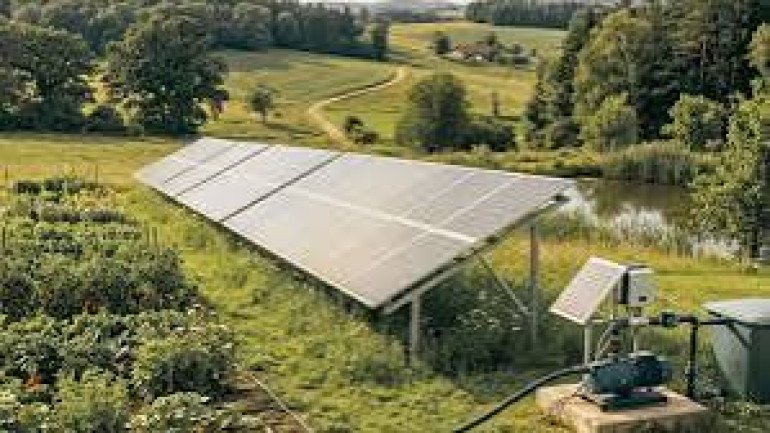
The procurement covers projects associated with 257 substations across Maharashtra, with a combined planned capacity of 2,269 MW. MSEB Solar Agro Power Ltd. (MSAPL), the nodal agency for MSKVY 2.0, conducted the competitive procurement process before MSEDCL approached MERC for approval of the discovered tariffs. The projects are intended to solarise agricultural feeders, allowing farmers to receive more reliable daytime electricity while reducing the distribution utility's dependence on conventional power during agricultural supply hours.
The bidding process was initiated through a Request for Selection issued in August 2025 and was conducted in two rounds. Multiple developers participated across the substations, with tariffs established through competitive bidding and electronic reverse auctions where applicable. The tender ceiling was set at Rs 2.90 per kWh, ensuring that the final procurement remained within the prescribed tariff limit.
An important feature of the latest procurement is that it was not linked to Central Financial Assistance under PM-KUSUM Component C. The tender also did not impose the Domestic Content Requirement applicable in certain subsidised procurement structures. According to MERC, these differences contributed to the competitive tariffs discovered in the latest round and helped bring the weighted average price below the tariff approved for an earlier MSKVY 2.0 procurement.
Feeder-level solarisation is an important component of Maharashtra's strategy to improve agricultural electricity supply. Instead of relying entirely on electricity transported over long distances from large power stations, distributed solar projects can be located closer to agricultural substations and feeders. This can help reduce transmission and distribution requirements for the relevant supply segment and improve the alignment between daytime solar generation and agricultural electricity demand.
The model is also intended to address a long-standing challenge associated with agricultural power consumption. Farmers generally require substantial electricity for irrigation during daytime and pumping operations, while conventional grid supply can create significant procurement and operational costs for distribution companies. Solarising agricultural feeders can provide a predictable source of daytime renewable electricity while potentially improving the financial sustainability of agricultural power supply.
The MSKVY 2.0 programme also forms part of Maharashtra's broader effort to expand renewable-energy capacity while modernising its electricity distribution system. Greater deployment of decentralised solar projects can support the state's renewable-energy objectives while creating opportunities for private developers to participate in smaller, geographically distributed projects rather than concentrating deployment solely in large solar parks.
MERC said the bidding process was transparent and reflected market conditions, citing participation from multiple developers and substations. The Commission also noted that the discovered tariffs were lower than the weighted average tariff approved in an earlier MSKVY 2.0 procurement. Based on its assessment, MERC approved the tariffs for the long-term procurement of the full 2,269 MW capacity.
For MSEDCL, the approval provides a pathway to convert the competitive bids into contractual commitments and begin the next stage of project implementation. For developers, the programme offers access to a large portfolio of distributed solar projects backed by long-term power procurement arrangements. For agricultural consumers, the intended outcome is greater availability of daytime electricity for irrigation, while the distribution utility can benefit from increased access to competitively priced renewable power.
The approval marks another significant step in Maharashtra's feeder-level solarisation programme. With 2,269 MW spread across 257 substations, the latest procurement has the potential to expand decentralised solar generation substantially while supporting agricultural electricity supply, renewable-energy procurement obligations and distribution-sector reforms. The competitive tariff outcome also demonstrates the increasing cost competitiveness of solar power for large-scale distributed procurement, particularly as developers and utilities gain greater experience with feeder-level renewable-energy projects.
Related News

Tamil Nadu Unveils Rs 1 Lakh Rooftop Solar Subsidy…
The Tamil Nadu Government has announced a new rooftop solar subsidy of up to Rs…
MERC Clears MSEDCL’s 2,269 MW Distributed Solar Procurement…
The Maharashtra Electricity Regulatory Commission (MERC) has approved the tariffs…
OERC Proposes New 10 MW Distributed Renewable Energy…
The Odisha Electricity Regulatory Commission (OERC) has proposed a new regulatory…