Follow India Renewable Energy News on WhatsApp for exclusive updates on clean energy news and insights
Andhra Pradesh's Proposed ‘Deemed Distribution Licensee’ Status for Data Centres Raises Legal and Regulatory Questions
Jul 23, 2026
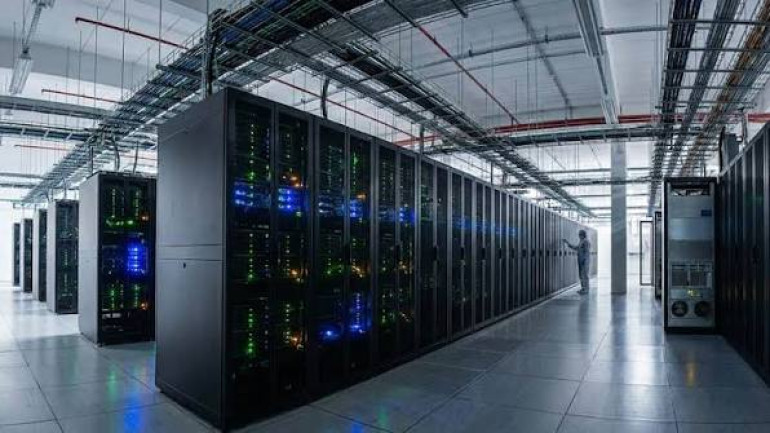
The Andhra Pradesh Government's proposal to grant "deemed distribution licensee" status to large data centres has sparked debate among power sector experts, who argue that the move could create legal, regulatory and commercial complexities. The notification proposes extending the status to data centres with a minimum connected load of 300 MW, a provision that is expected to benefit upcoming hyperscale facilities, including a proposed 1 GW data centre project in Visakhapatnam.
The policy is intended to help large data centres procure electricity directly without bearing certain charges applicable to open-access consumers, thereby reducing power costs—one of the largest operating expenses for hyperscale digital infrastructure. However, experts contend that the proposal stretches the intent of the Electricity Act, 2003, which provides deemed licence status only under specific circumstances, such as for government-owned utilities or entities explicitly recognised under the Act.
According to the notification, a deemed distribution licensee would be permitted to procure and supply electricity exclusively for activities related to the operation of a data centre. While this could provide operational flexibility, questions remain regarding the scope of such supply. For instance, it is unclear whether ancillary facilities located within a data centre campus—such as cafeterias, healthcare units or administrative offices—would qualify as part of the licensed operation or require separate electricity arrangements under existing regulations.
Industry observers have also highlighted regulatory uncertainties surrounding tariff determination and oversight. Unlike conventional distribution companies that purchase electricity and supply multiple consumers within a licensed area, a data centre operating as a deemed distribution licensee would primarily procure electricity for its own consumption. This raises questions over how the State Electricity Regulatory Commission (SERC) would determine the entity's Aggregate Revenue Requirement (ARR), enforce distribution obligations and regulate a licence that effectively functions as a self-consumption model rather than a public distribution utility.
One of the key motivations behind the proposal appears to be enabling large data centres to avoid cross-subsidy surcharge, additional surcharge and certain open-access charges, which are typically payable by consumers procuring power directly from generators or through open access. While this could significantly reduce electricity costs and improve the competitiveness of data centre investments, critics argue that exempting such large consumers could affect the long-term revenue base of incumbent distribution companies, particularly if more energy-intensive industries seek similar treatment.
The issue assumes greater significance given the scale of the proposed investment. A 1 GW data centre would represent one of the largest electricity consumers in the state, with demand equivalent to a substantial share of the load served by regional distribution utilities. If such consumers bypass the conventional distribution framework, utilities could lose opportunities to serve high-paying industrial customers, potentially increasing financial pressure on discoms that continue to subsidise residential and agricultural consumers.
India's rapidly expanding digital economy is expected to drive significant growth in data centre capacity over the coming decade, fuelled by increasing cloud adoption, artificial intelligence (AI), digital services and data localisation requirements. Ensuring reliable, affordable and clean power supply has therefore become a critical policy priority. Many developers are increasingly sourcing renewable energy through open access, captive generation and long-term power purchase agreements to meet both cost and sustainability objectives.
While the Andhra Pradesh initiative seeks to position the state as an attractive destination for large-scale digital infrastructure investments, legal experts believe the proposal may invite regulatory scrutiny. They point to the Supreme Court's recent ruling on the deemed distribution licensee status of Indian Railways, which reaffirmed that such designations must remain consistent with the provisions of the Electricity Act. As India balances investment promotion with regulatory certainty, policymakers may need to explore alternative mechanisms that lower power procurement costs for data centres while preserving the integrity of the country's electricity market framework.
Related News
NIT Rourkela Develops AI-Powered Smart Monitoring…
Researchers at the National Institute of Technology (NIT) Rourkela have developed…
INVT Electric India Unveils Advanced Industrial Automation…
INVT Electric India showcased its latest portfolio of industrial automation and…
Andhra Pradesh's Proposed ‘Deemed Distribution Licensee’…
The Andhra Pradesh Government's proposal to grant "deemed distribution licensee"…