Follow India Renewable Energy News on WhatsApp for exclusive updates on clean energy news and insights
CCI Dismisses Allegations Against Adani Group in Solar Tender Case
Apr 18, 2026
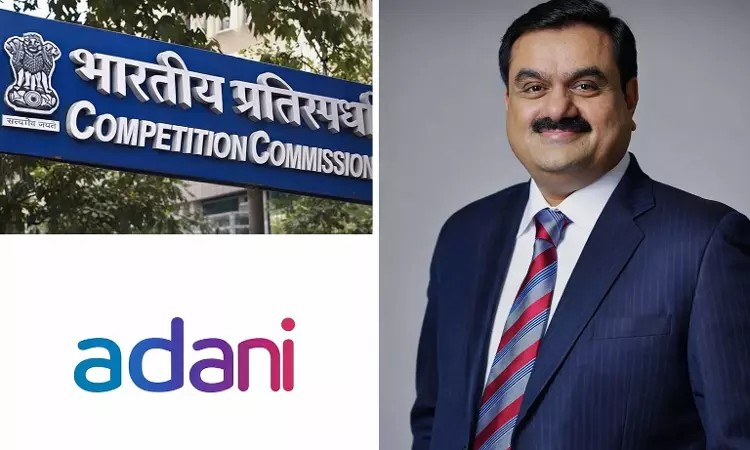
The Competition Commission of India (CCI) has rejected a complaint accusing Adani Group entities, Azure Power, and the Solar Energy Corporation of India (SECI) of engaging in anti-competitive practices in a large solar tender. The regulator found no prima facie evidence to support claims of bid manipulation, abuse of market position, or collusion.
The complaint was linked to SECI’s 2019 tender, which involved the development of 7 GW of solar capacity tied to 2 GW of domestic manufacturing. It was alleged that the structure of the tender favored large players and restricted opportunities for smaller developers.
The tender aimed to encourage local manufacturing by requiring successful bidders to establish solar manufacturing facilities alongside project execution. After a competitive bidding process, Adani Green Energy and Azure Power secured the projects. Adani was awarded capacity associated with 2 GW of manufacturing and 8 GW of solar projects, while Azure obtained 1 GW of manufacturing-linked capacity and 4 GW of solar installations.
Concerns were raised over specific provisions such as the greenshoe option, which was claimed to allow disproportionate allocation of additional capacity to selected bidders. The complaint also referred to Azure Power’s later decision to surrender part of its capacity and the subsequent reassignment of a portion of it to Adani Group entities as indicative of a pre-planned arrangement.
It was further alleged that Adani Group used its financial strength, scale, and integrated operations to limit competition in the market. References to a U.S.-based indictment were also cited in support of the claims.
SECI defended the tender process, stating that it adhered strictly to government guidelines and followed a transparent tariff-based bidding mechanism. It highlighted that tariffs were discovered through an e-reverse auction and that all agreements were executed with necessary regulatory approvals. According to SECI, the allegations lacked substantive evidence.
The Commission noted that the formulation of tender conditions is the responsibility of the procuring entity and does not, by itself, indicate anti-competitive intent. It found no material to suggest that the tender design excluded participants or ensured selection of specific companies.
The CCI also ruled that the Adani Group does not hold a dominant position in the relevant market, pointing to the presence of several major players across India’s power sector, including both conventional and renewable energy companies.
On the issue of abuse of dominance, the regulator observed that benefits arising from scale, financial capability, or operational integration do not automatically translate into anti-competitive conduct. Allegations related to market foreclosure, discriminatory practices, and entry barriers were not supported by sufficient evidence.
Regarding references to proceedings outside India, the Commission clarified that such matters do not directly establish a violation under domestic competition law.
The CCI further stated that linking manufacturing commitments with project allocation aligns with government policy objectives. It noted that the greenshoe provision was introduced under the guidance of the Ministry of New and Renewable Energy and had been previously upheld by the Central Electricity Regulatory Commission.
The regulator also observed that any voluntary reduction in tariffs after bidding benefits consumers and does not violate regulatory norms.
Related News
EUROBOND Expands Captive Solar Capacity to 3.6 MW,…
Building materials manufacturer EUROBOND, the flagship brand of Euro Panel Products,…

Waaree Renewable Technologies Expands into New Zealand…
Waaree Renewable Technologies Limited (WRTL), the engineering, procurement and construction…

Tata Power Posts Rs 1,401 Crore Q1 FY27 Profit as…
Tata Power has reported a strong financial performance for the first quarter of…