Follow India Renewable Energy News on WhatsApp for exclusive updates on clean energy news and insights
Delhi and Western Uttar Pradesh to Pilot Peer-to-Peer Power Trading Under India Energy Stack
Feb 10, 2026
The government is set to introduce a pilot peer-to-peer (P2P) electricity trading framework that will allow consumers to buy and sell power directly with one another, with all transactions ultimately reflected in their regular electricity bills.
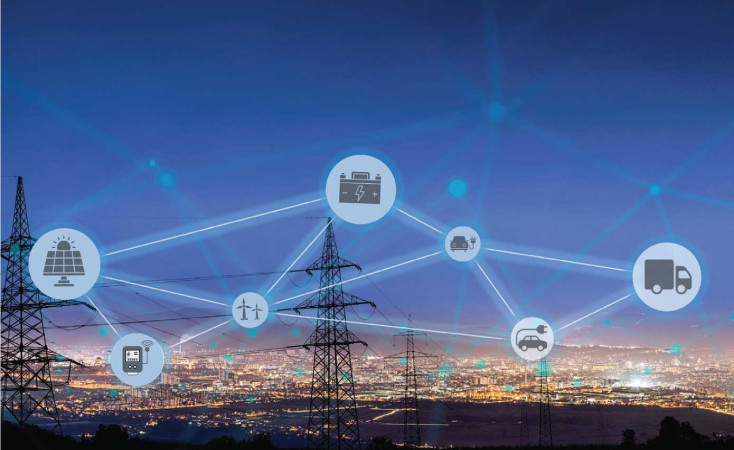
The initiative will be rolled out under the India Energy Stack (IES), enabling consumers who generate renewable energy—particularly rooftop solar producers—to trade surplus electricity with other users, including across state boundaries. The platform will operate on a secure, trust-based digital architecture designed to support transparent, verifiable, and scalable energy transactions.
To participate, consumers will need a rooftop solar system, a net meter, and a smart electricity meter. Price discovery will take place through a mobile application, allowing buyers and sellers to mutually agree on tariffs. Financial settlements will be adjusted cumulatively within the billing systems of distribution companies, while standard electricity billing will continue unchanged.
Officials said the model is expected to help prosumers monetise excess generation while giving buyers access to electricity at prices lower than prevailing discom tariffs. The P2P trading platform forms part of the broader India Energy Stack being developed by REC Ltd. and is likely to be formally unveiled at the upcoming IndiaAI Summit later this month.
The pilot phase will cover select areas of Delhi and western Uttar Pradesh through BSES Rajdhani Power Ltd., Tata Power-Delhi Distribution Limited, and Paschimanchal Vidyut Vitran Nigam Ltd. Collectively, these utilities serve around 12.5 million consumers, although the initial rollout will involve approximately 1,000 consumers in each distribution area.
Paschimanchal Vidyut Vitran Nigam Ltd Managing Director Raveesh Gupta said participants for the pilot are being drawn from a wide range of consumer segments. “Our teams are engaging with farmers, small business owners, and residential consumers to onboard them for peer-to-peer energy trading,” he said.
Peer-to-peer electricity trading allows consumers with surplus renewable generation, such as rooftop solar, to sell power directly to other users, creating decentralised local energy markets instead of relying solely on centralised power supply systems. Blockchain-based ledgers ensure that each transaction is securely recorded, while smart contracts automatically execute trades when surplus energy becomes available.
According to studies, P2P energy trading can improve grid resilience by matching local supply with demand, lowering transmission losses, and reducing stress on distribution networks. When supported by smart controls, such markets may also help flatten peak demand and enhance the utilisation of distributed energy resources.
Related News

Bihar Unveils Rs 1.40 Lakh Crore Energy Investment…
The Government of Bihar has presented an ambitious roadmap for transforming the…
GK Energy Revenue Jumps 71% in Q1 FY27 as Renewable…
GK Energy, a decentralised renewable energy infrastructure company focused on solar…
Siemens Energy India Q3 FY26 Revenue Surges 39.3%…
Siemens Energy India Ltd. delivered a strong financial performance in the third…