Follow India Renewable Energy News on WhatsApp for exclusive updates on clean energy news and insights
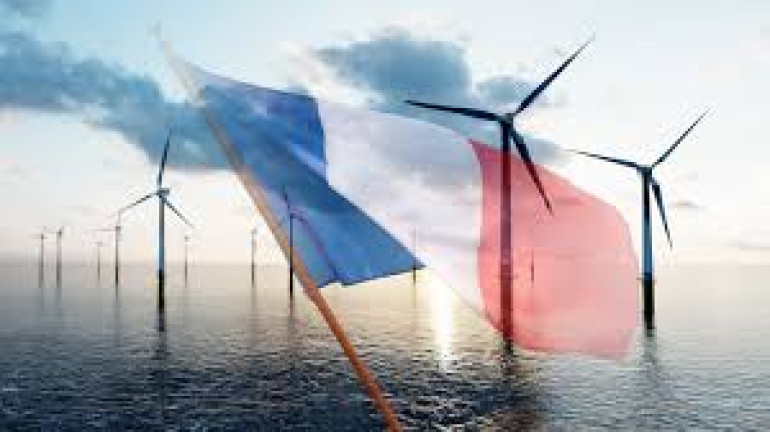
France Rolls Out PPE3 Roadmap to Fast-Track Energy Transition and Net-Zero Goal
Feb 19, 2026
The government of France has unveiled its third Multi-Year Energy Programme (PPE3), outlining a comprehensive strategy to expand decarbonised, domestically produced and cost-competitive energy over the next decade. The roadmap is designed to steer the country toward carbon neutrality by 2050 while strengthening energy sovereignty and affordability.
Before final approval, the programme underwent an extensive public consultation process, drawing participation from around 50,000 stakeholders and incorporating thousands of proposals. The final version received broad public backing, reflecting strong engagement in shaping France’s long-term energy direction.
Higher Clean Energy Output, Lower Fossil Dependence
Under PPE3, France plans to raise decarbonised electricity generation from 544 TWh in 2025 to between 650 TWh and 693 TWh by 2035. At the same time, fossil fuel consumption is projected to fall sharply to roughly 330 TWh by 2035, compared with 900 TWh recorded in 2023. The programme targets a 60% share of decarbonised energy in total consumption by 2030 and 70% by 2035.
The strategy supports a diversified energy mix that includes nuclear, hydropower, onshore and offshore wind, and solar power. It also promotes electrification of sectors currently dependent on fossil fuels and encourages low-carbon alternatives such as district heating, biomethane, biofuels and hydrogen. A review clause scheduled for 2027 will allow authorities to reassess demand trends and recalibrate targets if necessary.
Ambitious Renewable Energy Targets
Solar power capacity is set to expand significantly, rising from about 30 GW in 2025 to 48 GW by 2030 and reaching between 55 GW and 80 GW by 2035. Offshore wind installations are expected to scale up to 15 GW by 2035, while onshore wind capacity is projected to grow from roughly 24 GW in 2025 to 31 GW by 2030 and 35–40 GW by 2035.
Hydropower will also see optimisation efforts, with dam-based capacity targeted at 2.8 GW, including 1.7 GW from pumped-storage facilities aimed at enhancing grid flexibility.
Expanding Decarbonised Fuels and Heat
For hard-to-electrify sectors, PPE3 emphasises scaling up renewable and low-carbon fuels. By 2035, renewable and recovered heat output is expected to increase to between 328 TWh and 421 TWh. Biomethane capacity is projected to reach 47–82 TWh, biofuels 70–90 TWh, and hydrogen production capacity 8 GW.
Financial Discipline and Grid Reforms
The programme prioritises competitive tenders as the primary support mechanism for renewable projects, with adjustments aimed at avoiding excessive returns and maintaining fiscal discipline. Authorities estimate that renewable energy support costs could be halved by 2040 and phased out entirely by 2055, depending on electricity market trends.
To manage price volatility and ensure grid stability, reforms are planned for 2026 to address power fluctuations during negative pricing periods. Additional updates to the power capacity mechanism will prepare the system for winter peaks. Meanwhile, Réseau de Transport d’Électricité, the national transmission system operator, will revise its Ten-Year Network Development Plan to strengthen high- and very-high-voltage lines, adapt infrastructure to climate impacts, and accommodate rising electrification and new generation connections.
Through PPE3, France aims to combine climate ambition with industrial competitiveness, while also giving preference to European industry participation in future energy tenders.
Related News
International Solar Alliance Seeks Consultants to…
The International Solar Alliance (ISA) has invited bids from eligible consulting…
Hinduja Renewables Crosses 4 TWh Green Power Generation…
Hinduja Renewables Energy Private Limited (HREPL), the renewable energy arm of the…
Mahavitaran CMD Lokesh Chandra Honoured for Driving…
Lokesh Chandra, Chairman and Managing Director of Maharashtra State Electricity…