Follow India Renewable Energy News on WhatsApp for exclusive updates on clean energy news and insights
Government Push to Accelerate Rooftop Solar Adoption Targets 10 Million Homes
Apr 10, 2026
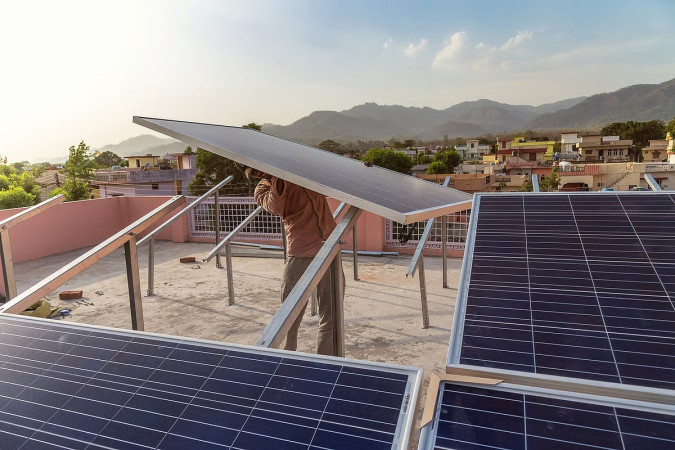
PM-KUSUM 2 planned to expand solar irrigation capacity: Pralhad Joshi. The government is stepping up efforts to scale rooftop solar adoption under the PM Suryaghar Muft Bijli Yojana, aiming to reach 10 million households in the coming years. Union Minister Pralhad Joshi said the initiative will play a key role in expanding access to clean energy across the country.
So far, installations under the scheme have touched around 2.7 million households, reflecting steady progress. The pace of deployment is also increasing rapidly, with nearly 11,000–12,000 rooftop solar systems being installed daily. This figure is expected to rise to 15,000–16,000 installations per day in the near future, signalling strong momentum in distributed renewable energy adoption.
In parallel, the government is working on the next phase of its solar irrigation programme, PM-KUSUM, with “PM-KUSUM 2” expected to further expand solar-powered irrigation infrastructure. These initiatives are expected to reduce dependence on conventional power and lower subsidy burdens for states over time, particularly in rural areas.
India’s clean energy capacity addition has also gained pace. The country added a record 55.3 GW of non-fossil fuel-based capacity in FY26, including about 16.4 GW from distributed sources such as rooftop solar systems and solar pumps.
Meanwhile, the Ministry of New and Renewable Energy is set to hold discussions with developers and manufacturers to address delays in project commissioning, especially ahead of the implementation of the Approved List of Models and Manufacturers (ALMM) for solar cells. Officials aim to ensure smoother execution as the sector scales up.
On the policy front, around 40 GW of non-fossil fuel-based projects are currently awaiting power purchase agreements (PPAs). The government expects that nearly 10–12 GW of these agreements will be finalised within the next three to four months, as tariff trends stabilise and investor confidence improves.
Efforts are also underway to address transmission bottlenecks that could hinder renewable energy integration. Delayed transmission lines are being fast-tracked, with key projects expected to be completed by June. Authorities are also exploring technology-driven solutions to minimise curtailment and ensure efficient utilisation of green power.
Related News
AXITEC Energy India Supplies 600 Wp Bifacial Modules…
AXITEC Energy India, the Indian subsidiary of Germany-headquartered AXITEC Energy…
Kolkata Metro Expands Renewable Energy Footprint with…
Metro Railway has commissioned a 500 kWp rooftop solar power plant at Jessore Road…
Odisha to Integrate PM Surya Ghar Scheme with Housing…
The Odisha Government has announced plans to integrate the PM Surya Ghar: Muft Bijli…