Follow India Renewable Energy News on WhatsApp for exclusive updates on clean energy news and insights
India Adds Record 55.29 GW Non-Fossil Capacity in FY26, Climbs Global Rankings
Apr 10, 2026
Solar leads growth as India strengthens renewable energy footprint. India recorded its highest-ever annual addition of non-fossil fuel-based power capacity in FY26, with 55.29 GW added during the year. This milestone has taken the country’s total non-fossil installed capacity to 283.46 GW, further solidifying its position as a global leader in clean energy.
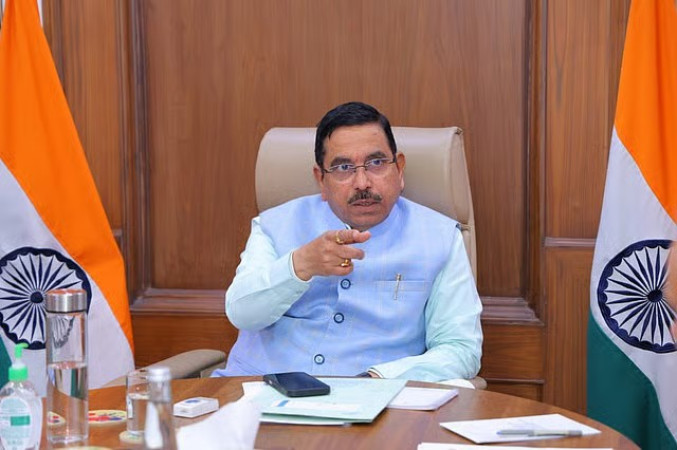
Announcing the achievement, Union Minister Pralhad Joshi said the country has now moved up to the third position globally in renewable energy capacity, surpassing Brazil. He described the addition as the highest ever in a single year, reflecting India’s accelerated push toward cleaner energy sources.
Solar energy accounted for the largest share of new capacity, contributing 44.61 GW, followed by 6.05 GW from wind installations. As of March 31, 2026, renewable sources made up 274.68 GW of the total non-fossil capacity, while nuclear power contributed 8.78 GW. Within renewables, solar capacity stood at 150.26 GW, wind at 56.09 GW, along with contributions from bioenergy, small hydro, and large hydro projects.
India’s total electricity generation for FY26 reached 1,845.9 billion units, of which non-fossil sources contributed 538.97 billion units—around 29.2% of the total. Notably, renewable energy met 51.5% of the country’s peak electricity demand of 203 GW on a single day in July 2025, marking a record high share.
The country also achieved a key climate milestone by reaching 50% of its cumulative installed electricity capacity from non-fossil sources in June 2025—well ahead of its 2030 target under its climate commitments.
A significant portion of the growth came from distributed renewable energy, particularly solar. About 16.3 GW—nearly 36% of total solar additions—came from decentralised installations, including 7.6 GW under the PM-KUSUM programme and 8.7 GW from rooftop solar systems.
India also crossed the 150 GW mark in cumulative solar capacity, with solar generation reaching 173.5 billion units and wind generation at 106.08 billion units during the year.
Looking ahead, the government is preparing to roll out an expanded version of the solar irrigation initiative, PM-KUSUM 2.0, and is advancing Phase III of the Green Energy Corridor to strengthen transmission infrastructure for renewable integration.
Policy support has played a key role in this growth. Measures such as reducing GST on renewable energy equipment from 12% to 5% and extending customs duty exemptions for lithium-ion cell manufacturing have supported the sector. Domestic manufacturing capacity has also expanded significantly, with solar module capacity reaching 172 GW, while imports have declined sharply, indicating progress toward self-reliance.
Related News

International Solar Alliance Seeks Consultants to…
The International Solar Alliance (ISA) has invited bids from eligible consulting…
Hinduja Renewables Crosses 4 TWh Green Power Generation…
Hinduja Renewables Energy Private Limited (HREPL), the renewable energy arm of the…

Mahavitaran CMD Lokesh Chandra Honoured for Driving…
Lokesh Chandra, Chairman and Managing Director of Maharashtra State Electricity…