Follow India Renewable Energy News on WhatsApp for exclusive updates on clean energy news and insights
India’s Advanced Battery Sector Confronts Supply Shortfall, Industry Seeks Stronger Policy Backing
Mar 27, 2026
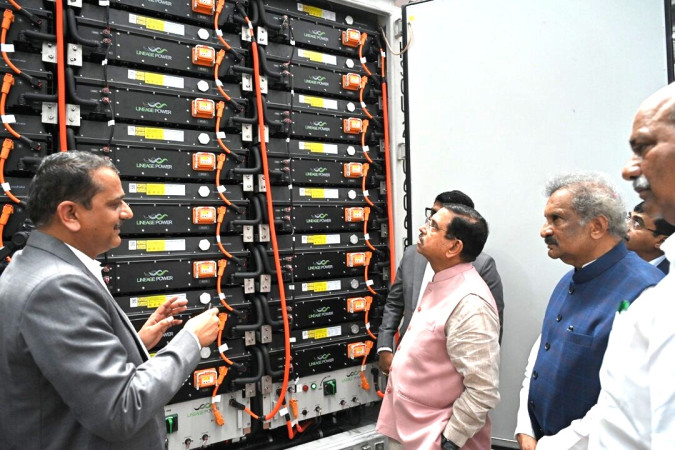
India’s advanced chemistry cell (ACC) ecosystem is entering a decisive phase of growth, but industry leaders have flagged a widening gap between demand and domestic supply. At the Stationary Energy Storage India (SESI) 2026 summit, experts emphasised the urgent need for coordinated policy support to accelerate localisation, secure raw materials, and scale up energy storage deployment across the country.
Projections indicate that India’s ACC demand could reach 220–260 GWh by 2030 and surge further to 800–900 GWh by 2035, largely driven by electric mobility and stationary storage needs. However, domestic manufacturing capacity currently lags behind, with only a fraction expected to become operational in the near term. This imbalance is expected to result in a significant supply deficit, forcing continued reliance on imports for battery cells and critical components such as cathodes, anodes, and electrolytes.
Industry stakeholders highlighted that more than 80 percent of battery components are still sourced from overseas, while raw materials like lithium and graphite account for a substantial share of overall costs. To address these challenges, experts called for faster project approvals, targeted incentives for component manufacturing, and the development of strong local supply chains supported by efficient recycling systems.
The event, organised by the India Energy Storage Alliance along with Customised Energy Solutions, brought together over 450 participants from across the globe. Discussions underscored India’s potential to emerge as a global leader in energy storage, provided there is sustained investment in both hardware and digital capabilities, including analytics, automation, and smart grid technologies.
Experts also stressed the importance of building a skilled workforce capable of managing advanced manufacturing and data-driven energy systems. Strengthening human capital, alongside technological innovation, was seen as critical to achieving long-term competitiveness in the sector.
At the same time, industry voices pointed to the need for a unified national framework to guide the growth of battery energy storage systems (BESS). While recent policy measures—such as viability gap funding and localisation targets—have created momentum, stakeholders cautioned that fragmented state-level policies and dependence on global price benchmarks for raw materials could hinder progress.
Leaders from manufacturing and startup ecosystems further highlighted operational challenges, including dependence on imported machinery and the need for safeguards against low-cost imports. They urged the government to create a supportive environment that enables domestic companies to scale, innovate, and compete globally.
As the summit concluded, there was a clear consensus: bridging the supply gap in India’s ACC sector will require decisive and well-aligned policy action. Strengthening domestic manufacturing, ensuring access to critical minerals, and fostering innovation will be key to positioning India as a major force in the global clean energy transition.
Related News
Kalpa Power Secures 100 MWh BESS Manufacturing Capacity…
Energy management company Kalpa Power has signed a Memorandum of Understanding (MoU)…
Government Opens Global Bidding for 10 GWh ACC Battery…
The Ministry of Heavy Industries (MHI) has invited global bids for the establishment…
Hitachi Energy Wins 165 MW/330 MWh Battery Storage…
Hitachi Energy has secured its first Battery Energy Storage System (BESS)…