Follow India Renewable Energy News on WhatsApp for exclusive updates on clean energy news and insights
India’s Solar Panel Recycling Could Unlock Rs 3,700 Crore Green Market by 2047: CEEW
Nov 08, 2025
Recovering and reusing materials from end-of-life solar panels could create a Rs3,700 crore market opportunity by 2047, according to new studies by the Council on Energy, Environment and Water (CEEW). The research suggests that efficient recycling could supply up to 38 percent of India’s future solar manufacturing materials.
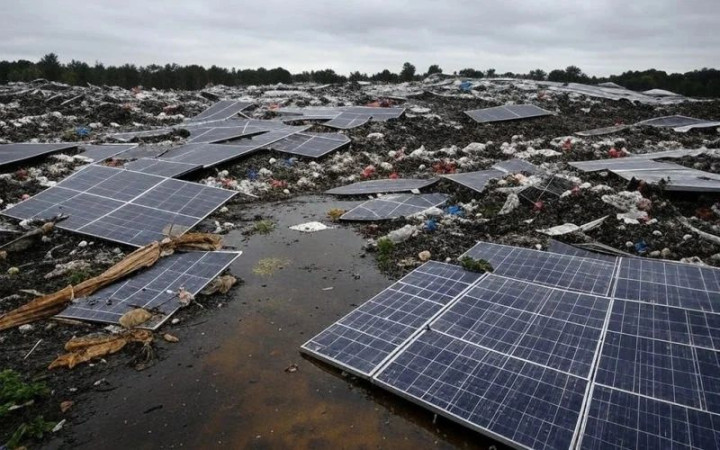
India’s rapidly growing solar sector is projected to generate over 11 million tonnes of solar waste by 2047, predominantly from crystalline-silicon modules. The latest twin studies by CEEW outline a comprehensive roadmap to establish a formal recycling ecosystem that supports the nation’s clean-energy goals and industrial self-reliance.
According to the findings, recovering valuable resources such as silicon, copper, aluminium, and silver from discarded modules could replace virgin raw materials, cut 37 million tonnes of carbon emissions, and significantly reduce import dependence. However, setting up this ecosystem would require around Rs4,200 crore in investment and nearly 300 recycling facilities across India.
“India’s solar revolution can power a new green industrial opportunity,” said Rishabh Jain, Fellow at CEEW. “Embedding circularity in clean-energy systems will help recover critical minerals, strengthen supply chains, and create green jobs — turning waste into value.”
Currently, solar panel recycling remains commercially unviable, with recyclers incurring losses of Rs10,000–Rs12,000 per tonne. High buy-back costs for discarded modules — roughly two-thirds of total expenses — and additional processing, collection, and disposal costs limit profitability. The studies suggest that economic viability could be achieved through EPR (Extended Producer Responsibility) certificate trading, tax incentives, and R&D support for improved silicon and silver recovery.
“Solar recycling can connect India’s clean-energy transition with its manufacturing ambitions,” noted Akanksha Tyagi, Programme Lead at CEEW. “Designing for recyclability, setting EPR targets, and fostering demand for circular products can transform solar waste into a sustainable industry.”
The reports further recommend establishing a Circular Solar Taskforce under the Ministry of New and Renewable Energy to align policies, financing, and industry efforts. They also propose a centralised solar inventory to identify waste hotspots and encourage producers to share material data for easier module disassembly.
If implemented effectively, these measures could help India build a resource-efficient, circular solar economy, ensuring that its clean-energy transition remains both sustainable and self-reliant.
Related News

Bihar Unveils Rs 1.40 Lakh Crore Energy Investment…
The Government of Bihar has presented an ambitious roadmap for transforming the…

GK Energy Revenue Jumps 71% in Q1 FY27 as Renewable…
GK Energy, a decentralised renewable energy infrastructure company focused on solar…

Siemens Energy India Q3 FY26 Revenue Surges 39.3%…
Siemens Energy India Ltd. delivered a strong financial performance in the third…