Follow India Renewable Energy News on WhatsApp for exclusive updates on clean energy news and insights
LanzaTech Secures SED Project to Develop Advanced Carbon Recycling Plant Using Sugarcane Waste in India
Jan 28, 2026
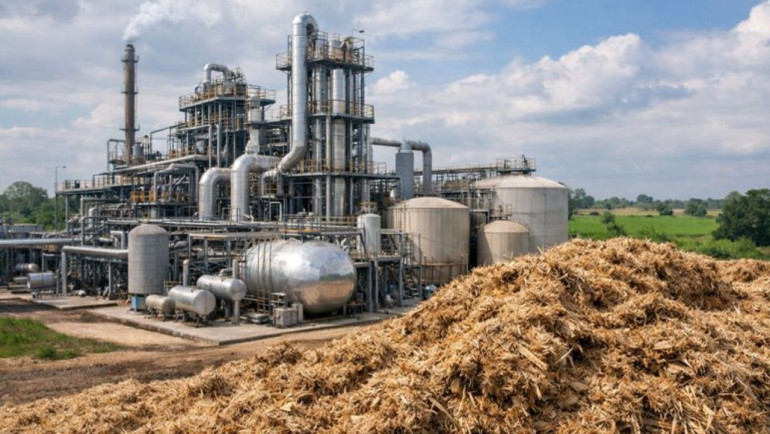
LanzaTech Global, a carbon recycling technology company, has secured a contract from Spray Engineering Devices (SED) to develop a next-generation carbon recycling facility in India that will convert sugarcane bagasse into sustainable fuels and chemicals.
The project, to be located in Uttar Pradesh, will process up to 300 tonnes of bagasse per day and forms a core part of SED’s Smart Village initiative. The Smart Village model is designed to maximise the economic value of renewable electricity and carbon resources by enabling the production of high-value outputs such as green chemicals, polymers, sustainable aviation fuels, and e-fuels.
In addition to fuel and chemical production, the facility will generate 5–10% nutrient-rich biochar, enabling permanent carbon sequestration while enhancing soil fertility. This integrated approach supports both emissions reduction and agricultural sustainability.
Commenting on the development, Vivek Verma, Managing Director of SED, said that India’s agricultural sector is positioned for transformation through the convergence of renewable power, green hydrogen, and biomass utilisation. He noted that India’s solar potential, arable land, and growing energy demand provide a strong foundation for a low-cost renewable energy ecosystem, while emphasising the importance of local biomass processing and nutrient recycling to protect soil health and strengthen rural economies.
LanzaTech’s technology equips industrial facilities with bioreactor systems that capture carbon-rich gases before they are released into the atmosphere. Inside the reactors, proprietary microbes convert carbon-rich gases—including CO? combined with green hydrogen—into ethanol, a versatile platform molecule used in consumer products and low-carbon fuels such as sustainable aviation fuel, e-fuels, and renewable diesel.
By leveraging existing supply chains, the project will divert bagasse and other biomass residues away from open burning and instead enable localised production of sustainable fuels and green chemicals. The plant is expected to deliver an annual emissions reduction of approximately 19,200 tonnes of CO? equivalent and is targeted to begin operations within two years.
The facility will also represent one of the first privately developed ethanol projects utilising sugar industry by-product bagasse under India’s PM JI-VAN Yojana, which supports advanced bioethanol production from agricultural and industrial waste.
Dr. Jennifer Holmgren, Chief Executive Officer of LanzaTech and a board member of the US–India Strategic Partnership Forum (USISPF), said the collaboration strengthens the company’s presence in India while demonstrating the commercial potential of agricultural residues as a feedstock for ethanol production. She added that waste-based pathways can support India’s Make in India ambitions by boosting domestic manufacturing while delivering environmental and business benefits.
In India, LanzaTech’s carbon recycling technology is already operational at Indian Oil Corporation’s Panipat refinery, which uses refinery off-gases and represents the company’s sixth commercial-scale facility globally. Additionally, a 10-tonne-per-day ethanol unit being developed by NTPC using waste CO? and green hydrogen is at an advanced stage of execution at the Pudimadaka site in Andhra Pradesh.
Related News
Delhi Needs Faster Rooftop Solar and Battery Storage…
Delhi will need to accelerate the deployment of rooftop solar, battery energy storage,…
NHPC Strengthens Clean Energy Portfolio with 40-Year…
NHPC Limited has signed a long-term Power Purchase Agreement (PPA) with Chhattisgarh…
REC Commits Rs 5,000 Crore to Boost Renewable Energy…
REC Ltd. has signed a Memorandum of Understanding (MoU) with the Tripura Renewable…