Follow India Renewable Energy News on WhatsApp for exclusive updates on clean energy news and insights
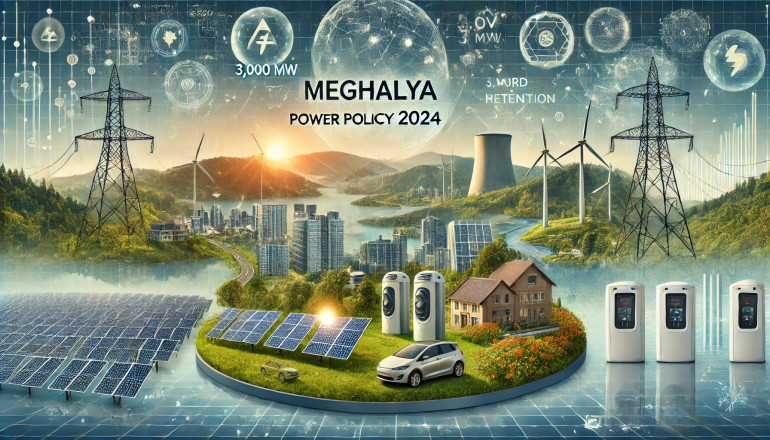
Meghalaya Unveils Ambitious Power Policy 2024, Prioritizing Renewable Energy and Sustainability
Dec 18, 2024
This forward-thinking policy aims to create a sustainable, efficient, and inclusive energy ecosystem, addressing pressing challenges in power generation, transmission, and distribution.
Key Objectives:
- Establish a state power trading company to streamline power purchase agreements, short-term transactions, and renewable energy procurement.
- Accelerate renewable energy adoption across hydro, solar, wind, and pumped storage systems.
- Reduce Aggregate Technical and Commercial (AT&C) losses in the power distribution network.
Solar Energy Expansion:
The policy targets a minimum of 100 MW solar capacity by 2030, categorizing solar projects into:
- Category I: Power supply within Meghalaya under Power Purchase Agreements (PPAs).
- Category II: Power export outside the state.
- Category III: State-led projects managed by Meghalaya Power Generation Corporation or through joint ventures.
Solar developers will benefit from incentives such as:
- Land lease benefits
- Two-year waivers on transmission charges
- Exemptions from cross-subsidy surcharges
Wind Energy Development:
Meghalaya aims to harness up to 82 MW of wind energy potential by 2030, offering incentives like:
- Land lease concessions
- Waived transmission charges for the first two years
- Electricity duty exemptions
Hydro Power and Pumped Storage:
With an untapped hydro potential of 3,000 MW, the policy outlines development plans for large, medium, and small projects, promoting pumped storage hydro projects to meet peak demand.
Strengthening Transmission Infrastructure:
The policy introduces a State Transmission Utility and a comprehensive transmission master plan to enhance reliability and system security.
Reforms in Power Distribution:
To reduce AT&C losses, the policy advocates:
- Replacing conventional meters with smart meters
- Improving High Tension to Low Tension ratios in urban areas
- Expanding EV charging infrastructure
Renewable Purchase Obligations and Emerging Technologies:
The policy aligns with Renewable Purchase Obligations (RPOs) set by the Ministry of Power, targeting higher adoption of wind, hydro, distributed renewable energy, and emerging technologies like green hydrogen and battery energy storage systems.
Financial Incentives:
Developers will benefit from:
- Waivers on electricity duty for renewable projects
- Capital subsidies of up to 7.5% for small hydro projects
- Open access to green energy for consumers
With the Meghalaya Power Policy 2024, the state is poised to lead the way in renewable energy development, fostering a greener and more sustainable future while enhancing energy security and efficiency. "
Related News

Tamil Nadu Unveils Rs 1 Lakh Rooftop Solar Subsidy…
The Tamil Nadu Government has announced a new rooftop solar subsidy of up to Rs…
MERC Clears MSEDCL’s 2,269 MW Distributed Solar Procurement…
The Maharashtra Electricity Regulatory Commission (MERC) has approved the tariffs…
OERC Proposes New 10 MW Distributed Renewable Energy…
The Odisha Electricity Regulatory Commission (OERC) has proposed a new regulatory…