Follow India Renewable Energy News on WhatsApp for exclusive updates on clean energy news and insights
MNRE Expands PM Surya Ghar Incentive Framework, Allows DISCOMs to Invest Surplus Funds in BESS and Grid Modernisation
Jul 29, 2026
The Ministry of New and Renewable Energy (MNRE) has broadened the scope of the 'Incentives to DISCOMs' component under the PM Surya Ghar: Muft Bijli Yojana, allowing electricity distribution companies (DISCOMs) to utilise unspent incentive funds for Battery Energy Storage Systems (BESS), distribution network upgrades, rooftop solar installations on utility buildings and advanced rooftop solar monitoring systems. The move is expected to strengthen grid readiness and accelerate rooftop solar adoption across the country.
The clarification comes in response to requests from state implementing agencies seeking guidance on the utilisation of incentive funds remaining after meeting the mandatory expenditure requirements prescribed under the scheme. According to the ministry, once the mandatory allocations under the operational guidelines have been fulfilled, DISCOMs can deploy the balance funds for a range of activities that directly support rooftop solar implementation and grid integration.
Under the revised framework, utilities can install rooftop solar systems on their own offices and facilities, deploy Battery Energy Storage Systems to improve the integration of distributed solar generation, strengthen distribution infrastructure in areas witnessing high rooftop solar penetration and implement digital monitoring systems to track rooftop solar generation. DISCOMs may also undertake other eligible activities that facilitate the effective implementation of the PM Surya Ghar scheme, provided these expenditures comply with prevailing financial rules.
The ministry has clarified that these investments must not overlap with projects already receiving financial support under other government programmes, including the Revamped Distribution Sector Scheme (RDSS) or any similar Central or State Government initiatives. This is intended to ensure efficient utilisation of public funds while avoiding duplication of expenditure.
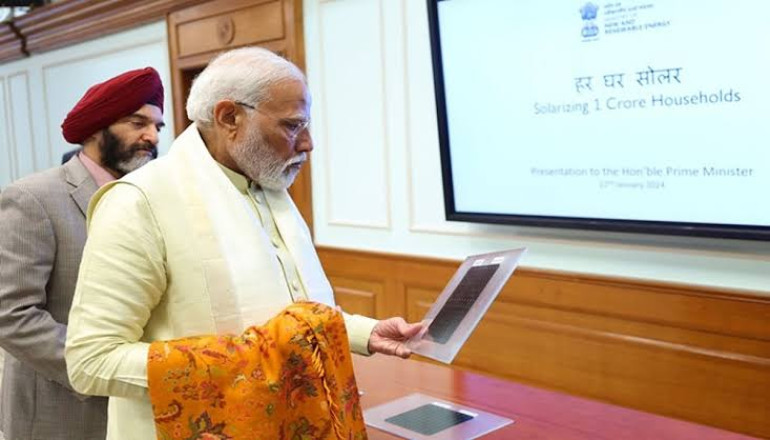
Launched in February 2024 with a total financial outlay of Rs 75,021 crore, the PM Surya Ghar: Muft Bijli Yojana aims to install rooftop solar systems on one crore households by the end of FY 2026-27. The scheme seeks to enable households to generate their own electricity, reduce monthly power bills and increase the share of decentralised renewable energy in India's electricity mix. Distribution companies play a central role in the programme by facilitating consumer registrations, approving applications, providing net meters, conducting inspections, commissioning rooftop systems and coordinating with empanelled vendors.
To encourage faster deployment, the scheme provides performance-linked incentives to DISCOMs based on incremental rooftop solar capacity additions. Utilities receive incentives equivalent to 5 percent of the applicable benchmark cost for capacity additions exceeding 10 percent and up to 15 percent of their existing installed rooftop solar base, while additions beyond 15 percent qualify for incentives of 10 percent of the benchmark cost. The incentive programme covers the first 18,000 MW of additional rooftop solar capacity installed nationally after March 31, 2019, with a total allocation of Rs 4,950 crore.
The operational guidelines also require DISCOMs to establish dedicated rooftop solar implementation teams and allocate a portion of the incentive funds towards employee recognition, consumer awareness campaigns, capacity building, grievance redressal and strengthening field-level implementation. At least 50 percent of the incentive amount, subject to prescribed limits, must be devolved to divisional and sub-divisional offices to support on-ground execution and improve service delivery.
The latest clarification reflects the government's growing focus on ensuring that rooftop solar deployment is supported by modern electricity infrastructure. As the number of distributed solar installations rises, investments in battery storage, smart monitoring systems and distribution network augmentation are becoming increasingly important for maintaining grid stability, managing bidirectional power flows and reducing technical constraints. By allowing DISCOMs greater flexibility in utilising incentive funds, the revised framework is expected to accelerate rooftop solar adoption while strengthening the distribution network needed to support India's target of 500 GW of non-fossil fuel-based installed power capacity by 2030.
Related News

Tamil Nadu Unveils Rs 1 Lakh Rooftop Solar Subsidy…
The Tamil Nadu Government has announced a new rooftop solar subsidy of up to Rs…

MERC Clears MSEDCL’s 2,269 MW Distributed Solar Procurement…
The Maharashtra Electricity Regulatory Commission (MERC) has approved the tariffs…

OERC Proposes New 10 MW Distributed Renewable Energy…
The Odisha Electricity Regulatory Commission (OERC) has proposed a new regulatory…