Follow India Renewable Energy News on WhatsApp for exclusive updates on clean energy news and insights
Neelkantha Group Enters IPP Segment with 22 MWp Group Captive Solar Project in Uttar Pradesh
Jan 03, 2026
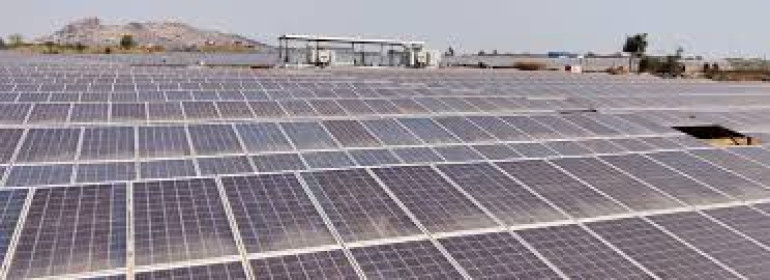
Delhi-based renewable energy company Neelkantha Group has announced its entry into the Independent Power Producer (IPP) segment with the development of a 22 MWp group captive solar power project at Shikarpur in Uttar Pradesh under the Group Captive Open Access (GCOA) framework.
The project is aimed at supplying clean and reliable electricity to commercial and industrial (C&I) consumers, supporting their transition toward sustainable energy solutions. Commenting on the announcement, Pankaj Verma, CEO and Co-Founder of Neelkantha Infrapower Ltd., said the initiative represents a significant milestone in the company’s growth strategy and its commitment to enabling decarbonisation for businesses.
Verma noted that the project has already crossed several critical development stages, including allocation of grid connectivity, full land acquisition, land development, and construction of boundary infrastructure, highlighting the group’s focus on execution efficiency and timely delivery.
He added that the company views the project not only as a business achievement but also as a responsibility toward advancing India’s clean energy goals, strengthening energy independence, and contributing to a more sustainable future.
Neelkantha Group has been active in the renewable energy sector for over 15 years, with experience spanning EPC services, land aggregation, and transmission line construction. During this period, the group has executed approximately 150 MW of rooftop solar projects. The company has now expanded its role to become an IPP, with plans to develop renewable energy assets across multiple Indian states, particularly for C&I consumers.
In addition, the company disclosed that it is currently developing a 70 MWp DC solar project in Uttar Pradesh, with land acquisition and grid connectivity already secured. The project is expected to achieve commercial operation by May 2026, and supply agreements have been signed with several leading manufacturing and commercial enterprises in the state.
Related News
EUROBOND Expands Captive Solar Capacity to 3.6 MW,…
Building materials manufacturer EUROBOND, the flagship brand of Euro Panel Products,…

Waaree Renewable Technologies Expands into New Zealand…
Waaree Renewable Technologies Limited (WRTL), the engineering, procurement and construction…

Tata Power Posts Rs 1,401 Crore Q1 FY27 Profit as…
Tata Power has reported a strong financial performance for the first quarter of…