Follow India Renewable Energy News on WhatsApp for exclusive updates on clean energy news and insights
NueGo Adds New Electric Bus Routes Across India, Expanding Sustainable Intercity Mobility Network
Aug 09, 2026
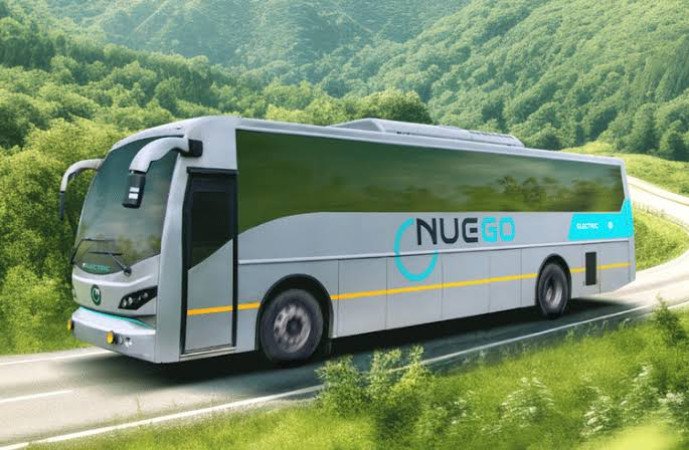
NueGo, the electric intercity bus brand operated by GreenCell Mobility and backed by Eversource Capital, is expanding its presence across India's intercity transport market with the launch of several new electric bus routes. The latest additions connect major cities with pilgrimage centres, tourism destinations and regional business hubs, taking NueGo's network to more than 150 cities and strengthening the availability of electric mobility for longer-distance road travel.
The newly introduced services include Chennai–Tirupati, Hyderabad–Guntur, Mussoorie–Delhi, Mussoorie–Gurugram, Gurugram–Haldwani, Coimbatore–Madurai and Tirupati–Puducherry. The routes have been selected across a mix of high-demand travel corridors, including religious and tourism destinations as well as economically important regional connections. The expansion is intended to provide passengers with an alternative to conventional diesel-powered intercity buses while increasing access to lower-emission public transportation.
Devendra Chawla, Managing Director and Chief Executive Officer of GreenCell Mobility, said the addition of new routes supports the company's objective of transforming intercity bus travel through sustainable and technology-enabled mobility solutions. He highlighted the company's focus on continued route expansion, safety systems and improved onboard amenities as part of its effort to provide a more convenient passenger experience while supporting India's transition towards cleaner transportation.
NueGo's expansion comes as electrification of road transport gradually moves beyond urban public transport into intercity and longer-distance operations. While electric buses require careful planning around vehicle range, charging infrastructure, route length and turnaround times, advances in battery technology and charging systems are creating greater opportunities for electric vehicles to operate on increasingly diverse routes. High-utilisation bus services can be particularly relevant to electrification because predictable schedules and centralised fleet operations make charging and maintenance easier to manage.
Safety and technology remain central to NueGo's operating model. The company says its buses undergo 25 safety checks before departure and are equipped with features including Advanced Driver Assistance Systems (ADAS), CCTV surveillance, GPS-based live tracking and Driver Monitoring Systems. The buses also use driver breathalyser checks and a speed-control mechanism that limits vehicle speed to 80 kmph. These systems are designed to strengthen monitoring of both vehicle and driver performance during intercity operations.
The operator has also introduced measures aimed at improving safety and convenience for women travellers. These include Pink Seat booking options and a dedicated 24x7 women's helpline. Alongside these measures, NueGo is focusing on clean coaches, maintained passenger facilities and designated service stops to improve the overall travel experience on longer journeys.
The expansion is significant for India's broader clean-mobility transition because road transportation remains heavily dependent on fossil fuels, particularly diesel in the bus and commercial-vehicle segments. Electrifying high-frequency bus routes can reduce direct tailpipe emissions and, depending on the electricity source used for charging, can also contribute to lower lifecycle emissions compared with conventional vehicles. Electric buses can additionally reduce local air pollution and noise levels along densely travelled corridors.
Routes connecting destinations such as Chennai and Tirupati, Hyderabad and Guntur, and Delhi with Uttarakhand's tourism centres also highlight the potential for electric buses to serve different passenger-demand patterns. Pilgrimage and tourism corridors can experience strong seasonal demand, while intercity business routes can provide more consistent passenger volumes. Building a diversified route network can help operators improve fleet utilisation while gradually creating a larger ecosystem for electric intercity transportation.
The availability of charging infrastructure will remain an important factor as NueGo and other operators expand their electric bus networks. Long-distance electric bus operations require appropriately located charging facilities, reliable grid connections, efficient fleet scheduling and sufficient charging capacity at terminals or intermediate locations. Continued investment in these areas will be necessary for electric intercity buses to scale across more routes and regions.
With its network now covering more than 150 cities and additional routes being introduced across southern, northern and central travel corridors, NueGo is positioning electric buses as an increasingly practical option for intercity passengers. The continued expansion of route coverage, combined with safety-focused technology and dedicated passenger services, could contribute to wider acceptance of electric buses and accelerate the shift towards cleaner and more sustainable road-based public transportation in India.
Related News
NueGo Adds New Electric Bus Routes Across India, Expanding…
NueGo, the electric intercity bus brand operated by GreenCell Mobility and backed…
Sona Comstar and DENSO Form Two Joint Ventures to…
Sona BLW Precision Forgings Ltd. (Sona Comstar) has entered into definitive joint…
Kazam Rolls Out ‘EV-Ready Ghar’ Initiative to Strengthen…
EV charging and energy management company Kazam has launched its nationwide 'EV-Ready…