Follow India Renewable Energy News on WhatsApp for exclusive updates on clean energy news and insights
Odisha to Integrate PM Surya Ghar Scheme with Housing Programmes, Announces Rooftop Solar Incentives and Power Safety Upgrades
Jul 12, 2026
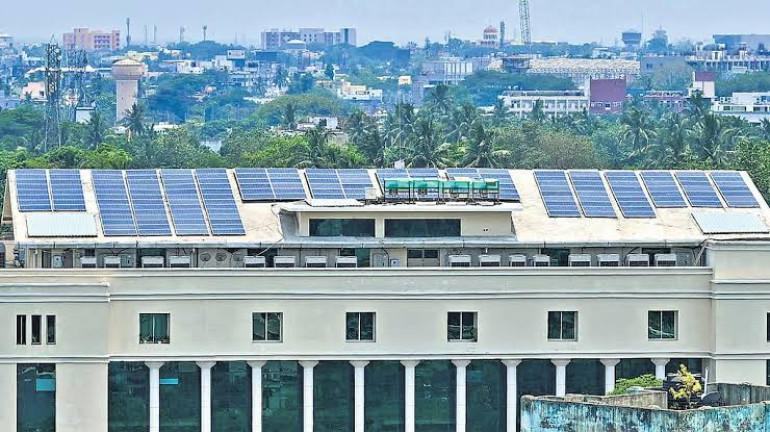
The Odisha Government has announced plans to integrate the PM Surya Ghar: Muft Bijli Yojana with state housing programmes, including the Pradhan Mantri Awas Yojana (PMAY), to accelerate residential rooftop solar adoption and expand access to affordable clean electricity. The initiative aims to enable beneficiaries of government housing schemes to install rooftop solar systems with financial assistance, helping reduce household electricity bills while promoting the state's clean energy transition.
The decision was announced by Deputy Chief Minister KV Singh Deo during a high-level review meeting on power sector reforms, electricity safety, and the implementation of central and state government schemes. He stated that beneficiaries of PMAY and other state housing programmes will be eligible to avail rooftop solar incentives under the PM Surya Ghar scheme, although participation will remain voluntary.
To encourage wider adoption, the state has proposed an enhanced subsidy structure for urban households. Beneficiaries installing a 1 kW rooftop solar system will receive a Rs 30,000 subsidy from the Central Government under the PM Surya Ghar programme, along with an additional Rs 25,000 subsidy from the Odisha Government. As a result, eligible consumers will need to contribute only Rs 1,875 towards the installation cost, significantly lowering the financial barrier to adopting rooftop solar.
The integration of housing and rooftop solar schemes aligns with the Government of India's objective of installing rooftop solar systems on one crore (10 million) households under the PM Surya Ghar: Muft Bijli Yojana. The programme is designed to increase distributed renewable energy generation, reduce dependence on conventional grid electricity, lower carbon emissions, and enable households to save on monthly electricity expenses while contributing surplus power to the grid through net metering, wherever applicable.
Alongside renewable energy adoption, the Odisha Government is also planning major investments to strengthen electricity distribution infrastructure. During the meeting, officials reviewed a proposal to invest Rs 3,708 crore in replacing overhead electricity lines with underground power cable networks across all four electricity distribution companies (DISCOMs) operating in the state. Underground cabling is expected to improve grid reliability, minimise weather-related outages, reduce maintenance requirements, and enhance public safety.
The Deputy Chief Minister also directed DISCOMs to accelerate several safety initiatives aimed at reducing electrical hazards across urban and rural areas. These include the removal of low-hanging power lines, replacement of bare conductors with insulated cables, installation of protective fencing around distribution substations, construction of boundary walls, and deployment of guard wires and cradle systems for low-tension power lines. Officials have been instructed to prepare a comprehensive Detailed Project Report (DPR) outlining long-term safety improvements for the state's electricity distribution network.
The review meeting was attended by Panchayati Raj and Drinking Water Minister Rabi Narayan Naik, Housing and Urban Development Minister Krushna Chandra Mahapatra, and senior government officials responsible for power, housing, and infrastructure development. The discussions focused on improving coordination between departments to ensure the timely implementation of both renewable energy and power infrastructure projects.
Odisha has been steadily expanding its clean energy initiatives as part of broader efforts to improve energy security, reduce dependence on fossil fuels, and modernise its electricity infrastructure. By linking rooftop solar incentives with housing programmes and investing in safer, more resilient distribution networks, the state aims to increase renewable energy adoption while ensuring reliable and secure electricity access for households across both urban and rural regions.
The latest measures reinforce Odisha's commitment to supporting India's renewable energy goals while delivering long-term economic and environmental benefits through cleaner electricity, lower consumer energy costs, and a more modern and resilient power distribution system.
Related News
AXITEC Energy India Supplies 600 Wp Bifacial Modules…
AXITEC Energy India, the Indian subsidiary of Germany-headquartered AXITEC Energy…
Kolkata Metro Expands Renewable Energy Footprint with…
Metro Railway has commissioned a 500 kWp rooftop solar power plant at Jessore Road…
Odisha to Integrate PM Surya Ghar Scheme with Housing…
The Odisha Government has announced plans to integrate the PM Surya Ghar: Muft Bijli…