Follow India Renewable Energy News on WhatsApp for exclusive updates on clean energy news and insights
Rajasthan, Gujarat and Arunachal Pradesh Face Highest Climate Risks to India's Renewable Energy Growth: Zurich Report
Jul 01, 2026
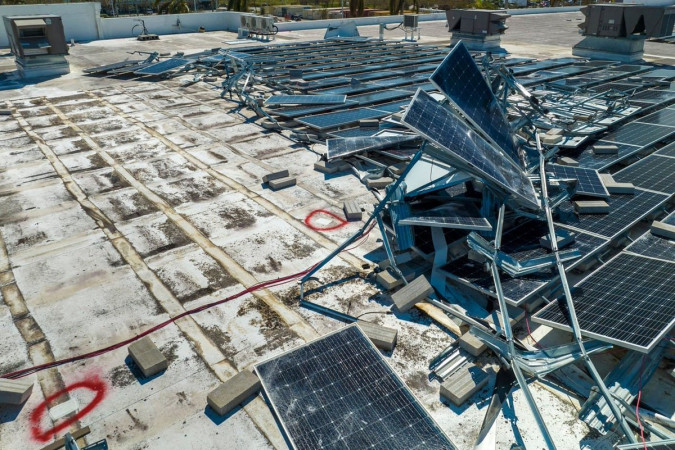
India's renewable energy expansion could face significant challenges from climate change unless future projects are planned with greater resilience, according to a new analysis by Zurich. The report identifies Rajasthan, Gujarat and Arunachal Pradesh as the country's most climate-vulnerable states for renewable energy infrastructure, warning that extreme weather events could expose billions of dollars' worth of clean energy investments to operational and financial risks by the end of this decade. It recommends integrating climate risk assessments into project planning, approvals and site selection to strengthen the long-term reliability of India's renewable energy sector.
Among all states assessed, Rajasthan records the highest climate-related financial exposure. Zurich's analysis covers 272 renewable energy project sites with a planned capacity of 82,149 MW, representing an estimated USD 16.4 billion in Value at Risk (VaR). Nearly 85% of these assets fall within the highest climate risk categories. As India's largest renewable energy-producing state and a major hub for utility-scale solar projects, Rajasthan plays a critical role in achieving the country's clean energy targets. However, recurring heatwaves and temperatures exceeding 50°C can reduce solar panel efficiency, accelerate equipment wear and place additional stress on associated electrical infrastructure.
Gujarat ranks second on the risk index, with 172 renewable energy sites and 47,530 MW of planned capacity carrying an estimated USD 8.6 billion in Value at Risk. Around 90% of the state's renewable assets fall into the highest climate risk categories. While inland projects face hazards such as hailstorms and strong winds, the state's extensive coastline exposes both solar and wind installations to cyclones, storm surges and coastal flooding. The report also notes that Gujarat's growing electric vehicle manufacturing industry and expanding green hydrogen projects are expected to increase electricity demand, making resilient energy infrastructure increasingly important.
Although Arunachal Pradesh has only 30 assessed renewable energy sites, it records one of the highest levels of climate exposure. The report estimates these projects carry USD 13.1 billion in Value at Risk, with 96% of assets classified under the highest climate risk categories. Much of the state's renewable portfolio consists of hydropower projects located in the eastern Himalayan region, where heavy rainfall, landslides, flooding and seismic activity create a highly challenging environment for infrastructure development and long-term operations.
The study also highlights notable differences across other states. Karnataka has the lowest proportion of renewable assets in the highest climate risk category at just 5%, while Uttarakhand has 94% of its renewable assets classified as high risk due to extreme Himalayan weather, changing river flows and slope instability. Uttar Pradesh also faces considerable exposure, with 78% of renewable assets falling into the highest risk categories, largely because of recurring floods across the Ganga basin and increasing instances of extreme heat.
Zurich recommends that renewable energy developers, investors and policymakers adopt multi-hazard climate stress testing to better understand potential financial losses and evaluate mitigation measures before projects are commissioned. The report suggests that climate risk screening should become a standard requirement during project siting, permitting and approval processes, enabling infrastructure to withstand increasingly frequent extreme weather events.
The findings come at a time when India is accelerating its clean energy transition with a national goal of achieving 500 GW of non-fossil fuel electricity capacity by 2030. As renewable energy investments continue to grow across the country, the report highlights that incorporating climate resilience into project design and planning will be essential for protecting infrastructure, maintaining energy security and ensuring the long-term success of India's renewable energy ambitions.
Related News
Rajasthan, Gujarat and Arunachal Pradesh Face Highest…
India's renewable energy expansion could face significant challenges from climate…

Solar Power Emerges as a Dominant Force in Meeting…
Solar energy, when paired with battery storage, is now capable of meeting up to…

ROQIT and Indian Railways Join Forces to Advance Sustainable…
ROQIT has entered into a strategic partnership with Indian Railways to roll out…