Follow India Renewable Energy News on WhatsApp for exclusive updates on clean energy news and insights
SHANTI Act Rules Likely Within Three Months; Private, Global Interest Rising: Jitendra Singh
Jan 30, 2026
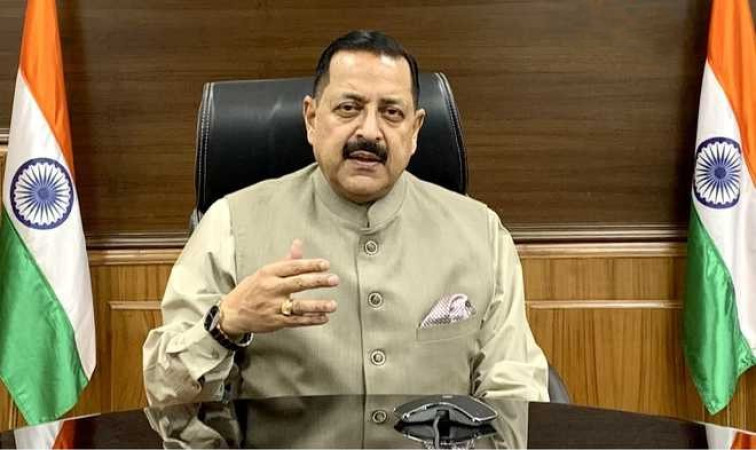
The Centre is preparing to unveil the operational framework and detailed rules under the SHANTI Act for nuclear energy within the next two to three months, Minister of State for the Department of Atomic Energy and the Prime Minister’s Office, Jitendra Singh, said on Wednesday.
Speaking at an ET Roundtable, Singh said the new law has already sparked significant interest among private players as well as foreign partners. He noted that the SHANTI Act has become a key topic of discussion in India’s international engagements, particularly with the United States.
“There is growing interest from the private sector and overseas collaborators. In fact, during recent discussions between the US Secretary of State and our External Affairs Minister, the SHANTI Act figured prominently. That was quite encouraging,” Singh said.
Rules Being Finalised With Caution
Singh said the government is actively working on the rules required to implement the SHANTI legislation but is proceeding cautiously due to the sector’s sensitivity and long-term implications.
“This is a new chapter for us in nuclear energy. We need to be extremely careful and diligent. Given the importance and complexity of the sector, it would not be fair to rush the process. That said, we expect the rules to be notified within the next two to three months,” he added.
Sector Set for Structural Change
According to Singh, the SHANTI Act and its forthcoming rules will fundamentally reshape India’s nuclear energy ecosystem by opening it up to private, non-government and other institutional players, while maintaining essential safety safeguards.
“The framework will be more accommodating without compromising on core protections. With multiple stakeholders involved, we need to strike a careful balance to ensure smooth and effective implementation,” he said.
FDI, Technology and Costs
On the question of foreign direct investment in nuclear power, Singh said the government would broadly follow existing FDI norms, while examining the need for sector-specific clarity where required.
Addressing concerns around costs, he expressed confidence that nuclear power prices would fall significantly over time, even with the use of advanced foreign technologies. Larger-scale investments and increased domestic manufacturing would help bring costs down “dramatically,” he said.
Indo-US Nuclear Deal and Liability
Responding to criticism over the BJP’s revised stance on the Indo-US nuclear deal, Singh said the government was not reversing its earlier position but reassessing it in light of major technological advances and changing geopolitical realities.
“Reactor technology, safety standards and the global geopolitical landscape have all evolved over the past 18 years. It is reasonable to re-evaluate policies in a changed environment,” he said.
Singh also rejected claims that the SHANTI framework dilutes nuclear liability norms. He clarified that operators remain free to enter into liability agreements with suppliers, and that the government’s role is limited to avoid complications arising from ancillary issues.
“Nothing has been compromised. The operator can still negotiate liability terms with the supplier. The government staying out of these arrangements is deliberate and necessary,” he said.
Related News

Tamil Nadu Unveils Rs 1 Lakh Rooftop Solar Subsidy…
The Tamil Nadu Government has announced a new rooftop solar subsidy of up to Rs…

MERC Clears MSEDCL’s 2,269 MW Distributed Solar Procurement…
The Maharashtra Electricity Regulatory Commission (MERC) has approved the tariffs…
OERC Proposes New 10 MW Distributed Renewable Energy…
The Odisha Electricity Regulatory Commission (OERC) has proposed a new regulatory…