Follow India Renewable Energy News on WhatsApp for exclusive updates on clean energy news and insights
Tata Consulting Engineers Launch India’s First 400 kV AI-Powered Dynamic Line Rating Project
Oct 24, 2025
Revolutionary DLR system enhances grid capacity and improves renewable energy integration
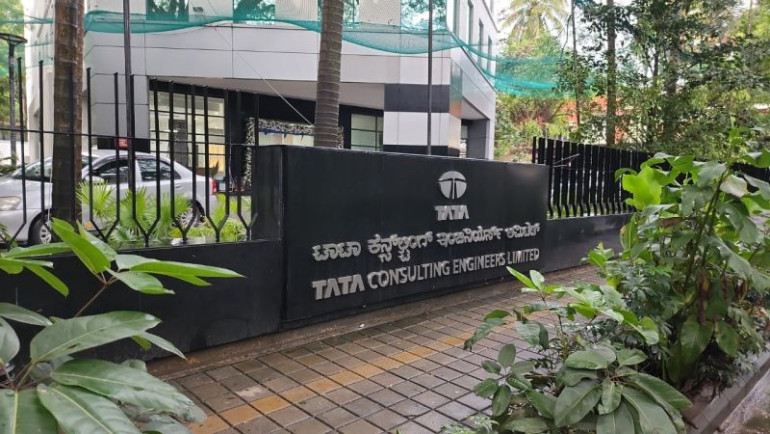
Tata Consulting Engineers (TCE), in collaboration with Enline and Gridpulse, has successfully commissioned India’s first 400 kV Dynamic Line Rating (DLR) project for the Power Grid Corporation of India (PGCIL). The system, deployed on the Madurai–Tuticorin transmission line in Tamil Nadu, marks a major milestone in India’s transition toward a digital and intelligent power grid.
The project leverages AI-driven real-time analytics to optimize existing grid assets, enhance operational reliability, and support greater integration of renewable energy sources.
AI-Driven Grid Intelligence
The 95 km double-circuit transmission line now operates with advanced DLR sensors that capture real-time weather and line data, enabling continuous monitoring of grid health. Installation was carried out using hotline techniques, ensuring uninterrupted power supply while meeting all safety and regulatory norms.
The system’s AI-enabled forecasting provides 168-hour advance predictions, helping grid operators identify potential overloads and weather-related disruptions early. This innovation supports PGCIL’s goal of modernizing grid operations and improving renewable power evacuation from Tamil Nadu’s wind-rich coastal zones.
Smarter Transmission Through DLR
Recognized in India’s National Electricity Plan (NEP) 2024 as a key digital grid technology, DLR continuously recalculates a transmission line’s actual power-carrying capacity based on live weather and operational data. Unlike traditional Static Line Rating (SLR), which uses conservative assumptions, DLR adjusts line ratings in real time—boosting transmission capacity by 30–50% without new infrastructure.
How It Works
The system integrates data from satellites, ground sensors, and meteorological services using advanced AI algorithms to model conductor cooling and predict line capacity. Sensor arrays monitor temperature, sag, and vibration, while Enline’s hybrid AI model ensures continuous performance even during data interruptions.
A digital twin of the transmission line simulates performance under various conditions, offering grid operators instant visibility through real-time dashboards that display conductor temperature, available capacity, and system health.
Impact and Efficiency
According to TCE, the DLR system has already improved transmission utilization by up to 25% during favorable weather conditions. This has reduced renewable curtailment, strengthened grid stability, and optimized capital use.
Compared to new high-voltage transmission corridors—which can take up to a decade and require significant investment—the DLR deployment costs less than 5% of building equivalent new capacity. This enables utilities to maximize existing infrastructure while channeling funds into digital modernization and grid reliability projects.
Future Outlook
As India expands its power transmission network from 485,000 ckm in 2024 to 648,000 ckm by 2032, digital grid technologies like DLR will play a crucial role in meeting the country’s projected 458 GW peak demand.
To further support renewable integration, the Central Electricity Authority (CEA) plans to install automatic weather stations for every 50 MW renewable project, ensuring real-time data for optimal performance and grid management.
Related News
NIT Rourkela Develops AI-Powered Smart Monitoring…
Researchers at the National Institute of Technology (NIT) Rourkela have developed…
INVT Electric India Unveils Advanced Industrial Automation…
INVT Electric India showcased its latest portfolio of industrial automation and…

Andhra Pradesh's Proposed ‘Deemed Distribution Licensee’…
The Andhra Pradesh Government's proposal to grant "deemed distribution licensee"…