Follow India Renewable Energy News on WhatsApp for exclusive updates on clean energy news and insights
TERI Floats Tender for 57.5 MW/115 MWh Battery Energy Storage Project Across BRPL Grid Stations in Delhi
Jul 10, 2026
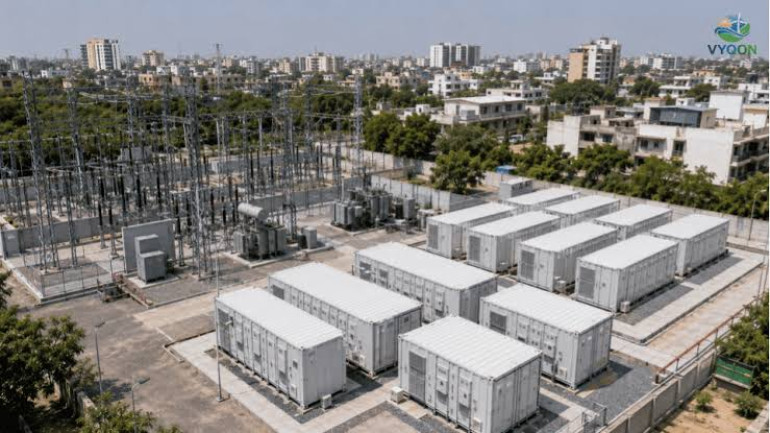
The Energy and Resources Institute (TERI), acting on behalf of BSES Rajdhani Power Limited (BRPL), has invited bids for the deployment of a 57.5 MW/115 MWh Battery Energy Storage System (BESS) across four 66/11 kV grid substations in Delhi. The project will be awarded through a tariff-based competitive bidding (TBCB) process and is aimed at strengthening the capital's electricity distribution network while supporting the growing integration of renewable energy and emerging electricity demand.
According to the Request for Proposal (RfP), interested bidders must submit their proposals by July 27, 2026. The selected developer will be responsible for the complete lifecycle of the project, including site surveys, engineering, design, equipment supply, transportation, installation, grid integration, testing, commissioning, and 12 years of operation and maintenance after the commercial operation date.
The project has received in-principle approval from the Delhi Electricity Regulatory Commission (DERC), with TERI serving as the bid manager for the procurement process. The tender documentation consists of bidder instructions and evaluation criteria, the draft Battery Energy Storage Service Agreement (BESSA), and detailed technical specifications outlining the scope of work and performance requirements.
To participate, bidders must furnish an Earnest Money Deposit (EMD) of Rs 2.5 crore through a bank guarantee or a Payment on Order Instrument (POI) issued by Indian Renewable Energy Development Agency (IREDA), Power Finance Corporation (PFC), or REC Limited. Technical and financial bids are to be submitted electronically via the Bharat Electronic Tender portal, while original EMD documents and bid passphrases must be submitted offline within two working days after the bid deadline.
The tender is open to companies incorporated under the Companies Act, foreign companies, SEBI-registered Alternative Investment Funds (AIFs), and consortia comprising up to two eligible entities. The successful bidder will be required to establish a wholly owned Special Purpose Vehicle (SPV) in India before executing the Battery Energy Storage Service Agreement. Eligible bidders must also demonstrate experience in commissioning at least 4 MWh of grid-connected BESS capacity in India over the past five years, integrated with electrical networks operating at 11 kV or above, along with Energy Management System (EMS) and SCADA integration. In addition, proposed equipment must carry valid type-test certifications from CPRI, ERDA, or accredited international laboratories, while manufacturers are expected to comply with internationally recognized quality, environmental, and occupational safety management standards.
Battery Energy Storage Systems are increasingly becoming a critical component of India's power infrastructure, enabling utilities to store surplus electricity during periods of high renewable generation and discharge it during peak demand. Besides improving grid reliability and power quality, BESS projects help integrate higher shares of solar and wind energy, reduce network congestion, defer costly grid upgrades, and support the rising electricity demand driven by electric vehicles and distributed energy resources. The proposed Delhi project represents another significant step toward modernizing urban distribution networks and building a more flexible, resilient, and sustainable electricity system.
Related News

SECI Invites Bids for Renewable Power Trading Partner…
The Solar Energy Corporation of India (SECI) has invited bids to select a Power…
SECI Invites Bids for PMU System at 100 MW Solar and…
The Solar Energy Corporation of India (SECI) has invited bids for the supply, installation,…
U-Solar Named L1 Bidder for NSPCL’s 20 MW Floating…
U-Solar Clean Energy Solutions Pvt. Ltd. has emerged as the lowest bidder (L1) for…