Follow India Renewable Energy News on WhatsApp for exclusive updates on clean energy news and insights
Unlocking the Potential of Small Wind Turbines in India: Barriers and the Way Forward
Apr 05, 2025
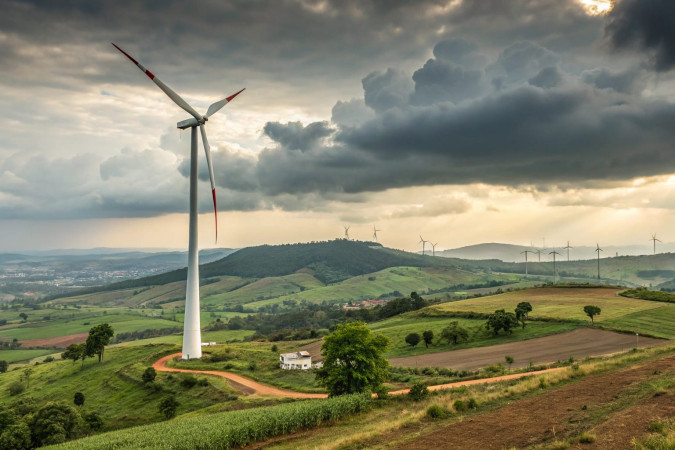
As India charts its ambitious journey toward 500 GW of non-fossil fuel energy capacity by 2030, small wind turbines (SWTs) are emerging as a promising yet underutilized solution in the distributed renewable energy (DRE) space. Unlike large wind projects, SWTs are flexible, scalable, and can operate independently or in hybrid systems alongside solar PV, especially in regions with moderate wind resources.
However, despite their potential, the deployment of SWTs in India remains minimal, with only about 3.3–5 MW of installed capacity as of 2024. This is in stark contrast to global leaders like China (704 MW) and the United States (156 MW).
Why SWTs Matter
SWTs are well-suited for decentralized applications such as powering remote communities, telecom towers, schools, farms, and livelihood-based microenterprises. Their ability to complement solar PV by providing energy during different seasons and times of day makes them ideal for hybrid energy systems.
Moreover, SWTs can contribute to meeting Distributed Renewable Purchase Obligations (RPOs), enhancing energy access, and diversifying the renewable mix across India's wind-rich regions.
What’s Holding SWTs Back?
The issue brief identifies several barriers that have stalled the growth of SWTs in India since subsidy support was withdrawn in 2017:
- Lack of resource mapping: There is insufficient granular wind data to identify ideal locations for SWT deployment.
- Limited awareness: Many end users, government agencies, and financiers are unaware of SWT applications and benefits.
- Poor after-sales service: Inaccessible installations and weak servicing networks reduce performance and reliability.
- Absence of standardized practices: Variability in turbine quality, installation procedures, and maintenance.
- Policy and regulatory gaps: Most policies favor solar, while SWTs are often not explicitly mentioned in grid codes or incentive schemes.
- High costs: Rising prices of raw materials and lack of economies of scale push up installation and ownership costs.
- Certification hurdles: Testing SWT models takes nearly a year and costs about INR 6 lakh, slowing down market entry.
The Way Forward: Key Recommendations
To scale up SWTs in India, a coordinated effort involving policy, industry, and R&D is needed. The report suggests the following strategic interventions:
- Resource Mapping & Data Collection: Conduct high-resolution wind studies to identify suitable sites, especially in urban and peri-urban areas. Real-world data from successful projects can help build trust.
- Strengthening Industry Collaboration: SWT manufacturers should form consortia to share resources, train technicians, and develop standardized practices.
- Reducing Costs through Innovation: Cost savings can be achieved by reusing existing structures for turbine mounting, minimizing use of cranes, and integrating SWTs into hybrid systems. Using towers for advertising can also generate additional revenue.
- Incentives & Business Models: Reviving financial incentives, offering GST/import duty relaxations, and promoting DRECs (Distributed Renewable Energy Certificates) can improve financial viability. Financial institutions should provide easier loan access to end users and developers.
- Policy Inclusion: SWTs need to be included in net metering policies, rooftop schemes, and state-level renewable energy targets. Grid codes must be revised to explicitly support SWT integration.
- Skilling & Training: Including SWT modules in existing courses (e.g., NIWE’s Vayumitra program), vocational training, and technician upskilling are critical for maintenance and deployment.
- Faster Testing & Certification: Alternative methods like real-time data sharing from existing installations can help fast-track certification processes. Mobile field labs and more R&D support are also recommended.
A Missed Opportunity Waiting to Be Tapped
India's SWT market holds immense potential, estimated at around 83 GW nationally. Yet, it remains vastly untapped. With the right policies, awareness campaigns, and business innovations, small wind turbines can become a key pillar in India’s decentralized clean energy revolution.
Related News
Rajasthan, Gujarat and Arunachal Pradesh Face Highest…
India's renewable energy expansion could face significant challenges from climate…

Solar Power Emerges as a Dominant Force in Meeting…
Solar energy, when paired with battery storage, is now capable of meeting up to…

ROQIT and Indian Railways Join Forces to Advance Sustainable…
ROQIT has entered into a strategic partnership with Indian Railways to roll out…