Follow India Renewable Energy News on WhatsApp for exclusive updates on clean energy news and insights
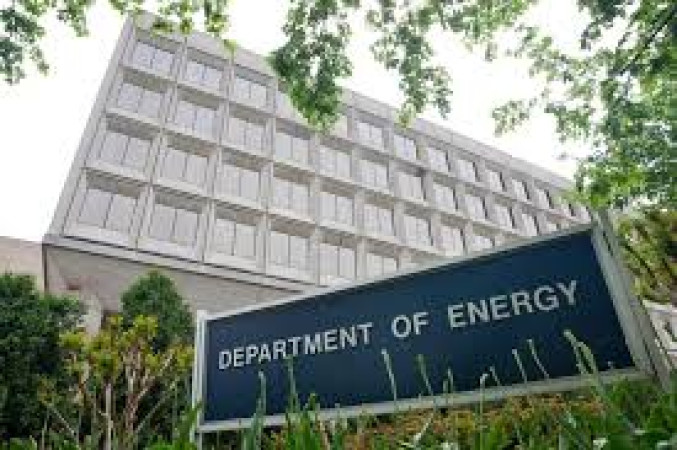
US Department of Energy Commits $30 Million to Advance Energy Storage, Building Efficiency and Innovation
Jan 28, 2026
The U.S. Department of Energy (DOE), through its Advanced Research Projects Agency–Energy (ARPA-E), has announced $30 million in funding across three targeted programs aimed at lowering electricity costs, advancing next-generation energy storage, and supporting early-stage energy innovators.
Of the total allocation, $15 million has been earmarked for the second phase of the Jumpstart Opportunities to Unleash Leadership in Energy Storage with 1K Energy Storage Systems (JOULES-1K) program. An additional $5 million will support four projects under the Galvanizing Leaps in Advanced Super INsulating Glass (GLASING) initiative, while $10 million will be directed toward 18 early-career researchers selected under ARPA-E’s 2025 Inspiring Generations of New Innovators to Impact Technologies in Energy (IGNIITE) program.
Funding under JOULES-1K Phase II will be awarded to six projects that demonstrated the most promising energy storage chemistries during the program’s first phase. These projects were evaluated using 1 kWh test systems, along with assessments of 1 MWh-scale performance and cost models.
The JOULES-1K program targets energy storage systems capable of achieving at least 1,000 Wh/kg and 1,000 Wh/l at the net-system level by the end of their operational life—representing a fourfold increase in energy density compared to today’s advanced storage technologies. According to ARPA-E, successful outcomes could significantly enhance the performance of applications such as drones, robotics, electric vertical takeoff and landing (eVTOL) aircraft, and other national security-related platforms.
The GLASING program funding will support the development of advanced window technologies designed to minimise energy losses in buildings. Projects under the initiative aim to create low-cost, high-performance vacuum-insulated glazing capable of delivering three times the thermal efficiency of commonly used double-pane windows, while maintaining optical clarity and cost competitiveness.
DOE said these technologies could make high-performance windows more practical and affordable for both existing buildings and new construction, contributing to reduced energy consumption and lower electricity bills.
Under the IGNIITE program, ARPA-E will provide up to $10 million to support 18 early-career engineers and scientists pursuing unconventional, high-risk, high-reward research with the potential to deliver transformative energy technologies. Each selected project may receive up to $500,000 in funding.
Research areas supported under IGNIITE span a wide range of technologies, including critical minerals, fusion concepts, advanced materials, geothermal energy, battery and component manufacturing, grid technologies, oil and gas systems, and industrial and water efficiency solutions.
Related News
Kalpa Power Secures 100 MWh BESS Manufacturing Capacity…
Energy management company Kalpa Power has signed a Memorandum of Understanding (MoU)…
Government Opens Global Bidding for 10 GWh ACC Battery…
The Ministry of Heavy Industries (MHI) has invited global bids for the establishment…
Hitachi Energy Wins 165 MW/330 MWh Battery Storage…
Hitachi Energy has secured its first Battery Energy Storage System (BESS)…