Follow India Renewable Energy News on WhatsApp for exclusive updates on clean energy news and insights
Uttarakhand Power Corporation Limited Optimises Power Procurement, Saves Rs160 Crore and Earns Rs125 Crore via REC Sales in FY26
Feb 19, 2026
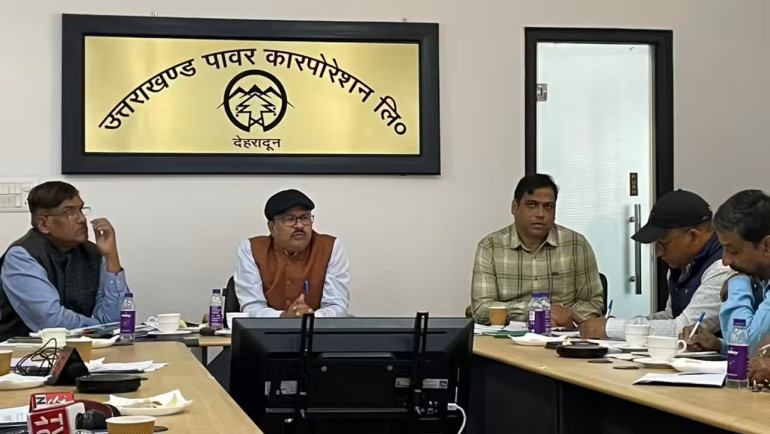
Uttarakhand Power Corporation Limited (UPCL) has adopted a market-driven power procurement strategy that has significantly reduced costs and improved revenue generation during the first nine months of FY26 (April–December 2025).
By actively leveraging power exchanges and long-duration contracts instead of relying on higher-priced DEEP portal tenders, the state distribution utility has saved over Rs 160 crore in procurement expenses. In parallel, strategic trading of Renewable Energy Certificates (RECs) has generated an additional Rs 125 crore in revenue.
Leveraging Exchange-Based Pricing
Improved supply liquidity — driven by increased renewable generation from solar, wind, and hydro sources along with stable coal-based output — led to softer electricity prices in exchange markets during the review period.
On the Indian Energy Exchange (IEX), the average Market Clearing Price in the Day-Ahead Market (DAM) stood at Rs 3.85 per unit during 9MFY26, marking a 14 percent year-on-year decline. Real-Time Market (RTM) prices averaged Rs 3.56 per unit, reflecting a 16 percent annual drop.
These favourable market conditions enabled UPCL to shift a portion of its procurement away from costlier long-term bilateral arrangements and DEEP-based sourcing toward competitive exchange products.
Replacing High-Cost DEEP Procurement
Initially, UPCL had floated tenders through the Discovery of Efficient Electricity Price (DEEP) portal. However, after observing elevated tariffs on DEEP, the utility adopted a diversified sourcing approach using exchange-linked contracts.
During the nine-month period, UPCL procured around 850 million units (MUs) under long-duration contracts at an average cost of Rs 3.59 per unit — substantially lower than the Rs 5.50 per unit quoted on the DEEP portal. The nearly Rs 2 per unit difference translated into savings of approximately Rs 160 crore compared to DEEP-based procurement.
In December 2025, when hydro availability dipped and winter demand rose, UPCL traditionally would have turned to DEEP tenders. Instead, the utility sourced electricity through long-duration contracts linked to power exchanges at Rs 3.40 per unit, significantly below the Rs 4.30 per unit available on DEEP. This tactical shift alone resulted in savings of nearly Rs 20 crore during the month.
Monetising Renewable Energy Certificates
As a hydro-rich state, Uttarakhand generates substantial renewable energy. After fulfilling its Renewable Purchase Obligation (RPO), surplus Renewable Energy Certificates are available for trading.
During FY26 to date, UPCL sold 35 lakh RECs on power exchanges at an average clearing price of around Rs 350 per certificate. The transactions generated approximately Rs 125 crore in additional revenue, strengthening the utility’s financial position.
Data-Driven Procurement Model
Anil Kumar, Managing Director of UPCL, stated that the utility’s procurement team adopted a scientific, data-backed approach that includes weather pattern analysis and demand forecasting. By strategically utilising Day-Ahead and Real-Time Market segments, along with longer-duration contracts, UPCL has enhanced its ability to manage supply-demand volatility while controlling costs.
He added that the combined strategy of optimised short-term market procurement and REC monetisation has improved financial efficiency, and the utility will continue leveraging competitive exchange pricing to ensure affordable and reliable electricity supply for consumers in the state.
Related News
Bihar Unveils Rs 1.40 Lakh Crore Energy Investment…
The Government of Bihar has presented an ambitious roadmap for transforming the…

GK Energy Revenue Jumps 71% in Q1 FY27 as Renewable…
GK Energy, a decentralised renewable energy infrastructure company focused on solar…
Siemens Energy India Q3 FY26 Revenue Surges 39.3%…
Siemens Energy India Ltd. delivered a strong financial performance in the third…