
Follow India Renewable Energy News on WhatsApp for exclusive updates on clean energy news and insights
Waaree Energies Initiates Construction of 10 GW Solar Ingot and Wafer Manufacturing Facility in Nagpur
Mar 16, 2026
The upcoming facility is planned with a production capacity of 10 GW each for solar ingots and wafers and is expected to enhance India’s domestic solar manufacturing base while reducing reliance on imported raw materials.
Waaree Energies has commenced construction of an integrated solar ingot and wafer manufacturing plant at Butibori in Nagpur, a project the company says will become one of the largest facilities of its kind in India.
The new manufacturing complex will feature an annual production capacity of 10 GW each for solar ingots and wafers. The initiative is aimed at strengthening India’s upstream solar manufacturing ecosystem and decreasing the country’s dependence on imported photovoltaic components.
Spanning nearly 300 acres, the project represents an estimated investment of about Rs6,200 crore. The facility will focus on producing high-purity solar ingots and wafers, which are critical elements in the solar photovoltaic manufacturing value chain.
According to the company, the project is expected to play a significant role in reinforcing India’s domestic solar supply network while supporting the nation’s long-term energy security objectives.
Once fully operational, the plant is projected to generate more than 8,000 direct and indirect employment opportunities, contributing to industrial growth and skill development in Maharashtra.
The groundbreaking ceremony was attended by senior government leaders, including Devendra Fadnavis and Nitin Gadkari, along with members of the company’s leadership team.
Speaking on the development, Hitesh Doshi, Chairman and Managing Director of Waaree Energies, noted that India’s clean energy transition will depend not only on expanding renewable power generation but also on strengthening domestic manufacturing across the solar value chain.
He added that the new integrated facility in Nagpur represents an important milestone toward building large-scale local production capacity for critical solar components, supporting the government’s vision of Atmanirbhar Bharat, reducing import dependence, and improving the resilience of India’s solar supply chain.
Doshi also highlighted Nagpur’s strategic advantages, including its industrial ecosystem and connectivity, stating that these factors make it an ideal location for a project of this scale. He acknowledged the support extended by the Maharashtra government in facilitating the initiative.
India continues to rank among the fastest-growing renewable energy markets globally, supported by policy measures aimed at expanding domestic manufacturing capabilities and strengthening long-term energy independence.
Related News
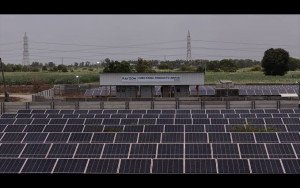
EUROBOND Expands Captive Solar Capacity to 3.6 MW,…
Building materials manufacturer EUROBOND, the flagship brand of Euro Panel Products,…

Waaree Renewable Technologies Expands into New Zealand…
Waaree Renewable Technologies Limited (WRTL), the engineering, procurement and construction…

Tata Power Posts Rs 1,401 Crore Q1 FY27 Profit as…
Tata Power has reported a strong financial performance for the first quarter of…