Follow India Renewable Energy News on WhatsApp for exclusive updates on clean energy news and insights
Avaada Joins ALMM List-II with 610 MW TOPCon Cell Capacity; India's Approved Solar Cell Manufacturing Reaches 31.76 GW
Jul 23, 2026
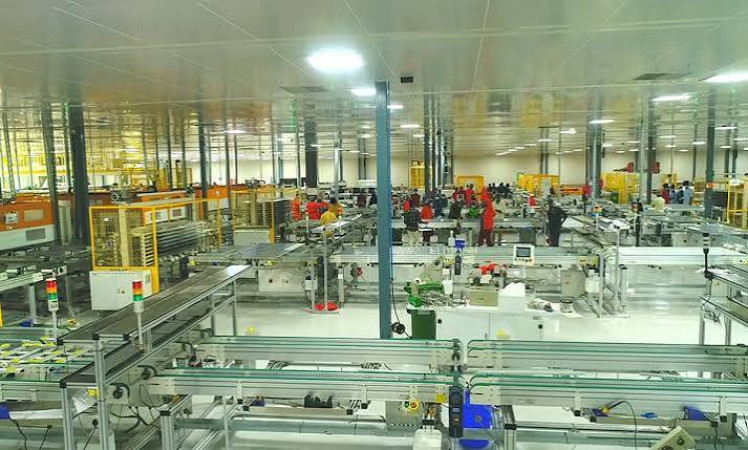
India's domestic solar manufacturing ecosystem has received another boost as the Ministry of New and Renewable Energy (MNRE) expanded the Approved List of Models and Manufacturers (ALMM) List-II for solar photovoltaic (PV) cells. Avaada Electro has been included in the latest revision of the list with 610 MW of N-Type TOPCon G12 solar cell manufacturing capacity from its facility in Nagpur, Maharashtra, while Fujiyama Power Systems (UTL Solar) has secured approval for additional manufacturing capacity. The latest revision raises the country's total ALMM List-II enlisted solar cell manufacturing capacity to 31,758 MW (31.76 GW).
Avaada's approved manufacturing portfolio includes N-Type TOPCon G12 (210 mm) solar cells in both half-cut and full-cell configurations, reflecting the industry's transition toward high-efficiency cell technologies. According to the latest ALMM notification, the approved half-cut cell model delivers an average efficiency of 25.63 percent, while the full-cell variant offers 25.57 percent, placing them among the high-performance cell technologies currently being deployed for utility-scale and commercial solar projects.
Meanwhile, Fujiyama Power Systems (UTL Solar) has expanded its ALMM-listed manufacturing capacity for Bifacial Mono PERC solar cells by 640 MW, taking its approved capacity to 1,077 MW. With the addition of Avaada and the capacity enhancement by Fujiyama, the latest revision increases India's approved solar cell capacity by 1,250 MW and expands the number of manufacturers included under ALMM List-II to 14. The update marks the eighth revision of the list since its introduction in July 2025.
The ALMM framework has become a key policy instrument aimed at strengthening India's solar manufacturing ecosystem by promoting the use of domestically produced components in government-backed renewable energy projects. While ALMM List-I governs approved solar module manufacturers, List-II covers solar cell manufacturers, enabling greater supply chain integration and supporting the government's objective of reducing dependence on imported photovoltaic components, particularly from overseas markets.
The latest update follows the inclusion of RenewSys India in April 2026, when the company added 452 MW of bifacial N-Type TOPCon solar cell capacity from its Telangana manufacturing facility. The steady expansion of ALMM-approved manufacturing capacity aligns with India's broader strategy of developing an end-to-end domestic solar value chain under initiatives such as the Production Linked Incentive (PLI) Scheme for High Efficiency Solar PV Modules, which encourages investments across polysilicon, wafers, cells and modules.
In a related policy move, MNRE has extended the exemption from mandatory compliance with ALMM List-II for net-metering and open-access solar projects until December 31, 2026, providing developers additional flexibility while domestic manufacturing capacity continues to expand. At the same time, the ministry is gradually tightening domestic sourcing requirements for large-scale projects to improve self-reliance and manufacturing competitiveness.
Looking further ahead, MNRE has also broadened the ALMM framework beyond cells and modules. In March 2026, the ministry introduced ALMM List-III for solar ingots and wafers, with mandatory usage scheduled to begin from June 1, 2028. The first List-III notification will be issued once at least three independent wafer manufacturers with a combined production capacity of 15 GW are enlisted. The move is expected to deepen domestic manufacturing across the entire photovoltaic value chain and further support India's target of achieving 500 GW of non-fossil fuel-based installed electricity capacity by 2030, while enhancing energy security and reducing import dependence.
Related News

Navitas Solar and Caelux Partner to Manufacture 5…
Indian solar module manufacturer Navitas Solar has entered into a five-year strategic…

Avaada Joins ALMM List-II with 610 MW TOPCon Cell…
India's domestic solar manufacturing ecosystem has received another boost as the…

Rayzon Solar Partners with Caelux to Develop 5 GW…
Indian photovoltaic manufacturer Rayzon Solar has entered into a strategic five-year…