Follow India Renewable Energy News on WhatsApp for exclusive updates on clean energy news and insights
BPE Expands India-Made Energy Storage Push as Renewable Power Reaches New Highs
Aug 23, 2026
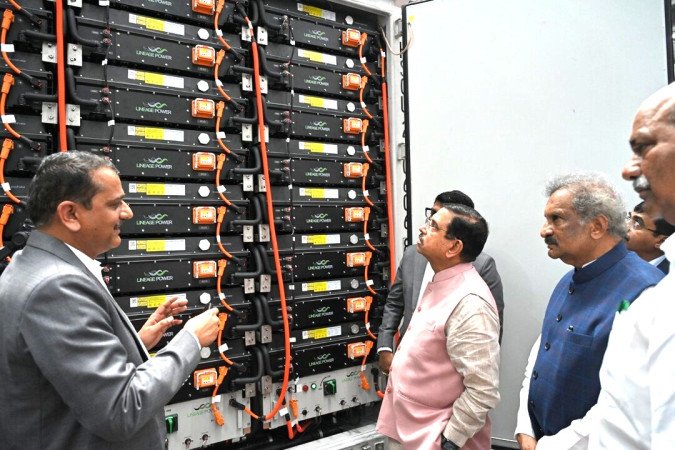
As India accelerates its transition toward renewable energy, the next challenge is increasingly shifting from generating clean electricity to storing and delivering it reliably when demand rises. On Akshay Urja Diwas, Best Power Equipments (BPE) highlighted its growing focus on battery energy storage and solar-integrated power systems, positioning domestic manufacturing as an important part of India's evolving clean-energy infrastructure.
India's renewable energy base has expanded rapidly. According to the Ministry of New and Renewable Energy, the country had 291.73 GW of installed renewable energy capacity as of July 31, 2026, including 164.59 GW of solar capacity. Large hydro contributed another 52.06 GW, while wind capacity stood at 58.14 GW. These figures underline the scale of India's clean-power expansion, but they also highlight the importance of technologies capable of balancing generation with demand, particularly when solar output falls after sunset.
Energy storage is therefore becoming a critical component of the country's power-sector strategy. The Ministry of New and Renewable Energy, citing the Central Electricity Authority's National Electricity Plan, says India's storage requirement is projected to rise from 82.37 GWh in 2026-27 to 411.4 GWh by 2031-32, including 236.22 GWh from battery energy storage systems and 175.18 GWh from pumped storage. The Central Electricity Authority has also identified energy storage as an increasingly important resource for integrating variable renewable generation into the grid.
Against this backdrop, BPE is expanding its portfolio of lithium-ion energy storage technologies designed to work alongside renewable generation. The company's solutions include solar-compatible systems with maximum power point tracking capabilities, battery energy storage systems and power conversion equipment intended to improve the efficiency and reliability of stored electricity. Such technologies can help businesses and other power consumers reduce dependence on conventional diesel-based backup while making greater use of electricity generated from renewable sources.
The opportunity is substantial. Government data released in July 2026 put the projected requirement for battery energy storage systems at 34 GWh by 2026-27 and 236 GWh by 2031-32, with the estimated investment associated with BESS deployment reaching about ?3.49 lakh crore by 2031-32. The government has also introduced policy and regulatory measures to encourage energy storage, reflecting its growing importance in maintaining grid flexibility as renewable generation expands.
For BPE, the emerging market is also an opportunity to strengthen India's role in the manufacture and deployment of energy-storage equipment. Amitansu Satpathy, Founder and Group Managing Director of BPE, said the company's focus is on developing storage systems that can complement solar generation and provide an alternative to diesel-based backup. He added that BPE intends to expand its manufacturing capabilities, deepen international partnerships and increase the contribution of India-made storage technologies to the country's energy transition.
The company says its manufacturing footprint has grown to approximately 150,000 square feet across six facilities, including a recently added unit in Greater Noida. BPE also maintains international offices in Singapore and Dubai and is expanding its overseas reach, with manufacturing collaborations in Indonesia and plans to enter markets including the United Kingdom, Russia, Romania and the broader CIS region.
The wider significance of BPE's strategy lies in the changing economics and requirements of India's power system. As solar and wind capacity grows, storage can provide flexibility by shifting electricity generated during periods of high renewable output to periods of greater demand. Battery systems can also support backup power, peak-load management and grid services, making storage increasingly relevant beyond conventional emergency power applications. India's Central Electricity Authority has already incorporated substantial battery and pumped-storage requirements into its longer-term planning framework.
With renewable capacity continuing to expand, India's energy transition is entering a phase in which storage, power electronics and grid flexibility will be as important as new generation capacity. BPE's investment in domestic manufacturing and international expansion reflects that broader shift, as companies seek to build the infrastructure needed to make renewable electricity more dependable, dispatchable and commercially useful around the clock.
Related News
BPE Expands India-Made Energy Storage Push as Renewable…
As India accelerates its transition toward renewable energy, the next challenge…
Kalpa Power Secures 100 MWh BESS Manufacturing Capacity…
Energy management company Kalpa Power has signed a Memorandum of Understanding (MoU)…
Government Opens Global Bidding for 10 GWh ACC Battery…
The Ministry of Heavy Industries (MHI) has invited global bids for the establishment…