Follow India Renewable Energy News on WhatsApp for exclusive updates on clean energy news and insights
Government Opens Global Bidding for 10 GWh ACC Battery Manufacturing to Strengthen India’s Grid Energy Storage Capacity
Jul 17, 2026
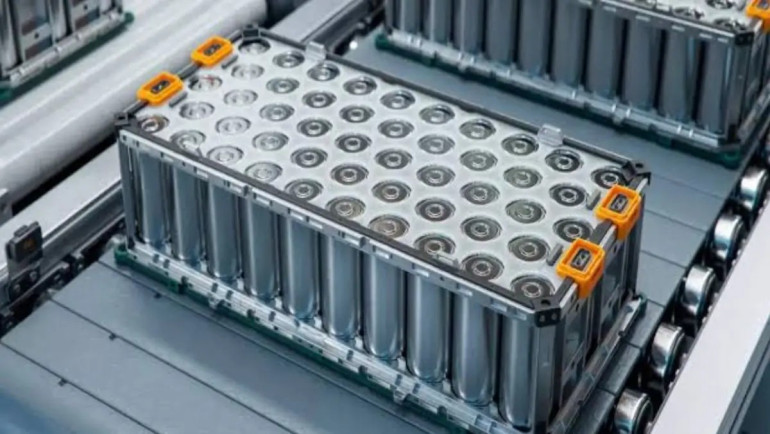
The Ministry of Heavy Industries (MHI) has invited global bids for the establishment of 10 GWh of Advanced Chemistry Cell (ACC) battery manufacturing capacity under the Production Linked Incentive (PLI) Scheme for ACC Battery Storage. The new manufacturing capacity has been exclusively earmarked for Grid-Scale Stationary Storage Systems (GSSS), reflecting the government's growing focus on building large-scale energy storage infrastructure to support India's rapidly expanding renewable energy sector and enhance grid reliability.
The bidding process will be conducted through the Central Public Procurement (CPP) Portal using a transparent two-stage Quality and Cost-Based Selection (QCBS) mechanism. Tender documents became available on July 15, 2026, with a pre-bid conference scheduled for July 29, 2026. Interested companies must submit their bids by October 13, 2026, while technical bid evaluation will commence on October 14, 2026. The competitive process is open to both domestic and international manufacturers capable of establishing giga-scale battery manufacturing facilities in India.
The latest tender is part of the National Programme on Advanced Chemistry Cell (ACC) Battery Storage, approved by the Union Cabinet in May 2021 with a financial outlay of INR 18,100 crore. The programme aims to establish 50 GWh of domestic ACC manufacturing capacity while encouraging investments across the battery value chain. By promoting local production of advanced battery cells, the initiative seeks to reduce India's reliance on imports, strengthen supply chain resilience, generate employment, and position the country as a global manufacturing hub for next-generation energy storage technologies.
According to the ministry, 40 GWh of the programme's targeted manufacturing capacity has already been allocated to selected companies under earlier rounds of the PLI scheme. The remaining 10 GWh has now been reserved specifically for grid-scale stationary storage, highlighting the increasing importance of battery energy storage systems in balancing electricity supply, integrating intermittent renewable energy sources, and maintaining grid stability as India's clean energy capacity continues to expand.
Large-scale battery storage is becoming a critical component of India's power sector transformation. As the share of solar and wind generation increases, energy storage systems enable surplus renewable electricity generated during periods of high production to be stored and dispatched during evening peak demand or periods of low renewable output. This improves grid flexibility, reduces renewable energy curtailment, enhances power quality, and minimises dependence on fossil fuel-based peaking plants.
The new manufacturing capacity is also expected to complement India's ambitious clean energy targets, including achieving 500 GW of non-fossil fuel electricity capacity by 2030 and expanding battery energy storage deployment to support round-the-clock renewable power. Domestic production of advanced battery cells will play an important role in lowering storage costs, strengthening energy security, attracting investments into the battery manufacturing ecosystem, and supporting applications across the power sector, electric mobility, and industrial energy storage markets.
With demand for battery energy storage projected to grow significantly over the coming decade, the government's latest bidding initiative marks another strategic step towards developing a self-reliant and globally competitive battery manufacturing industry while accelerating India's transition to a cleaner, more resilient, and technology-driven energy system.
Related News
Kalpa Power Secures 100 MWh BESS Manufacturing Capacity…
Energy management company Kalpa Power has signed a Memorandum of Understanding (MoU)…
Government Opens Global Bidding for 10 GWh ACC Battery…
The Ministry of Heavy Industries (MHI) has invited global bids for the establishment…
Hitachi Energy Wins 165 MW/330 MWh Battery Storage…
Hitachi Energy has secured its first Battery Energy Storage System (BESS)…