Follow India Renewable Energy News on WhatsApp for exclusive updates on clean energy news and insights
GreenLine and Dabur India Join Hands to Reduce Supply Chain Emissions with LNG-Powered Freight Transport
Jul 23, 2026
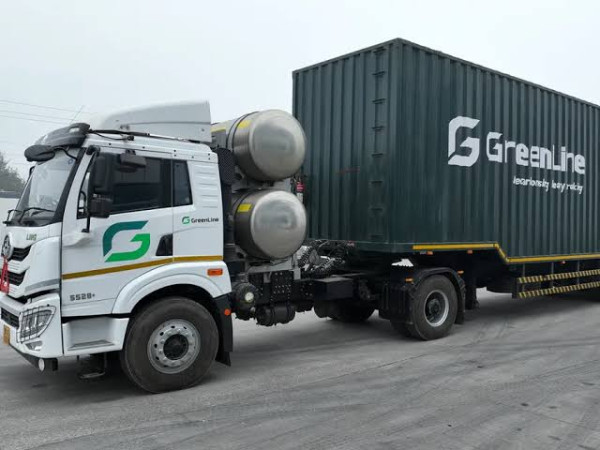
GreenLine Mobility Solutions, an Essar Group venture specialising in low-emission road logistics, has partnered with FMCG major Dabur India to introduce liquefied natural gas (LNG)-powered trucks into the company's transportation network. The collaboration is aimed at reducing carbon emissions from long-haul freight operations while maintaining operational efficiency, marking another step towards cleaner and more sustainable logistics in India's fast-moving consumer goods sector.
Under the partnership, GreenLine will deploy its fleet of LNG-powered heavy commercial vehicles across Dabur India's supply chain. The transition from conventional diesel trucks to LNG-powered vehicles is expected to significantly lower greenhouse gas emissions and particulate pollution associated with freight movement, helping Dabur advance its sustainability goals while ensuring reliable transportation of products across the country.
The agreement reflects a broader trend among Indian corporations to decarbonise logistics operations as environmental, social and governance (ESG) commitments become increasingly important. Freight transport remains one of the largest contributors to emissions within corporate supply chains, making cleaner fuel alternatives and zero-emission technologies a key focus area for companies seeking to reduce their overall carbon footprint.
GreenLine has emerged as one of India's leading providers of sustainable heavy-duty logistics solutions, operating a fleet of more than 1,000 LNG- and electric-powered trucks across major freight corridors. The company serves industries including FMCG, steel, cement, mining and chemicals. According to the company, its vehicles have collectively travelled over 100 million kilometres, enabling customers to avoid more than 27,000 tonnes of carbon dioxide (CO?) emissions compared to conventional diesel-powered freight operations.
LNG is increasingly being adopted as a transition fuel for heavy commercial vehicles because it produces lower carbon dioxide emissions and significantly reduces nitrogen oxides (NOx), sulphur oxides (SOx) and particulate matter compared to diesel. While battery-electric trucks are gaining traction for short- and medium-distance operations, LNG-powered vehicles currently offer a practical low-emission solution for long-haul transportation, where payload capacity, range and refuelling time remain critical operational considerations.
The partnership also aligns with India's broader efforts to decarbonise the transport sector through the adoption of alternative fuels, cleaner mobility technologies and expanded LNG infrastructure. The government has been promoting the development of LNG fuelling stations along major national highways to support the transition of heavy commercial vehicles away from conventional fossil fuels. Such initiatives complement the country's net-zero ambitions and its strategy to improve energy efficiency and reduce emissions from the logistics sector.
For Dabur India, integrating lower-emission freight into its distribution network supports the company's long-term sustainability roadmap and responsible supply chain management initiatives. As consumer goods companies continue to strengthen climate commitments, collaborations with green logistics providers are expected to play an increasingly important role in building resilient, efficient and environmentally responsible supply chains across India.
Related News
NIT Rourkela Develops AI-Powered Smart Monitoring…
Researchers at the National Institute of Technology (NIT) Rourkela have developed…
INVT Electric India Unveils Advanced Industrial Automation…
INVT Electric India showcased its latest portfolio of industrial automation and…
Andhra Pradesh's Proposed ‘Deemed Distribution Licensee’…
The Andhra Pradesh Government's proposal to grant "deemed distribution licensee"…