Follow India Renewable Energy News on WhatsApp for exclusive updates on clean energy news and insights
India's Solar Boom Is Shifting the Power Challenge from Generation to Energy Storage
Jul 12, 2026
India has made remarkable progress in expanding renewable energy capacity, particularly solar power, but the country's electricity sector is now entering a new phase where storing renewable energy has become as important as generating it. While record solar installations have significantly increased electricity availability during daylight hours, managing demand after sunset has emerged as one of the biggest challenges for grid operators, highlighting the urgent need for large-scale energy storage infrastructure.
The changing dynamics of India's power system were evident on May 21, 2026, when the national grid recorded an all-time peak electricity demand of 270.8 GW during the afternoon. Earlier the same day, electricity demand stood at 224.1 GW, requiring the grid to accommodate an additional 46.7 GW within less than eight hours. However, despite record demand during the afternoon, electricity prices remained relatively low because abundant solar generation was meeting a large share of the country's power requirements.
Price movements in the Indian Energy Exchange (IEX) Day-Ahead Market reflected this growing imbalance between daytime supply and evening demand. Electricity scheduled for delivery around 1:00 PM traded at approximately Rs 1.56 per unit, while prices surged to the market ceiling of Rs 10 per unit for electricity delivered around 6:30 PM, shortly after sunset. The sharp increase illustrates how India's electricity system now faces shortages primarily during evening hours rather than during periods of peak daytime demand.
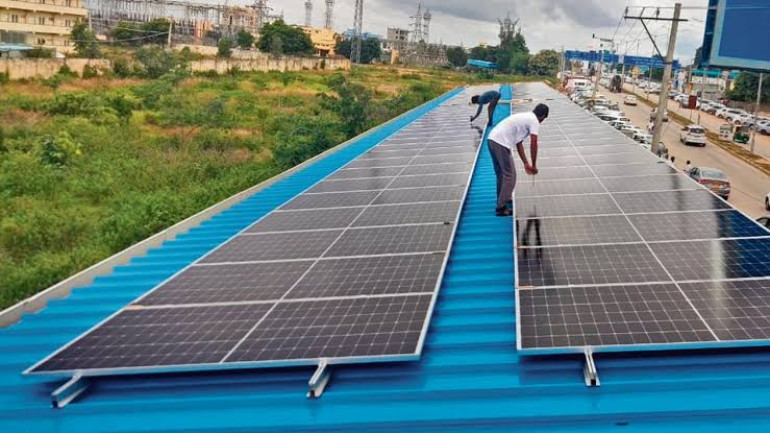
The transformation has been driven by India's rapid expansion of solar energy. By May 2026, the country had installed around 157 GW of solar power capacity, accounting for nearly 29 percent of the nation's total installed electricity generation capacity, compared with just 2 percent a decade earlier. Under existing grid regulations, solar power receives priority dispatch whenever available, reducing the requirement for conventional coal-fired and gas-based power plants during daylight hours.
As solar generation increases, the shape of electricity demand that conventional power plants must meet—known as net load—is changing significantly. During summer months, the grid experiences the well-known "duck curve," where abundant solar generation creates a deep midday reduction in net demand, followed by a steep increase in electricity requirements after sunset as solar output declines. During winter, electricity demand increasingly resembles a double-peaked "camel curve," with separate demand surges in the morning and evening and lower consumption around midday.
Analysis of recent grid data shows that these daily demand swings are becoming more pronounced. Between 2023 and 2026, India's nighttime net electricity demand increased by roughly 40 GW, while midday net demand remained largely unchanged because additional solar capacity absorbed most of the increase in daytime consumption. Over the same period, the evening ramp-up in demand between 1:00 PM and 8:00 PM nearly doubled, while the morning decline in conventional generation accelerated sharply. These trends require thermal power plants to ramp generation up and down much more rapidly, increasing operational complexity, fuel consumption, and maintenance costs.
The growing mismatch between solar generation and electricity demand is also leading to increased renewable energy curtailment. On an average day in May 2026, around 24 GWh of solar electricity reportedly had to be curtailed because the grid could not absorb the available generation. Ironically, this surplus renewable energy is lost only hours before the same electricity system experiences supply shortages during the evening peak, underlining the need for technologies capable of shifting electricity from periods of surplus to periods of high demand.
Energy storage is increasingly viewed as the most effective solution to this challenge. Battery Energy Storage Systems (BESS) and pumped hydro storage can store excess solar generation during the day and discharge it during evening peak hours, reducing pressure on conventional generators while improving grid stability. However, current storage deployment remains well below future requirements. Although India's battery storage capacity has expanded rapidly in recent months to approximately 2.7 GW, it remains significantly below long-term requirements and the deployment targets identified by policymakers.
International experience demonstrates the benefits of large-scale storage deployment. Markets such as California, which first popularised the concept of the "duck curve," have significantly reduced evening demand spikes through widespread deployment of utility-scale battery storage. By charging batteries during periods of abundant solar generation and discharging them after sunset, California has improved grid flexibility, reduced price volatility, and increased the utilisation of renewable energy resources.
Recognising these emerging challenges, the Government of India has initiated several policy reforms aimed at strengthening grid flexibility. The proposed Electricity (Amendment) Bill, 2025 seeks to formally recognise energy storage within the electricity framework, strengthen renewable purchase obligations, and deepen competitive electricity markets. Meanwhile, the draft Electricity (Rights of Consumers) Amendment Rules, 2026 propose wider implementation of time-of-day electricity tariffs and greater participation of demand-response programmes, encouraging consumers to shift electricity consumption to periods when renewable power is abundant.
As India continues its transition towards a cleaner energy system, experts believe the focus must increasingly shift from simply expanding renewable energy generation to developing the infrastructure needed to use that energy more efficiently. Accelerating investments in battery storage, pumped hydro projects, flexible grid infrastructure, smart electricity markets, and advanced demand management will be essential to maximise renewable energy utilisation, minimise curtailment, and ensure reliable electricity supply throughout the day. The country's next major milestone in the energy transition will not be generating more clean electricity—but delivering it precisely when consumers need it most.
Related News
Kalpa Power Secures 100 MWh BESS Manufacturing Capacity…
Energy management company Kalpa Power has signed a Memorandum of Understanding (MoU)…
Government Opens Global Bidding for 10 GWh ACC Battery…
The Ministry of Heavy Industries (MHI) has invited global bids for the establishment…
Hitachi Energy Wins 165 MW/330 MWh Battery Storage…
Hitachi Energy has secured its first Battery Energy Storage System (BESS)…