Follow India Renewable Energy News on WhatsApp for exclusive updates on clean energy news and insights
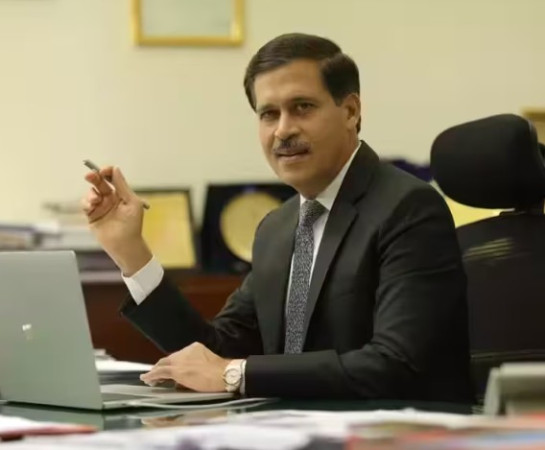
Mahavitaran CMD Lokesh Chandra Honoured for Driving Maharashtra’s Clean Energy and Power Distribution Reforms
Jul 29, 2026
Lokesh Chandra, Chairman and Managing Director of Maharashtra State Electricity Distribution Company Limited (Mahavitaran), has been honoured at the Sustainability Conclave 2026 in New Delhi for his contribution to strengthening Maharashtra's electricity distribution network, expanding renewable energy integration and advancing the state's long-term energy transition. The recognition acknowledges Mahavitaran's efforts to modernise power infrastructure while supporting India's broader objectives of energy security and sustainable development.
The conclave, themed 'India 2035: A Self-Reliant Nation', brought together policymakers, government officials, utility executives and industry experts to discuss strategies for accelerating India's clean energy transition, strengthening grid resilience and enhancing energy independence. During the event, Maharashtra's Energy Department highlighted the state's ongoing initiatives to build a future-ready electricity ecosystem capable of meeting rising demand through a greater share of renewable energy.
One of the major developments supporting this transformation is the Maharashtra Government's approval to restructure Mahavitaran's non-agricultural electricity distribution business, a move that will facilitate the utility's proposed Initial Public Offering (IPO). The restructuring is expected to improve operational efficiency, strengthen corporate governance, enhance transparency and attract long-term investments to modernise the state's power distribution infrastructure while improving services for more than three crore electricity consumers.
Maharashtra has set an ambitious target of adding 45,000 MW of new power generation capacity by 2030, of which 38,000 MW is planned from renewable energy sources. The state aims to increase the share of clean energy to more than 50 percent of its overall electricity mix, supporting both economic growth and climate commitments. As the state's largest electricity distribution company, Mahavitaran has been playing a central role in integrating renewable energy into the grid while ensuring reliable and affordable power supply across urban and rural areas.
The utility has also accelerated investments in smart metering, digital grid management, distribution network strengthening and advanced consumer service platforms. These initiatives are designed to improve billing accuracy, reduce aggregate technical and commercial (AT&C) losses, enhance outage management and enable efficient integration of variable renewable energy sources such as solar and wind power. Digitalisation is increasingly becoming a key component of India's power sector reforms, helping distribution companies improve operational efficiency and deliver better customer services.
Mahavitaran has significantly expanded its renewable energy procurement portfolio through long-term power purchase agreements, with around 65 percent of its contracted power capacity linked to renewable energy sources. The strategy supports Maharashtra's objective of reducing dependence on fossil fuels while ensuring a stable and diversified power supply for households, industries and agricultural consumers. The utility is also supporting large-scale initiatives such as feeder solarisation, rooftop solar adoption and grid modernisation to accommodate growing clean energy capacity.
The recognition of Lokesh Chandra reflects the broader transformation taking place within Maharashtra's power sector as the state pursues cleaner electricity generation, stronger distribution infrastructure and digital innovation. With sustained investments in renewable energy, smart grid technologies and institutional reforms, Mahavitaran continues to play a pivotal role in supporting India's target of achieving 500 GW of non-fossil fuel-based installed power capacity by 2030 and progressing towards its long-term Net Zero emissions goal by 2070.
Related News
International Solar Alliance Seeks Consultants to…
The International Solar Alliance (ISA) has invited bids from eligible consulting…
Hinduja Renewables Crosses 4 TWh Green Power Generation…
Hinduja Renewables Energy Private Limited (HREPL), the renewable energy arm of the…
Mahavitaran CMD Lokesh Chandra Honoured for Driving…
Lokesh Chandra, Chairman and Managing Director of Maharashtra State Electricity…