Follow India Renewable Energy News on WhatsApp for exclusive updates on clean energy news and insights
Private Power Distribution Proposal for Gurugram-Nuh Faces Scrutiny Over Infrastructure Investment and Universal Service Obligations
Jul 17, 2026
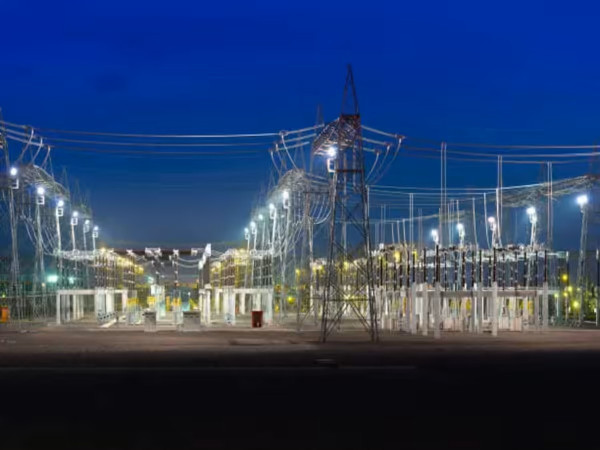
A proposal by Eleven Power Private Limited to secure a parallel electricity distribution licence for Gurugram and Nuh has encountered strong objections from the state-owned utility Dakshin Haryana Bijli Vitran Nigam (DHBVN). The company has approached the Haryana Electricity Regulatory Commission (HERC) under the provisions of the Electricity Act, 2003, seeking approval to operate alongside the existing distribution licensee. However, DHBVVN has questioned the financial viability of the proposal, arguing that the applicant has significantly underestimated the investment required to establish an independent distribution network capable of serving all consumers in the proposed licence area.
According to DHBVN, the proposed distribution network would need to cater to nearly 8.69 lakh electricity consumers across Gurugram and Nuh districts, including residential, commercial, industrial and agricultural users. The utility estimates that building the required transmission and distribution infrastructure would require an investment of approximately INR 11,398 crore at current price levels, excluding additional expenses such as working capital and land acquisition. In comparison, DHBVN contends that Eleven Power's business plan substantially understates the infrastructure and financial commitments needed to fulfil statutory obligations.
A key issue raised by the incumbent utility relates to the Universal Service Obligation (USO) under Section 43 of the Electricity Act, 2003, which requires every licensed distribution company to provide electricity to all consumers within its licensed area without discrimination. DHBVN has argued that Eleven Power's infrastructure planning appears to focus primarily on projected customer acquisition and anticipated electricity demand rather than creating a comprehensive network capable of serving the entire licence area, including remote and low-revenue regions.
The state utility has also questioned the financial strength of the applicant, stating that the proposed equity and funding arrangements do not adequately demonstrate the company's ability to execute a project of this scale. According to DHBVN, the business plan relies on financial assumptions that require stronger evidence of capital availability, while also lacking sufficient provisions for working capital and implementation-related expenses. The utility has further referred to previous regulatory precedents, including HERC's 2014 decision rejecting a similar application for a second distribution licence in Gurugram, where the Commission emphasised the need for realistic infrastructure planning and credible financing arrangements.
Separately, Haryana Vidyut Prasaran Nigam (HVPN), the state's transmission utility, has raised concerns that the proposed business model may result in "cherry-picking" of high-value electricity consumers. According to HVPN, Eleven Power's initial rollout strategy appears to prioritise industrial, commercial and high-density urban consumers located near existing grid infrastructure—segments that typically generate higher revenues for distribution companies. The utility warned that such an approach could weaken the financial sustainability of the incumbent distribution licensee, potentially affecting the cross-subsidy framework that supports affordable electricity supply for agricultural and rural consumers.
HVPN also noted that Eleven Power's business plan projects migration of only around 25 percent of DHBVN's existing consumers, with the remaining demand expected from new residential developments, industrial expansion and commercial projects. The transmission utility argued that the proposal lacks sufficient clarity on how the company would provide last-mile connectivity and maintain reliable power supply in rural and agricultural areas, particularly in Nuh district, where extending distribution infrastructure may involve higher costs and lower commercial returns.
In its submission to HERC, Eleven Power has maintained that it will comply with all applicable regulations and fulfil the obligations of a licensed electricity distribution company, including providing non-discriminatory power supply to all categories of consumers. The company has stated that it intends to adhere to the regulatory framework laid down by the Commission while meeting the Universal Service Obligation throughout the proposed licence area.
The case is expected to be closely watched by stakeholders across India's power sector, as it could influence the future of parallel electricity distribution in urban markets. The Electricity Act permits multiple distribution licensees in the same geographical area subject to regulatory approval, with the objective of promoting competition, improving service quality and enhancing consumer choice. However, regulators also seek to ensure that new entrants possess adequate financial capacity, robust infrastructure plans and the ability to meet universal service requirements without adversely affecting the stability and affordability of the existing power distribution system.
Related News
EUROBOND Expands Captive Solar Capacity to 3.6 MW,…
Building materials manufacturer EUROBOND, the flagship brand of Euro Panel Products,…
Waaree Renewable Technologies Expands into New Zealand…
Waaree Renewable Technologies Limited (WRTL), the engineering, procurement and construction…
Tata Power Posts Rs 1,401 Crore Q1 FY27 Profit as…
Tata Power has reported a strong financial performance for the first quarter of…