Follow India Renewable Energy News on WhatsApp for exclusive updates on clean energy news and insights
TERI and ISA Strengthen Building-Integrated Solar Adoption Through BIPV Capacity-Building Workshop
Jul 22, 2026
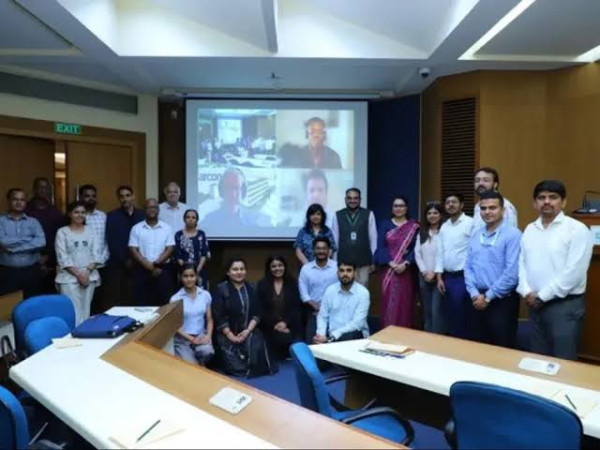
The Energy and Resources Institute (TERI), in collaboration with the International Solar Alliance (ISA), organised a capacity-building workshop on Building-Integrated Photovoltaics (BIPV) in New Delhi to accelerate the adoption of solar-integrated building technologies across developing economies. Held on July 21, 2026, the programme introduced stakeholders to a newly developed BIPV Guidebook, designed to support policymakers, architects, urban planners, developers, researchers and industry participants in implementing building-integrated solar solutions across ISA member countries.
Building-Integrated Photovoltaics represent an emerging segment of the clean energy sector where photovoltaic modules are incorporated directly into building components such as rooftops, façades, skylights, windows and exterior cladding. Unlike conventional rooftop solar systems, BIPV elements serve both as construction materials and electricity-generating assets, enabling buildings to produce renewable power while maintaining architectural functionality. The technology is increasingly viewed as an important solution for sustainable urban development, particularly in land-constrained cities where rooftop space alone may not be sufficient to meet growing electricity demand.
Despite its long-term advantages, BIPV deployment has remained limited across many countries due to high initial investment costs, fragmented supply chains, evolving technical standards, financing challenges and a shortage of skilled professionals. To address these barriers, the International Solar Alliance collaborated with TERI (India), Sun Appeal (Switzerland), Arconsol (Austria), and the University of Applied Sciences and Arts of Southern Switzerland (SUPSI) to develop a comprehensive guidebook that combines technical knowledge, policy recommendations, regulatory guidance and practical implementation strategies tailored for the Global South.
The workshop familiarised participants with the guidebook while facilitating discussions on climate-responsive BIPV design, technology selection, financing mechanisms, business opportunities, policy frameworks, regulatory standards, certification requirements and workforce development. Participants also examined real-world case studies demonstrating successful deployment models and explored practical pathways for scaling BIPV adoption across different climatic and urban environments.
Opening the workshop, Ashish Khanna, Director General of the International Solar Alliance, emphasised that rapid urbanisation across developing nations will significantly increase future electricity demand, making buildings central to the clean energy transition. He noted that integrating photovoltaic systems into building envelopes can transform structures from passive energy consumers into active producers of renewable electricity. Khanna also highlighted that the guidebook has been developed through extensive international collaboration, incorporating global best practices and technical expertise. He added that the publication is scheduled for its official launch during the ISA Assembly in November 2026, where it will serve as a reference document for ISA member countries seeking to expand BIPV deployment.
Delivering the special address, Dr. Jiwesh Nandan, Distinguished Fellow at TERI, said that integrating renewable energy directly into buildings is becoming increasingly important as urbanisation, economic growth and rising cooling requirements continue to drive electricity consumption. He observed that BIPV offers a practical solution for countries such as India by utilising existing building surfaces to generate clean power, reducing dependence on additional land while enhancing urban sustainability, energy resilience and long-term decarbonisation.
Presenting the newly developed guidebook, Dr. Gurleen Kaur, Co-Lead of the Technology Roadmap and Policy Unit at ISA, explained that the publication was prepared through consultations with 110 stakeholders across 17 countries and has been designed to support all 118 ISA Member Countries. The guidebook incorporates findings from stakeholder surveys, expert consultations and climate-specific assessments, providing tailored recommendations for six climatic zones—tropical, arid, coastal, temperate, Mediterranean and snow-prone regions—to ensure region-specific deployment strategies.
The workshop concluded with expert-led technical sessions covering BIPV system design, technology selection, financing and business models, regulatory pathways, quality standards, certification mechanisms and skill development requirements. A collaborative discussion session enabled participants to exchange experiences and identify opportunities for partnerships aimed at accelerating commercial deployment of BIPV technologies across the Global South.
Building-Integrated Photovoltaics are expected to play an increasingly important role in achieving net-zero energy buildings and supporting national clean energy targets. As countries pursue decarbonisation of the built environment, BIPV can reduce dependence on conventional grid electricity, improve building energy efficiency and lower carbon emissions without requiring additional land. With governments worldwide strengthening building energy codes and expanding distributed renewable energy programmes, initiatives such as the TERI–ISA guidebook are expected to help establish common technical standards, improve investor confidence and facilitate wider adoption of integrated solar technologies in future urban infrastructure.
Related News

NIT Rourkela Develops AI-Powered Smart Monitoring…
Researchers at the National Institute of Technology (NIT) Rourkela have developed…

INVT Electric India Unveils Advanced Industrial Automation…
INVT Electric India showcased its latest portfolio of industrial automation and…

Andhra Pradesh's Proposed ‘Deemed Distribution Licensee’…
The Andhra Pradesh Government's proposal to grant "deemed distribution licensee"…