Follow India Renewable Energy News on WhatsApp for exclusive updates on clean energy news and insights
AMPIN Energy Signs PPA with SECI for 199 MW FDRE Project Backed by 800 MWh Battery Storage
Jul 15, 2026
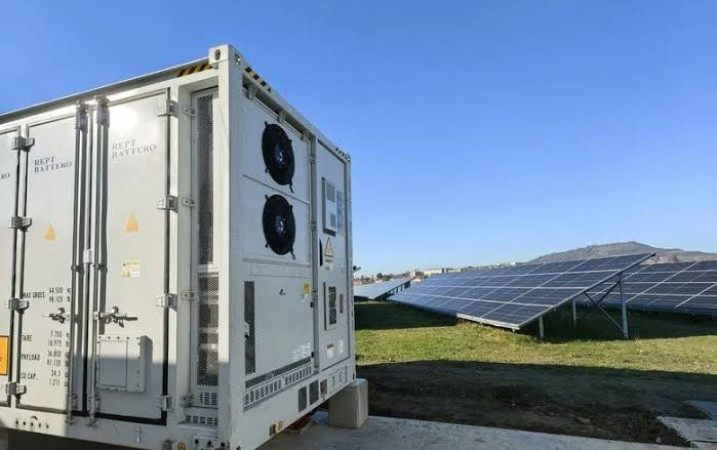
AMPIN Energy Transition has signed a Power Purchase Agreement (PPA) with the Solar Energy Corporation of India (SECI) for the development of a 199 MW Firm and Dispatchable Renewable Energy (FDRE) project supported by an approximately 800 MWh Battery Energy Storage System (BESS). The project marks AMPIN's entry into the fast-growing FDRE segment and reflects the increasing role of energy storage in delivering reliable renewable power that can be supplied even after sunset.
The project will integrate utility-scale solar generation with co-located battery storage to ensure firm and scheduled electricity delivery during non-solar hours. Unlike conventional renewable projects that generate power only when sunlight or wind is available, FDRE projects combine renewable energy with storage technologies to provide predictable and dispatchable electricity, helping utilities manage demand while improving grid stability.
Once operational, the project is expected to generate nearly 300 million units (300 GWh) of clean electricity annually and reduce carbon emissions by more than 270,000 tonnes every year. By storing surplus solar energy during daylight hours and releasing it during evening peak demand, the battery energy storage system will enhance renewable energy utilisation and reduce dependence on fossil fuel-based peaking power plants.
The capacity was secured through SECI's competitive tender for 1,200 MW of Inter-State Transmission System (ISTS)-connected Firm and Dispatchable Renewable Energy projects integrated with energy storage. The tender, issued in October 2025 and auctioned in February 2026, requires developers to supply assured renewable power for four hours every day during non-solar periods, ensuring high monthly and annual availability standards. AMPIN Energy Utility Nine, a special purpose vehicle (SPV) of AMPIN Energy Transition, emerged successful with 199 MW of capacity at a tariff of INR 6.28 per kWh.
Under the tender conditions, developers are required to provide 4 MWh of dispatchable energy per MW of contracted capacity during designated non-solar hours while maintaining a minimum 70 percent monthly and 85 percent annual availability. The framework also permits developers to procure up to 5 percent of their annual renewable energy requirement through green power markets or bilateral arrangements, providing operational flexibility while maintaining clean energy commitments.
The project must also comply with stringent operational and regulatory requirements, including the installation of GPS-enabled Automatic Weather Stations (AWS) for real-time weather monitoring, data sharing with Load Dispatch Centres in accordance with the Indian Electricity Grid Code (IEGC), and adherence to the Government of India's cybersecurity guidelines for critical power infrastructure.
With this addition, AMPIN Energy Transition's utility-scale portfolio has expanded to approximately 3.5 GWp of renewable energy capacity, complemented by around 2.5 GWh of energy storage. The company continues to strengthen its position in India's rapidly evolving clean energy market, supported by long-term power purchase agreements with highly rated public and private sector offtakers.
Firm and Dispatchable Renewable Energy is emerging as a key component of India's energy transition, enabling greater integration of renewable power into the national grid while ensuring round-the-clock electricity availability. As the country pursues its target of 500 GW of non-fossil fuel electricity capacity by 2030, hybrid renewable projects equipped with battery storage are expected to play an increasingly important role in enhancing grid flexibility, reducing renewable energy curtailment, and supporting the growing electricity demand from industries, urban centres, and digital infrastructure.
Related News
Kalpa Power Secures 100 MWh BESS Manufacturing Capacity…
Energy management company Kalpa Power has signed a Memorandum of Understanding (MoU)…
Government Opens Global Bidding for 10 GWh ACC Battery…
The Ministry of Heavy Industries (MHI) has invited global bids for the establishment…
Hitachi Energy Wins 165 MW/330 MWh Battery Storage…
Hitachi Energy has secured its first Battery Energy Storage System (BESS)…